Seborrhoeic dermatitis
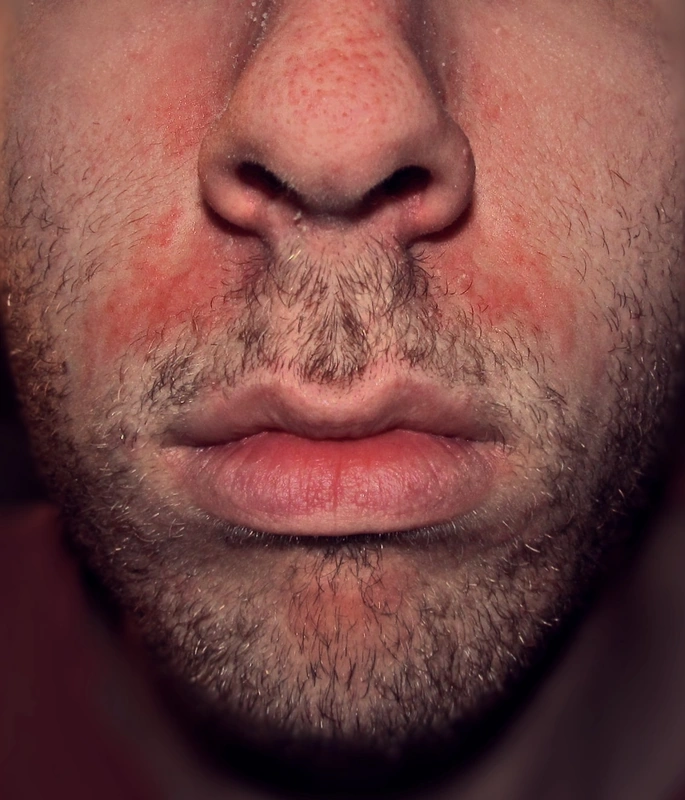
Definition and Pathogenesis
Seborrheic eczema is a chronic-recurrent inflammatory dermatosis of sebaceous gland-rich areas. The pathogenesis is based on an interaction of increased sebum production, individual immune reaction, and colonization with lipophilic yeasts of the genus Malassezia.
Epidemiology
Seborrheic eczema occurs particularly frequently in:
- infants ("cradle cap")
- adults between 30–60 years
An increased prevalence exists in patients with Parkinson's disease and in HIV infection.
Typical Localizations
Primarily affected are sebaceous gland-rich areas such as:
- scalp
- nasolabial folds
- eyebrows
- retroauricular
- sternum
Clinical Presentation
Characteristic are erythematous plaques with yellowish-greasy scaling with usually mild itching. On the scalp, the disease often manifests as Pityriasis capitis.
Special Forms
In infants, it is referred to as cradle cap, which usually has a self-limiting course.
Differential diagnoses
- Pityriasis versicolor
- Tinea corporis
- Psoriasis vulgaris (plaque psoriasis)
- Pityriasis rosea
- Malassezia (Pityrosporum) folliculitis
- Darier's disease (keratosis follicularis)
- Allergic contact dermatitis
Practise Seborrhoeic dermatitis in the app
Flashcards with spaced repetition, exam questions and spot-the-diagnosis on this topic – in DermaFuchs, free of charge.
In the DermaFuchs app: 4 flashcards · 7 clinical images
Open in browser Download on the App StoreSources (selection)
More allergies and eczemas
Note: This page is intended for medical education and does not replace diagnosis or treatment decisions in individual cases. Treatment and follow-up content is available in the app.