Folliculitis
- Specialty
- Dermatology · Skin appendages
- Images
- Clinical 2
- In the app
- 6 flashcards
- Last updated
- 10/2026 · Dr. Pascal Bafteh
Contents
Images (2)
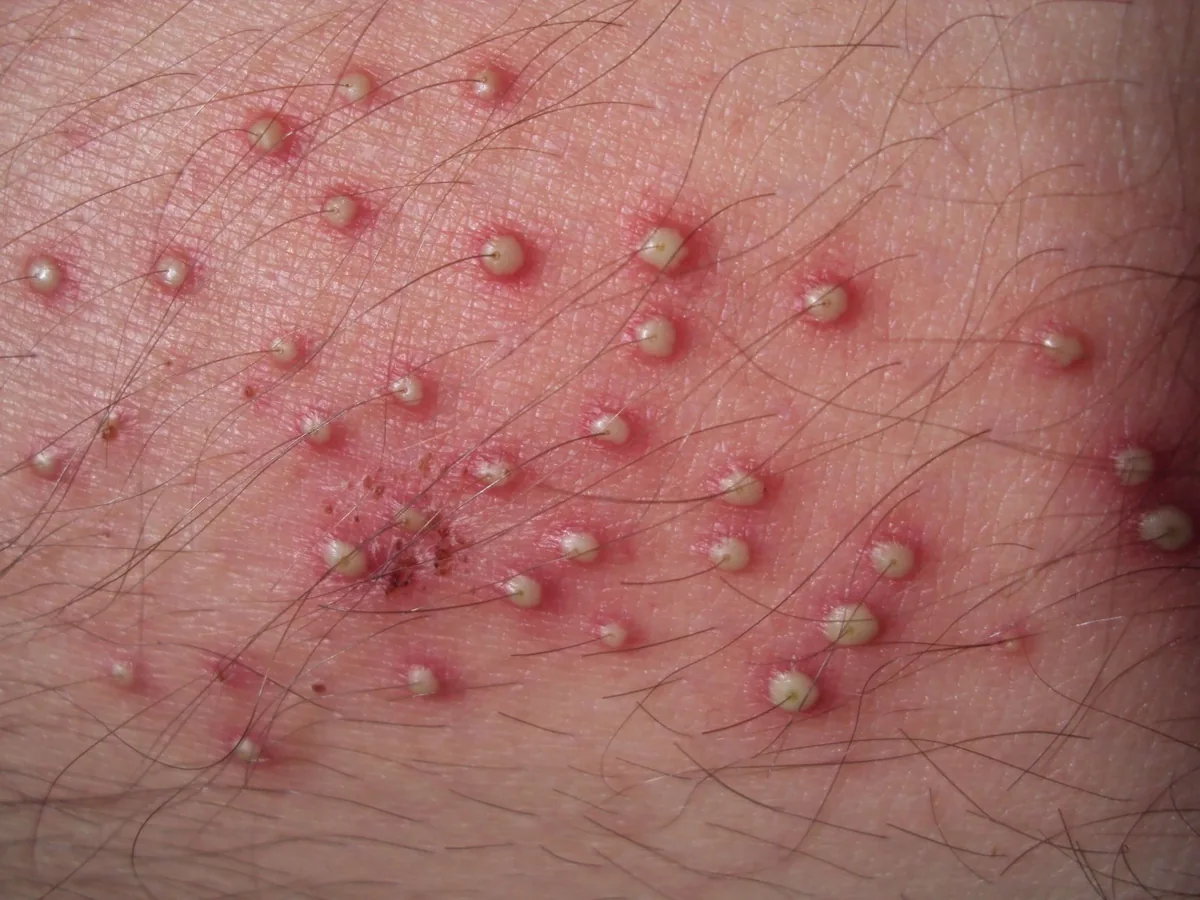
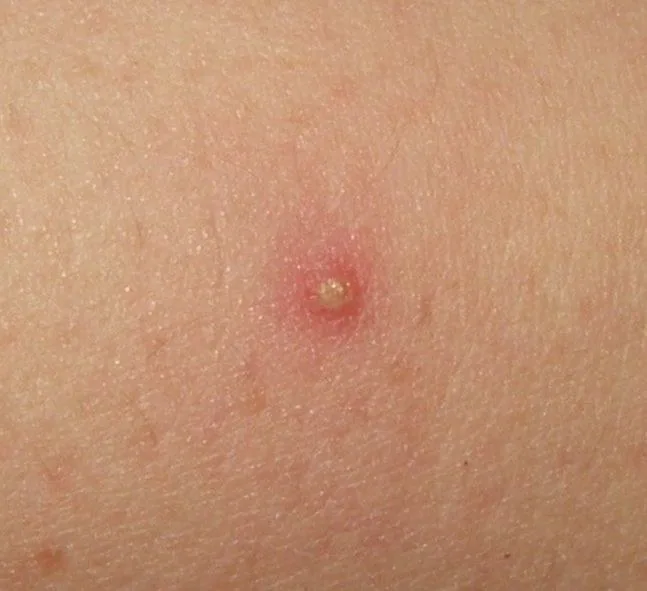
Definition
Mycotic Folliculitides
- Tinea barbae / capitis (dermatophytes) in beard/scalp folliculitis.
Folliculitis Spectrum with Keratinization Component
- Follicular Ichthyosis (ichthyosis follicularis, e.g. in the rare IFAP syndrome with atrichia and photophobia).
- Folliculitis decalvans: chronic-purulent, scarring alopecia of the scalp.
- Kyrle disease (perforating dermatosis): hyperkeratotic plugs with transepidermal elimination of keratin; associated with diabetes mellitus and chronic kidney disease.
- Folliculitis ulerythematosa reticulata (genodermatosis): atrophic scarring folliculitis in the cheek area.
- Ulerythema ophryogenes: erythema + keratotic follicular papules, later atrophy and hair loss of the lateral eyebrows — DD Hertoghe's sign.
- Keratosis pilaris (chicken skin) extensor aspects of upper arms — very common, harmless, atopy-associated.
- Lichen spinulosus (Keratosis spinulosa): symmetrical follicular hyperkeratosis with spine formation.
- Pityriasis rubra pilaris.
- Perniosis follicularis (chilblain-like folliculitis after cold exposure).
External Irritants
- Tar and Oil Acne (Acne venenata): relevant for occupational dermatoses — mineral oils, pitch, tar → comedogenic and follicular pustules.
- Shave Folliculitis: caused by shaving (especially lower legs in women) — mechanically induced folliculitis with pustulation along the hair shafts.
- "Hot-Tub Folliculitis" (Pseudomonas) — see above.
- Friction Folliculitis due to tight clothing, helmets, backpacks.
Differential diagnoses
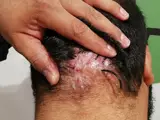 Folliculitis decalvans
 Acne vulgaris
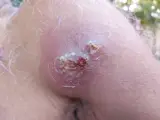 Furuncle and carbuncle
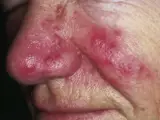 Rosacea
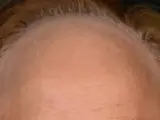 Frontal fibrosing alopecia
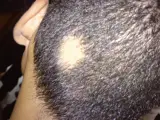 Alopecia areata
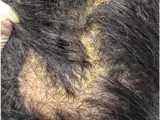 Lichen planopilaris
- Malassezia (Pityrosporum) folliculitis
Image credits for the thumbnails
- Folliculitis decalvans: Mohammad2018, “Foliculitis declavane new photo to avoid wrong diagnosis”, CC BY-SA 4.0, via Wikimedia Commons · CC BY-SA 4.0 · Source
- Acne vulgaris: Sedef94, “Kürəkdə düyünlü və kistik sızanaqlar (Acne Vulgaris) 08”, CC BY-SA 4.0, via Wikimedia Commons · CC BY-SA 4.0 · Source
- Furuncle and carbuncle: Medicalpal, “Carbuncle”, CC BY-SA 4.0, via Wikimedia Commons · CC BY-SA 4.0 · Source
- Rosacea: Michael Sand, Daniel Sand, Christina Thrandorf, Volker Paech, Peter Altmeyer, Falk G Bechara, “Rosacea”, CC BY 2.5, via Wikimedia Commons, cropped · CC BY 2.5 · Source
- Frontal fibrosing alopecia: Tziotzios, C., Petridis, C., Dand, N. et al., CC BY 4.0, via Wikimedia Commons, cropped · CC BY 4.0 · Source
- Alopecia areata: Abbassyma at English Wikipedia, “Allopecia areata”, Public Domain, via Wikimedia Commons · Public domain · Source
- Lichen planopilaris: Shahbar ST, Maaddawi HA, Aljefri YE et al. (JAAD Case Rep 2026), CC BY 4.0, via PubMed Central (PMC12996700) · CC BY 4.0 · Source
Treatment principles
- Superficial bacterial folliculitis often resolves spontaneously or with topical antiseptics or antibiotics; extensive or deep forms are treated with systemic antibiotics.
- When the cause is not bacterial, treatment is directed at the pathogen, for example antifungal therapy in Pityrosporum folliculitis.
- Predisposing factors such as shaving, occlusion and friction are avoided; in frequent recurrences, decolonisation of Staphylococcus aureus may be considered.
Specific treatment regimens with drugs and doses are covered in the DermaFuchs app.
Keep learning in the app
Cross-references
Mentioned in
More diseases of the skin appendages
Keep learning: test yourself
One question from the DermaFuchs app on Folliculitis – tap an answer.
Question 1 of 1
What characteristic lesions are arranged annularly on the face and trunk in the classic type of eosinophilic pustular folliculitis (Ofuji disease)?
Answer
Correct: sterile follicular pustules. Eosinophilic pustular folliculitis classically presents with sterile follicular pustules arranged in annular plaques.
More questions like these – with explanations and spaced repetition – in the app.
Note: This page is intended for medical education and does not replace diagnosis or treatment decisions in individual cases.