Angioedema
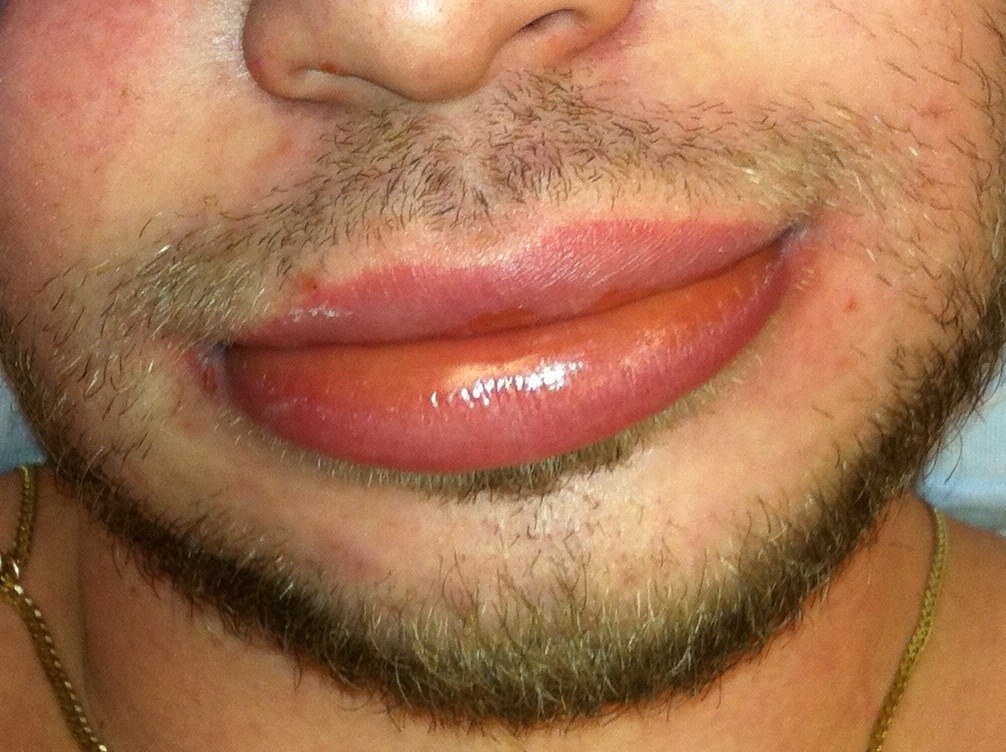
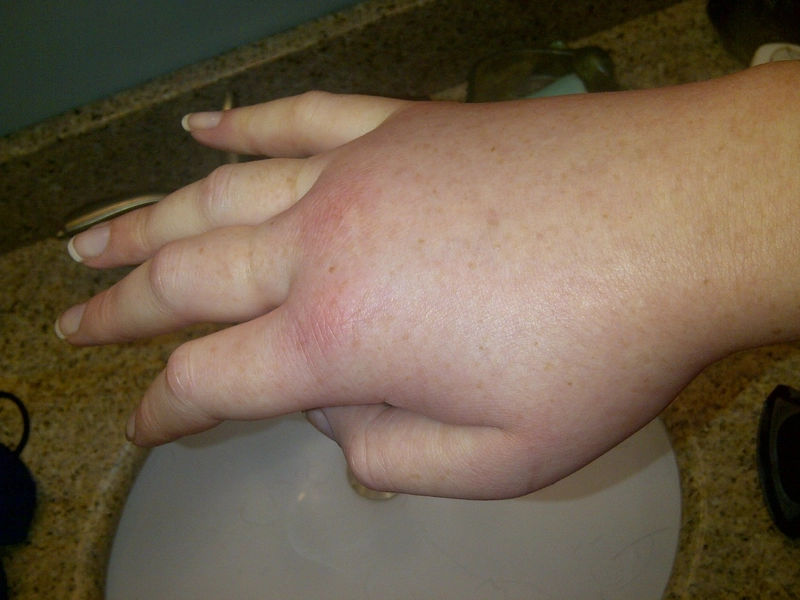
Differentiation from Urticaria
Typical for angioedema is the absence of wheals. Furthermore, they often appear early at first manifestation and, especially in bradykinin-mediated forms, do not respond to antihistamines or corticosteroids.
Allergic (histamine-mediated) vs. hereditary angioedema
The distinction can be made at the bedside: histamine-mediated angioedema develops within minutes to two hours and usually resolves within 24–48 h, whereas hereditary angioedema swells slowly over hours and lasts 2–5 days.
| Criterion | Histamine-mediated (allergic) | Hereditary angioedema (HAE) |
|---|---|---|
| Time course | onset within minutes to 2 h, resolution usually < 24–48 h | slow build-up over hours, duration 2–5 days |
| Wheals / itch | frequently accompanying urticaria, itchy | no wheals, no itch — rather tightness and pain |
| Prodrome | none | tingling, tightness, erythema marginatum |
| Sites | lips, eyelids, tongue, larynx | face, limbs, genitals, larynx and the bowel wall |
| Abdomen | rarely involved | colicky abdominal pain with nausea, vomiting, diarrhoea — mistaken for an "acute abdomen", not rarely with an unnecessary laparotomy |
| Triggers | allergen, food, NSAIDs | trauma and pressure (e.g. dental treatment), infection, stress, oestrogens, ACE inhibitors |
| Family history | negative | positive, autosomal dominant (about a quarter are new mutations) |
| First manifestation | any age | usually childhood/adolescence, increasing at puberty |
| Antihistamines, steroids, adrenaline | effective | ineffective — the decisive clue |
Exam mnemonic: slow swelling over hours + abdominal colic + positive family history + no response to antihistamines = HAE until proven otherwise.
Acquired Angioedema
Histamine-mediated (Type I reaction): Acute onset, duration usually hours to a few days, rarely glottic involvement. Therapy with antihistamines and, if necessary, corticosteroids.
Bradykinin-mediated (drug-induced): Typically triggered by ACE inhibitors due to reduced breakdown of bradykinin. Therapy: Discontinuation of the trigger, in emergencies Icatibant or C1-inhibitor.
Bradykinin-mediated (acquired with C1-inhibitor deficiency): Often caused by autoantibodies against C1-inhibitor.
Further forms:
- vibratory/traumatic
- pseudoallergic (e.g., ASA/NSAIDs with leukotriene shift)
- idiopathic
Hereditary Angioedema (HAE)
Classic forms are based on a C1-esterase inhibitor deficiency or functional defect.
Typical are recurrent edemas, often with glottic involvement, but without urticaria.
There are also forms without C1-inhibitor deficiency (e.g., Factor XII-associated), which require differentiated therapeutic approaches.
Prodromes — erythema marginatum
Most HAE attacks are preceded by prodromes hours in advance: tingling or tightness in the affected area, fatigue, irritability — and in up to half of patients an erythema marginatum: a non-itchy, serpiginous to garland-shaped erythema with a paler centre on the trunk and proximal limbs.
- Why this matters in the exam: erythema marginatum is regularly mistaken for urticaria — with the consequence that antihistamines and steroids are given, which do not work in HAE, and the diagnosis is delayed by years. It differs by the absence of itch, the absence of elevation (no weal) and by appearing before the swelling.
- Do not confuse: the identically named erythema marginatum rheumaticum of rheumatic fever is a separate entity unrelated to HAE.
- Practical use: prodromes are the signal to start on-demand therapy early — the earlier icatibant or C1-INH concentrate is given, the shorter and milder the attack.
Diagnostics
Central diagnostics include the determination of C4 complement as well as quantity and function of C1-inhibitor.
The C1-inhibitor regulates, among other things, the kallikrein-kinin system and prevents excessive bradykinin formation.
Differential diagnoses
Practise Angioedema in the app
Flashcards with spaced repetition, exam questions and spot-the-diagnosis on this topic – in DermaFuchs, free of charge.
In the DermaFuchs app: 1 flashcards · 4 clinical images
Open in browser Download on the App StoreSources (selection)
More allergies and eczemas
Note: This page is intended for medical education and does not replace diagnosis or treatment decisions in individual cases. Treatment and follow-up content is available in the app.