Dyshidrotic eczema (pompholyx)
- Synonyms
- Pompholyx, dyshidrotisches Ekzem, Dyshidrose, Bläschenekzem der Hände, Cheiropompholyx, dyshidrotic eczema, blisters on hands, dyshidrosis
- Specialty
- Dermatology · Allergies
- Images
- Clinical 4
- In the app
- 2 flashcards
- Last updated
- 10/2026 · Dr. Pascal Bafteh
Contents
Images (4)
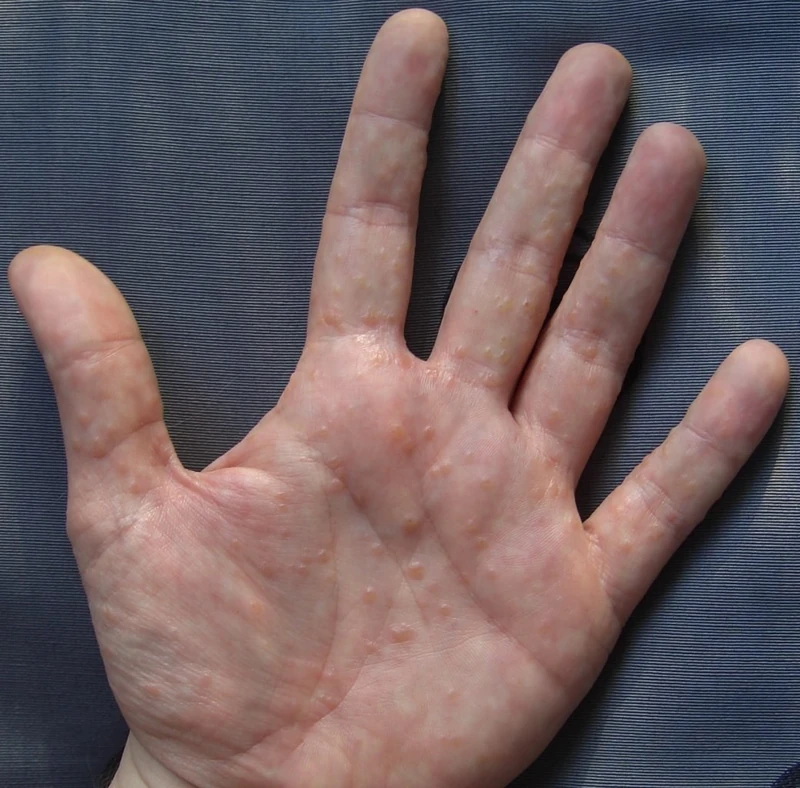
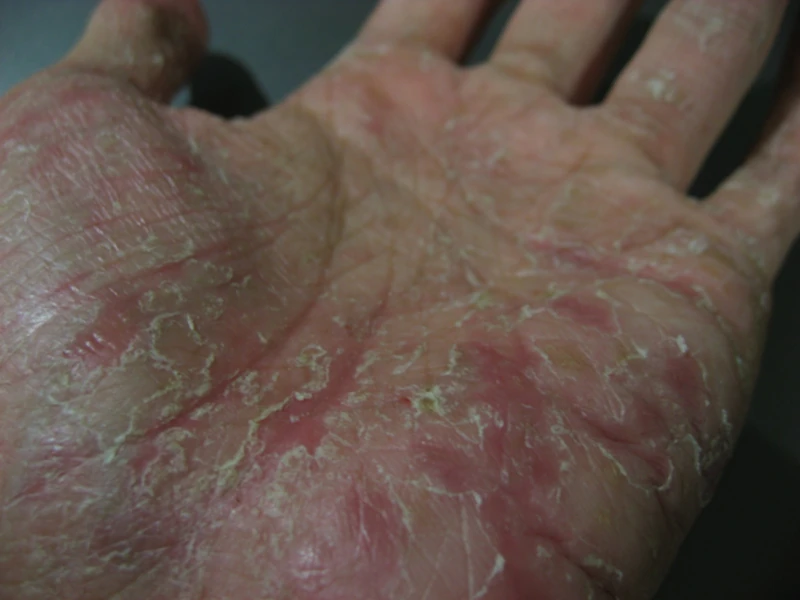
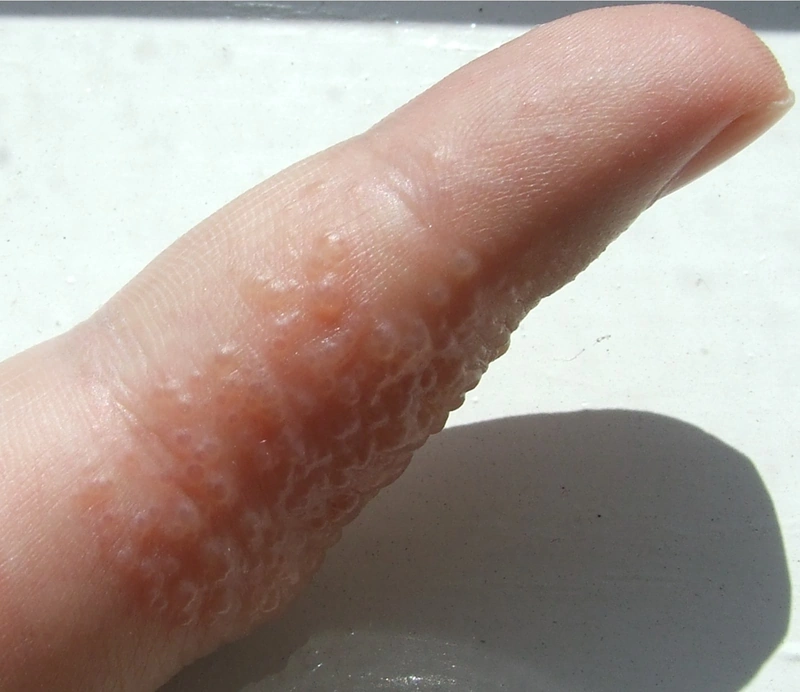
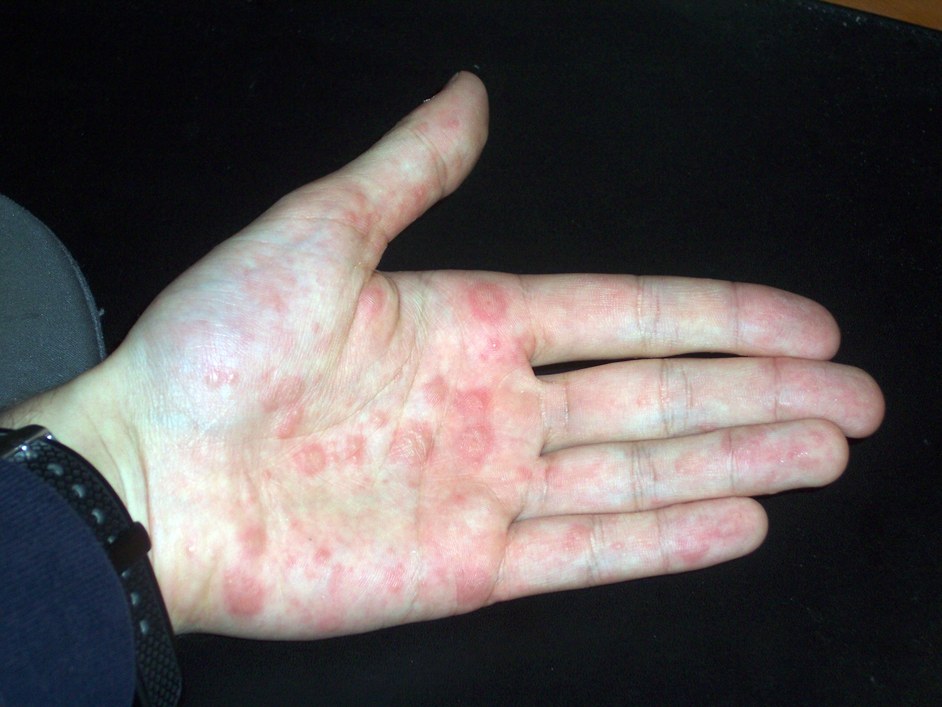
Definition
Dyshidrotic eczema (pompholyx) is a form of eczema with deep-seated, itchy vesicles on the palms, sides of the fingers and soles. Despite its name it is not a disorder of the sweat glands; the deep-seated vesicles look tense and like sago grains.
Aetiopathogenesis
The cause is unknown; the dyshidrotic pattern is associated with various factors: atopic predisposition (evidence mixed), allergic contact dermatitis (e.g. nickel, chromium, cobalt), irritant factors, hyperhidrosis, seasonal variation, UVA exposure, smoking and id reactions to tinea pedis (dermatophytid).
Clinical features
- Recurrent crops of intensely itchy, 1–2 mm, clear vesicles that may coalesce into larger blisters.
- Usually resolve after 2–3 weeks with peeling.
- Chronic recurrent course; possible complications are secondary bacterial infection and paronychia and nail dystrophy when the nail fold region is involved.
Diagnosis
- Clinical diagnosis; patch test if contact allergy is suspected.
- Microscopy and fungal culture of hands and feet (tinea, dermatophytid).
- Distinction from palmoplantar pustulosis, bullous tinea, scabies and dyshidrosiform bullous pemphigoid.
Differential diagnoses
 Contact dermatitis (contact eczema)
 Atopic dermatitis (atopic eczema)
 Tinea pedis
 Palmoplantar psoriasis
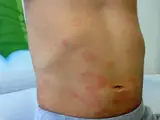 Urticaria
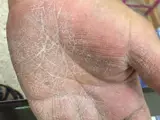 Tinea manuum
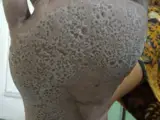 Pitted keratolysis
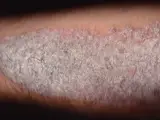 Psoriasis vulgaris (plaque psoriasis)
Image credits for the thumbnails
- Contact dermatitis (contact eczema): Dr.khatmando, “Severe contact dermatitis buprenorphine transdermal patch”, CC BY-SA 4.0, via Wikimedia Commons · CC BY-SA 4.0 · Source
- Atopic dermatitis (atopic eczema): Eisfelder, “Atopic dermatitis child”, CC BY-SA 3.0, via Wikimedia Commons · CC BY-SA 3.0 · Source
- Tinea pedis: Tang21237, “Interdigital tinea between the 3rd and 4th interdigital spaces”, CC BY-SA 4.0, via Wikimedia Commons · CC BY-SA 4.0 · Source
- Palmoplantar psoriasis: MCvanVeen, “Psoriasis July 2016”, CC BY-SA 4.0, via Wikimedia Commons · CC BY-SA 4.0 · Source
- Urticaria: Gzzz, “Urticaria child”, CC BY-SA 4.0, via Wikimedia Commons · CC BY-SA 4.0 · Source
- Tinea manuum: Mohammad2018, “Tinea manum”, CC BY-SA 4.0, via Wikimedia Commons · CC BY-SA 4.0 · Source
- Pitted keratolysis: Evan Saap, CC BY-SA 4.0 · CC BY-SA 4.0 · Source
- Psoriasis vulgaris (plaque psoriasis): MediaJet, “An Arm Covered With Plaque Type Psoriasis”, CC BY-SA 3.0, via Wikimedia Commons · CC BY-SA 3.0 · Source
Treatment principles
- Identifying and avoiding triggers, such as contact allergens, irritants or a fungal infection elsewhere, and consistent skin protection are important.
- Acute flares are treated with high-potency topical glucocorticoids; topical calcineurin inhibitors can be used as steroid-sparing agents.
- In chronic relapsing disease, phototherapy of the hands and feet, topical JAK inhibitors and, as in severe chronic hand eczema, systemic treatments such as retinoids are options; if the cause is occupational, the dermatologist's procedure of the German statutory accident insurance (Hautarztverfahren) is initiated early.
Guideline: AWMF guideline register (no. 013-053)
Specific treatment regimens with drugs and doses are covered in the DermaFuchs app.
Keep learning in the app
References (selection)
Cross-references
Mentioned in
- Acrodermatitis enteropathica (zinc deficiency)
- Atopic dermatitis (atopic eczema)
- Dermatitis herpetiformis (Duhring disease)
- Hand eczema
- Lichen planus
- Grover's disease (transient acantholytic dermatosis)
- Pitted keratolysis
- Pityriasis lichenoides chronica (PLC)
- PLEVA (Pityriasis lichenoides et varioliformis acuta)
- Palmoplantar psoriasis
- Reactive arthritis (Reiter syndrome)
- Scabies
Keep learning
Keep learning with flashcards, exam questions and spot diagnoses in the DermaFuchs app – free, in your browser or as an app.
Related pages: Contact dermatitis (contact eczema) · Atopic dermatitis (atopic eczema) · Tinea pedis
Note: This page is intended for medical education and does not replace diagnosis or treatment decisions in individual cases.