Pityriasis rosea
Exam relevance: in 9 of more than 50 board exam reports · rank 12
- Synonyms
- herald patch
- Specialty
- Dermatology · Inflammatory skin diseases
- Images
- Clinical 10
- In the app
- 6 flashcards
- Last updated
- 10/2026 · Dr. Pascal Bafteh
Contents
Images (10)
Definition
Definition & Epidemiology
- Pityriasis rosea (PR, Gibert disease) = acute, self-limiting exanthematous dermatosis probably triggered by HHV-6 / HHV-7 reactivation (Drago 2005).
- Epidemiology: Peak incidence 10–35 years, F: M ≈ 1.5: 1 with seasonal clustering in spring and autumn.
- Incidence: approx. 170 / 100,000 / year.
Aetiopathogenesis
Pathogenesis
- HHV-6/-7 reactivation with viral DNA detectable in plasma and skin lesions; systemic viral replication with cutaneous manifestation.
Clinical features
Clinical Presentation
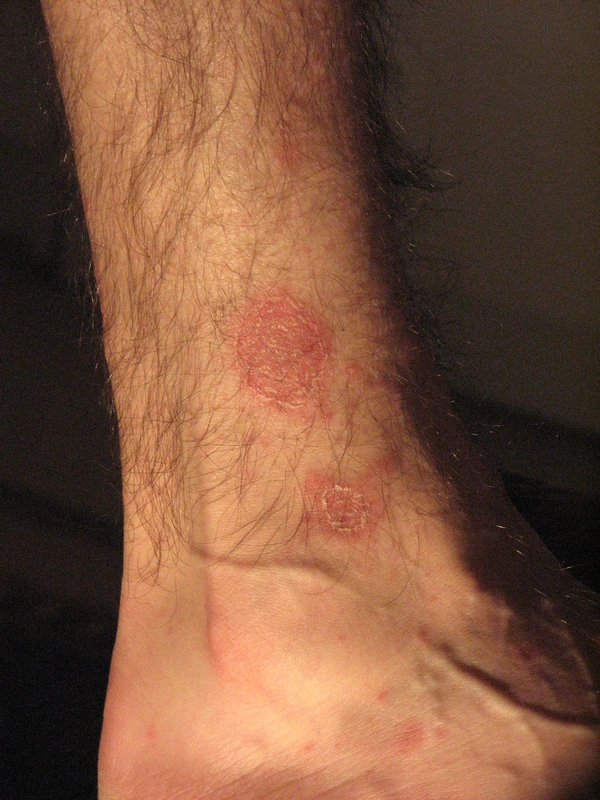
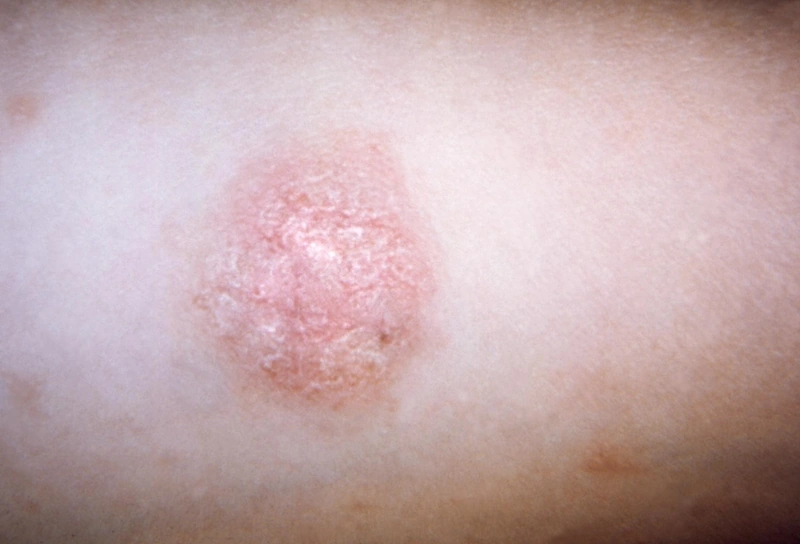
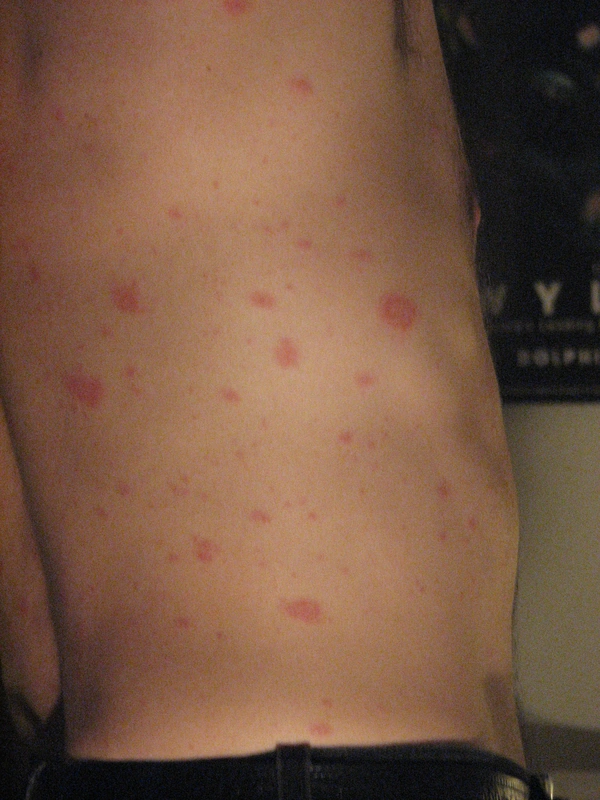
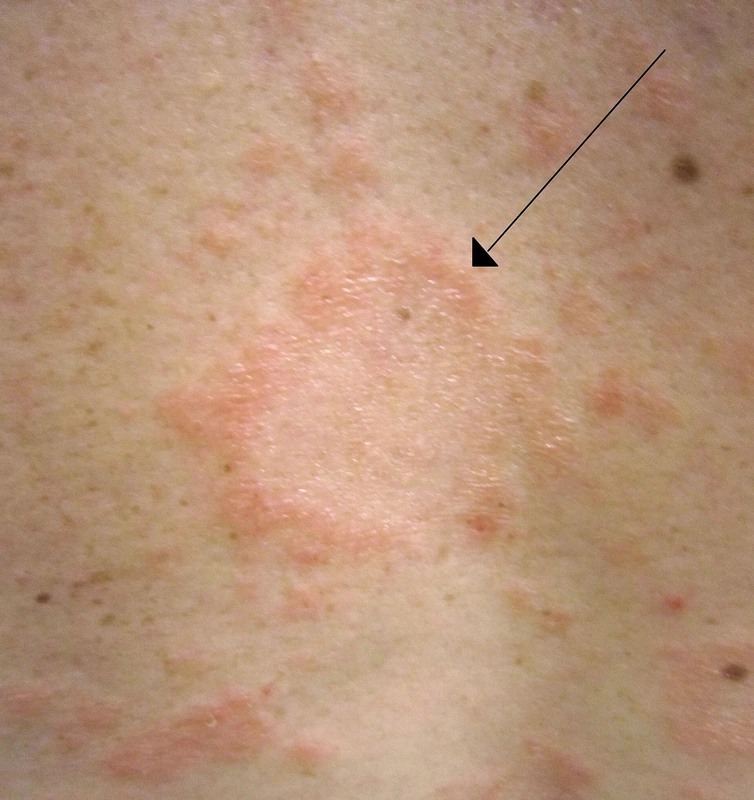
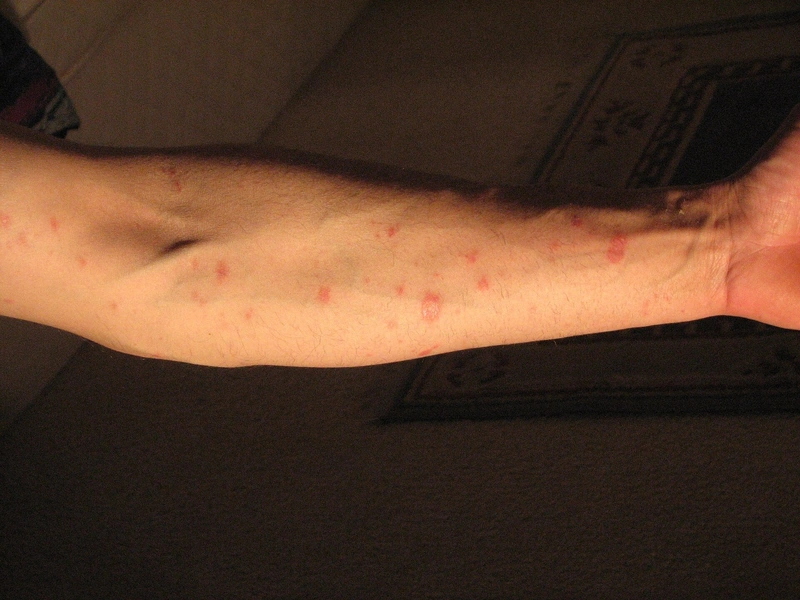
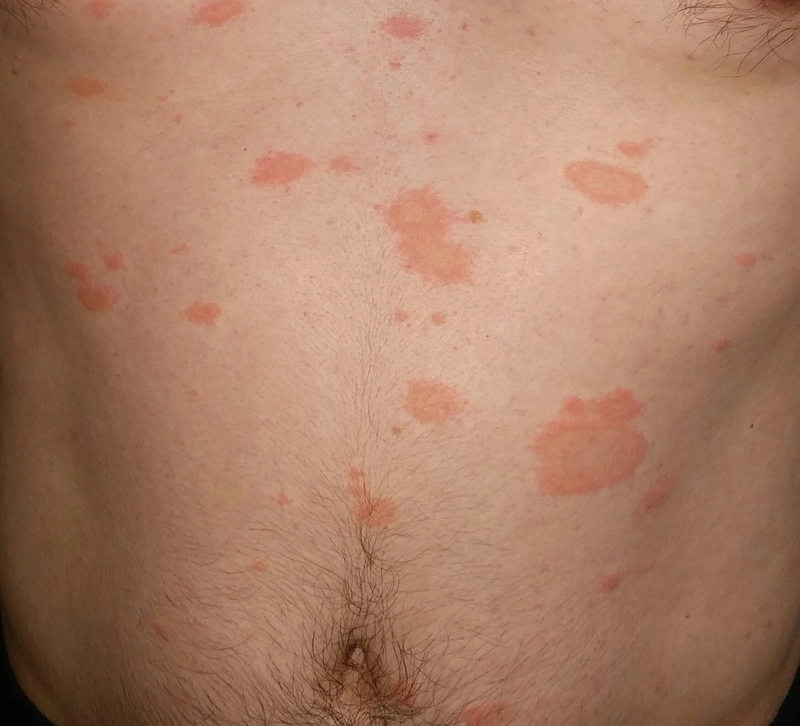
- Herald patch (Tâche mère): oval erythematous-scaly plaque 2–5 cm with collarette scaling on trunk / proximal extremities, 1–2 weeks before exanthem.
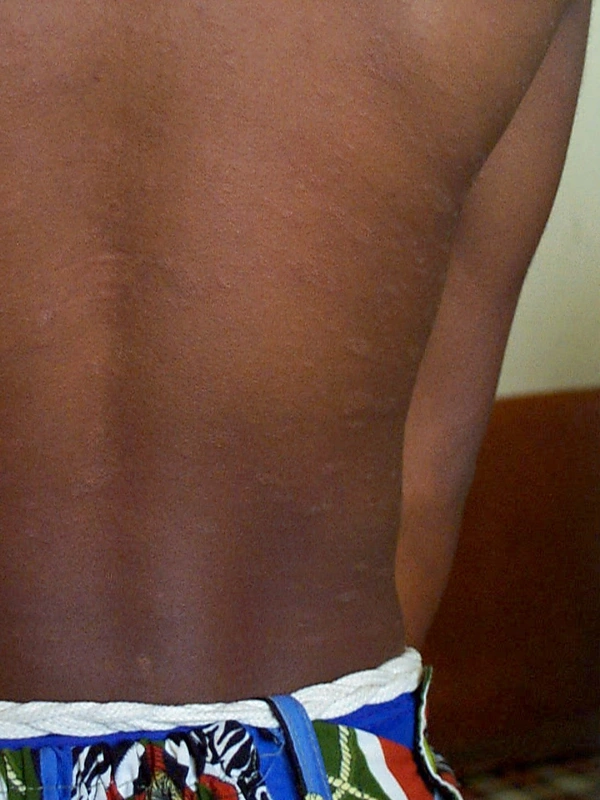
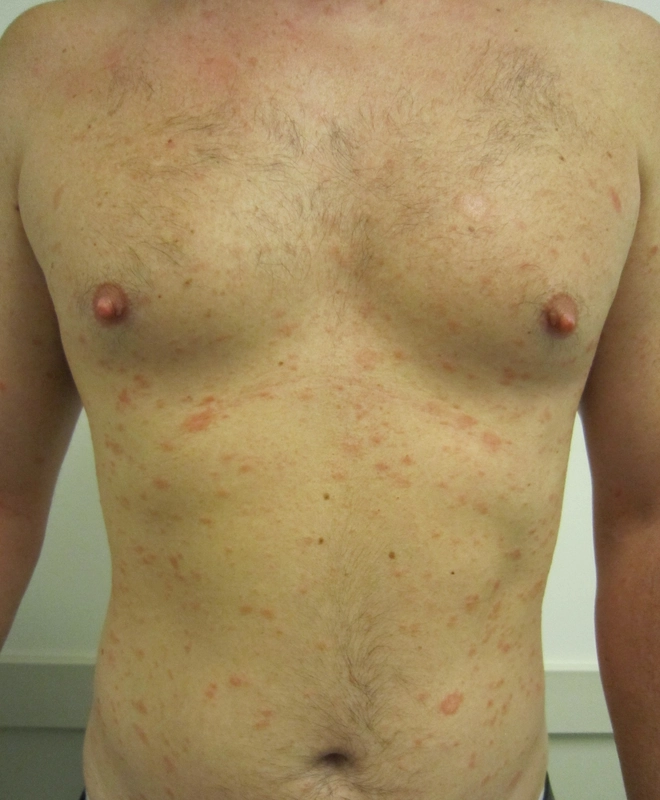
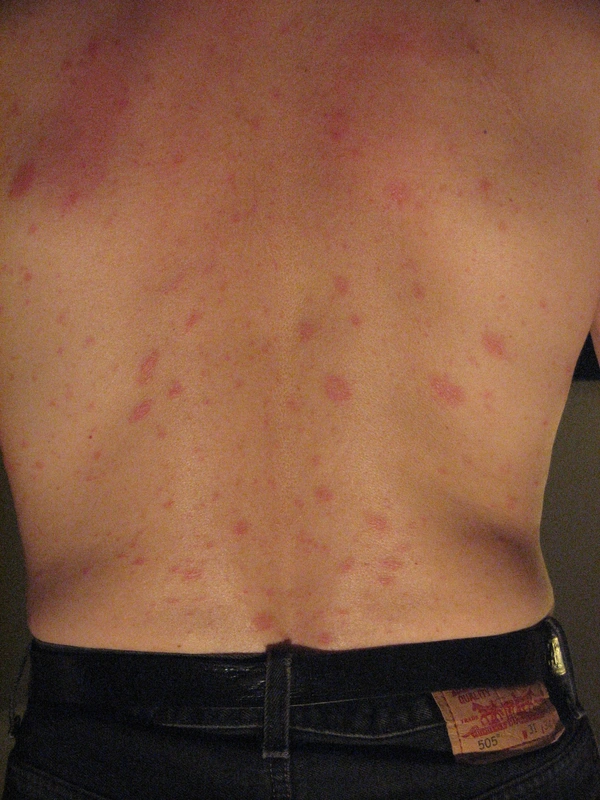
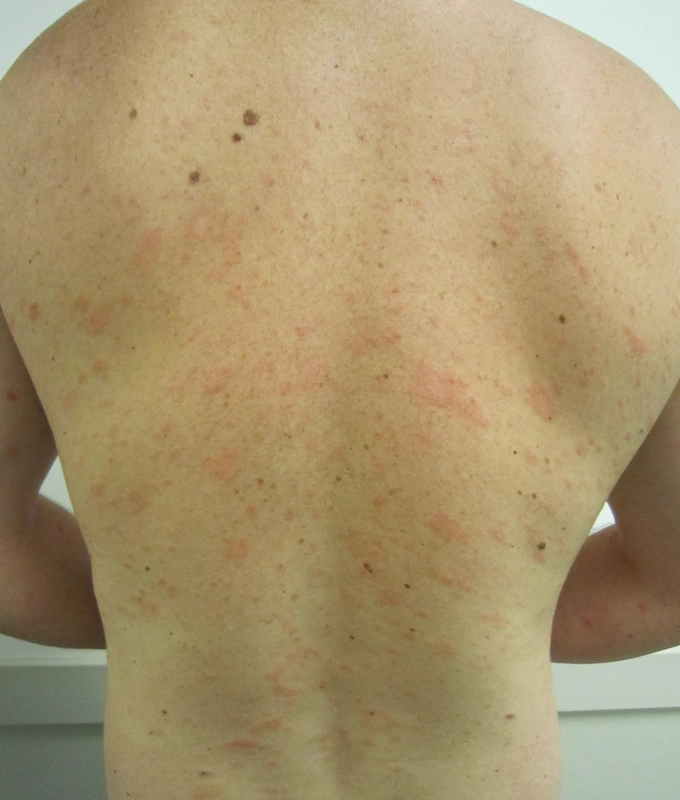
- Secondary efflorescences: smaller oval plaques along Langer's cleavage lines → classic "Christmas tree pattern" on back.
- Special locations: Atypical PR variants include inverse (axilla / groin) + papular (children) + vesicular + purpuric.
- Symptoms: mildly pruritic (in 50 %), occasionally prodromal symptoms (fatigue, cephalgia, pharyngitis).
- Course: Spontaneous healing in 6–8 weeks with rare recurrences.
Diagnosis
Diagnostics
- Clinical visual diagnosis — herald patch + Christmas tree pattern is pathognomonic.
- Laboratory / tests: Obligatory exclusion in sexually active adults is TPHA / RPR (secondary syphilis) — secondary syphilis can be very PR-like, but with palmoplantar involvement + lymphadenopathy!
- KOH preparation to exclude tinea corporis with isolated plaques.
- Skin biopsy only in atypical courses → superficial perivascular lymphocytic infiltrate, spongiosis, parakeratotic scale.
Differential diagnoses
 Atopic dermatitis (atopic eczema)
 Secondary syphilis (lues II)
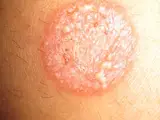 Tinea corporis
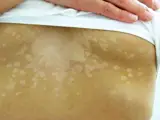 Pityriasis versicolor (tinea versicolor)
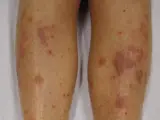 Lichen planus
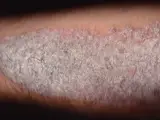 Psoriasis vulgaris (plaque psoriasis)
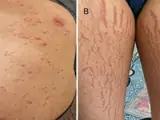 Pityriasis lichenoides chronica (PLC)
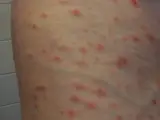 PLEVA (Pityriasis lichenoides et varioliformis acuta)
Image credits for the thumbnails
- Atopic dermatitis (atopic eczema): Eisfelder, “Atopic dermatitis child”, CC BY-SA 3.0, via Wikimedia Commons · CC BY-SA 3.0 · Source
- Secondary syphilis (lues II): Ehlers S, Sergent S, Ashurst J (Clin Pract Cases Emerg Med 2020), CC BY 4.0, via PubMed Central (PMC7676796) · CC BY 4.0 · Source
- Tinea corporis: Corina G., “Tinea corporis”, Public Domain, via Wikimedia Commons · Public domain · Source
- Pityriasis versicolor (tinea versicolor): Sarahrosenau on Flickr.com, “Tinea versicolor1”, CC BY-SA 2.0, via Wikimedia Commons · CC BY-SA 2.0 · Source
- Lichen planus: James Heilman, MD, “Lichen Planus (2)”, CC BY-SA 3.0, via Wikimedia Commons · CC BY-SA 3.0 · Source
- Psoriasis vulgaris (plaque psoriasis): MediaJet, “An Arm Covered With Plaque Type Psoriasis”, CC BY-SA 3.0, via Wikimedia Commons · CC BY-SA 3.0 · Source
- Pityriasis lichenoides chronica (PLC): Ahmed HB, Aziz JMA, Salih MKB et al. (Clin Case Rep 2026), CC BY 4.0, via PubMed Central (PMC13478903) · CC BY 4.0 · Source
- PLEVA (Pityriasis lichenoides et varioliformis acuta): Florian Jesse, “PLEVA”, Public domain, via Wikimedia Commons · Public domain · Source
Treatment principles
- Pityriasis rosea is self-limiting; explanation and watchful waiting are the most important measures, once syphilis has been excluded serologically in sexually active adults.
- Pruritus responds to emollients and short courses of topical glucocorticoids, and extensive disease to UVB phototherapy.
- Systemic antivirals are considered only in severe cases.
Specific treatment regimens with drugs and doses are covered in the DermaFuchs app.
Keep learning in the app
References (selection)
Cross-references
Mentioned in
- Drug eruption (maculopapular)
- Dermatitis herpetiformis (Duhring disease)
- Erythema annulare centrifugum (EAC)
- Lichenoid drug eruption
- Mastocytosis (urticaria pigmentosa)
- Grover's disease (transient acantholytic dermatosis)
- Pityriasis lichenoides chronica (PLC)
- PLEVA (Pityriasis lichenoides et varioliformis acuta)
- Guttate psoriasis
- Psoriasis vulgaris (plaque psoriasis)
- Seborrhoeic dermatitis
- Secondary syphilis (lues II)
Keep learning: test yourself
One question from the DermaFuchs app on Pityriasis rosea – tap an answer.
Question 1 of 1
What is the typical natural course and prognosis of Pityriasis rosea?
Answer
Correct: Spontaneous healing in 6–8 weeks. The disease is self-limiting and typically resolves spontaneously within 6 to 8 weeks, with recurrences being rare.
More questions like these – with explanations and spaced repetition – in the app.
Note: This page is intended for medical education and does not replace diagnosis or treatment decisions in individual cases.