Actinic reticuloid
- Synonyms
- chronische aktinische Dermatitis, chronische Photosensitivitätsdermatitis, chronic actinic dermatitis, chronic photosensitivity dermatitis
- Specialty
- Dermatology · Environmental & photodermatoses
- Images
- Clinical 2
- In the app
- 4 flashcards
- Last updated
- 10/2026 · Dr. Pascal Bafteh
Contents
Images (2)
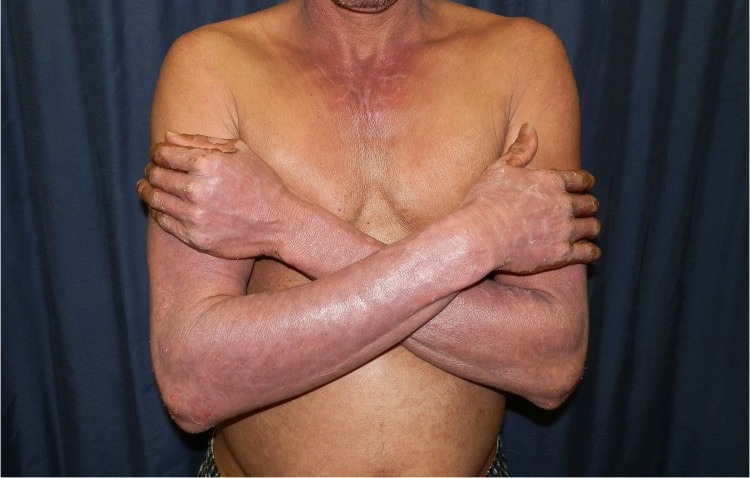
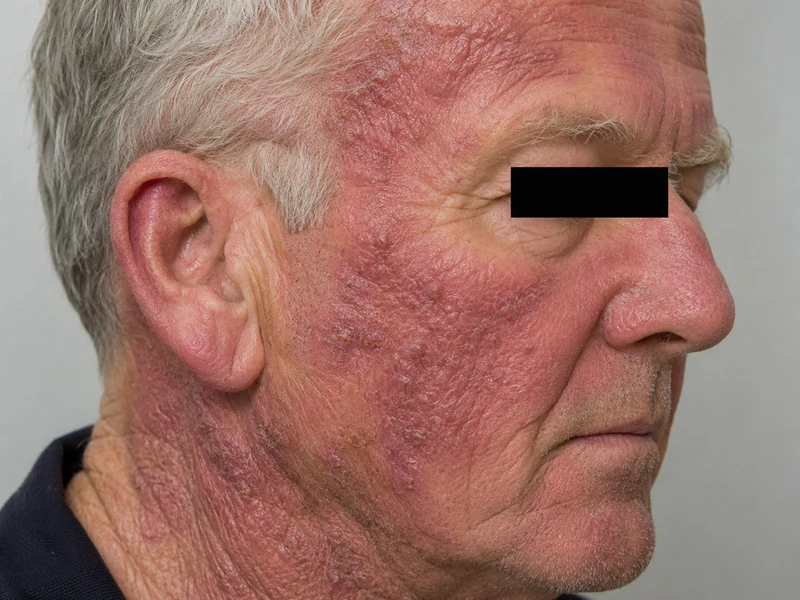 AI illustration
Definition
Actinic reticuloid is the severe variant of chronic actinic dermatitis (CAD), a rare, immune-mediated photodermatosis with abnormal sensitivity to ultraviolet (UV) light and occasionally to visible light. It is characterised by thickened nodules and lichenified plaques on light-exposed skin.
Occurrence & epidemiology
It most commonly affects middle-aged or elderly men (over 50 years) with considerable sun exposure, but it also occurs in women, younger people and all skin types. It is more frequent in people with atopic dermatitis, allergic contact dermatitis and photoallergic contact dermatitis. Up to 75% of patients have positive patch and/or photopatch test reactions, most often to UV filter chemicals, fragrances and Compositae plants (sesquiterpene lactones).
Aetiopathogenesis
The pathogenesis is not fully understood. Lesional skin shows dermal CD8-positive T cells, as in allergic contact dermatitis; a delayed (type IV) hypersensitivity reaction to an endogenous antigen that has become immunogenic through light exposure is suspected.
Clinical features
- Intensely itchy eczematous eruption, in actinic reticuloid with thickened nodules and lichenified plaques, on the face, nape, neck, upper chest and the backs of the hands and arms.
- Typical sparing of light-protected sites: upper eyelids, skin behind the ears and under the chin, nasolabial folds and skin creases; often a sharp cut-off at the collar or wrist.
- In severe cases it extends to covered skin; erythroderma is very rare.
- Even very brief sun exposure can trigger a flare within 72 hours, including on dull days, through window glass or from artificial light (especially bare fluorescent tubes); severe cases remain active all year round.
- The formerly feared transformation into lymphoma has not been confirmed.
Diagnosis
- Phototesting (monochromator) in every suspected case: erythematous or eczematous response to low levels of UV light, usually to UVB alone or to UVA and UVB, less often to UVA alone; in severe cases also to visible light.
- Patch and photopatch testing for contact and photocontact allergens.
- Lupus serology (ANA, ENA) to distinguish connective tissue disease.
- In actinic reticuloid, investigations to exclude cutaneous T-cell lymphoma, as marked lichenification can produce pseudolymphomatous plaques.
Differential diagnoses
 Actinic keratosis
 Cutis laxa (generalised elastolysis)
 Discoid lupus erythematosus (CDLE)
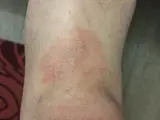 Mycosis fungoides
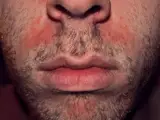 Seborrhoeic dermatitis
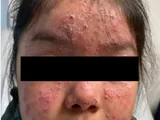 Actinic prurigo
Image credits for the thumbnails
- Actinic keratosis: Future FamDoc, “Actinic keratosis on ear”, CC BY-SA 4.0, via Wikimedia Commons · CC BY-SA 4.0 · Source
- Cutis laxa (generalised elastolysis): APSP J Case Rep, CC BY 4.0, via Wikimedia Commons · CC BY 4.0 · Source
- Discoid lupus erythematosus (CDLE): Mohammad2018, “Discoid lupus etythermayouses new image”, CC BY-SA 4.0, via Wikimedia Commons · CC BY-SA 4.0 · Source
- Mycosis fungoides: Wikindrea, “Mycosis Fungoides Before Sun and Cartamo”, CC BY-SA 4.0, via Wikimedia Commons · CC BY-SA 4.0 · Source
- Seborrhoeic dermatitis: Roymishali, “Seborrhoeic dermatitis highres”, CC BY-SA 3.0, via Wikimedia Commons · CC BY-SA 3.0 · Source
- Actinic prurigo: Barker CS, Sattele L, Strat N et al. (JAAD Case Rep 2024), CC BY 4.0, via PubMed Central (PMC10992274) – left panel (cropped) · CC BY 4.0 · Source
Treatment principles
- The foundation is strict photoprotection covering not only UVB but also UVA and, in part, visible light.
- Concomitant contact sensitisations, for example to plant or fragrance allergens, are common, and the relevant allergens are strictly avoided.
- Topical glucocorticoids and calcineurin inhibitors are used; in extensive, treatment-refractory cases, systemic immunosuppressive therapy may be considered.
Specific treatment regimens with drugs and doses are covered in the DermaFuchs app.
Keep learning in the app
References (selection)
Cross-references
Mentioned in
Keep learning: test yourself
One question from the DermaFuchs app on Actinic reticuloid – tap an answer.
Question 1 of 1
Unexplained Etiology: Actinic Reticuloid (CAD): _____ primarily in older men, histology MF-like.
Answer
Correct: chronic dermatitis. Actinic Reticuloid (CAD): chronic dermatitis primarily in older men, histology MF-like.
More questions like these – with explanations and spaced repetition – in the app.
Note: This page is intended for medical education and does not replace diagnosis or treatment decisions in individual cases.