Insect venom allergy (bee and wasp venom allergy)
Exam relevance: in 11 of more than 50 board exam reports · rank 7
- Synonyms
- Bienengiftallergie, Wespengiftallergie, Hymenopterengiftallergie, Insektenstichallergie, Anaphylaxie nach Insektenstich, bee sting allergy, wasp sting allergy, insect venom allergy, hymenoptera allergy
- Specialty
- Dermatology · Allergies
- Images
- Clinical 6
- Last updated
- 10/2026 · Dr. Pascal Bafteh
Contents
Images (6)
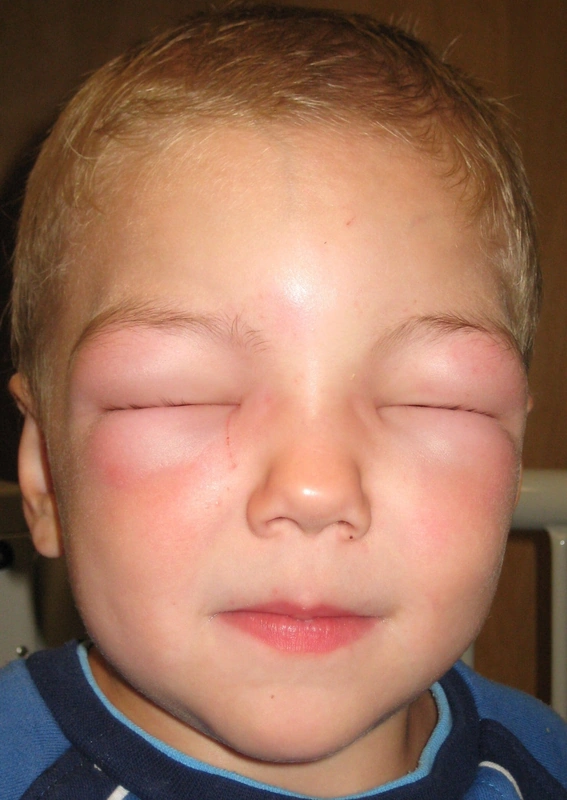
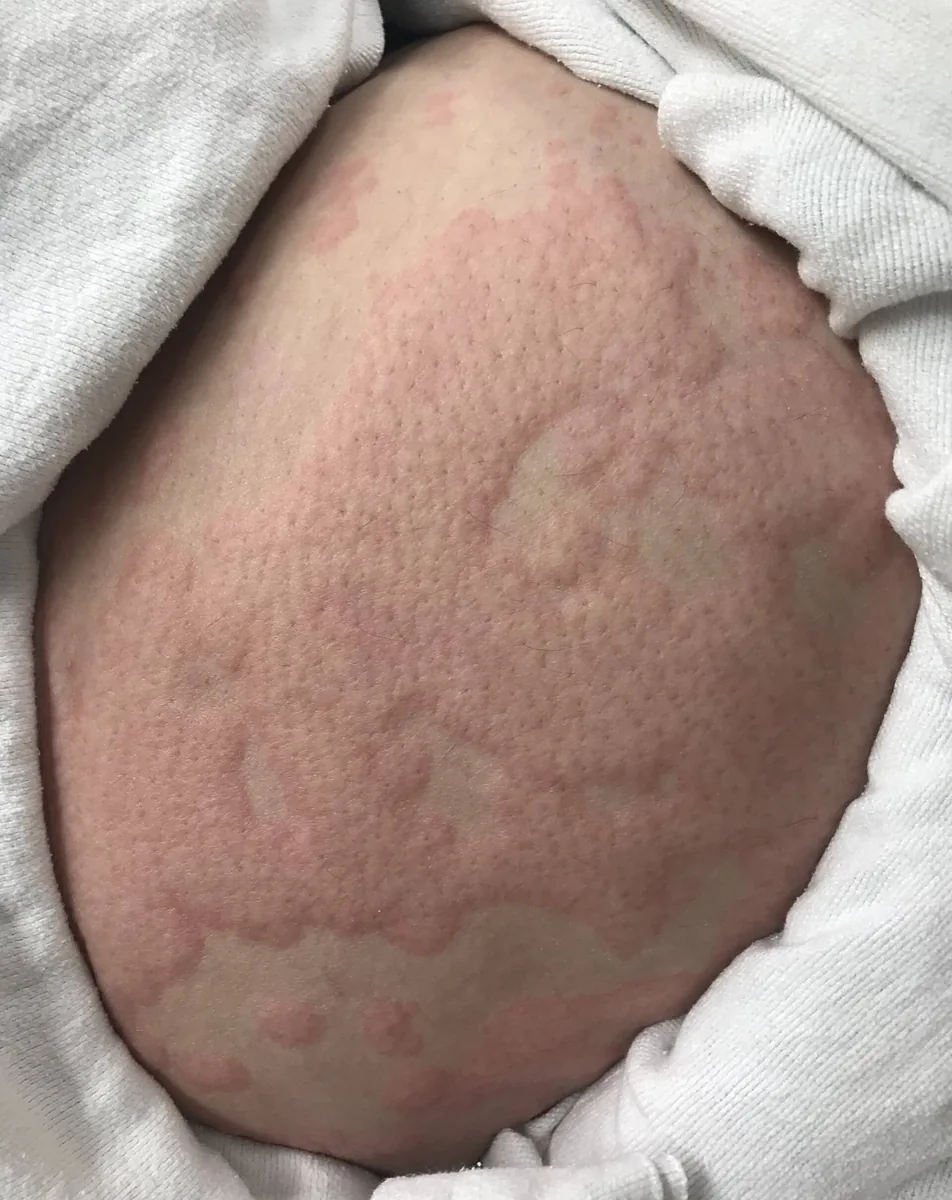
Definition
Insect venom allergy is an IgE-mediated immediate-type (type I) reaction to the venom of Hymenoptera. Bees and wasps are mainly responsible; their stings are a major cause of anaphylaxis.
Classification
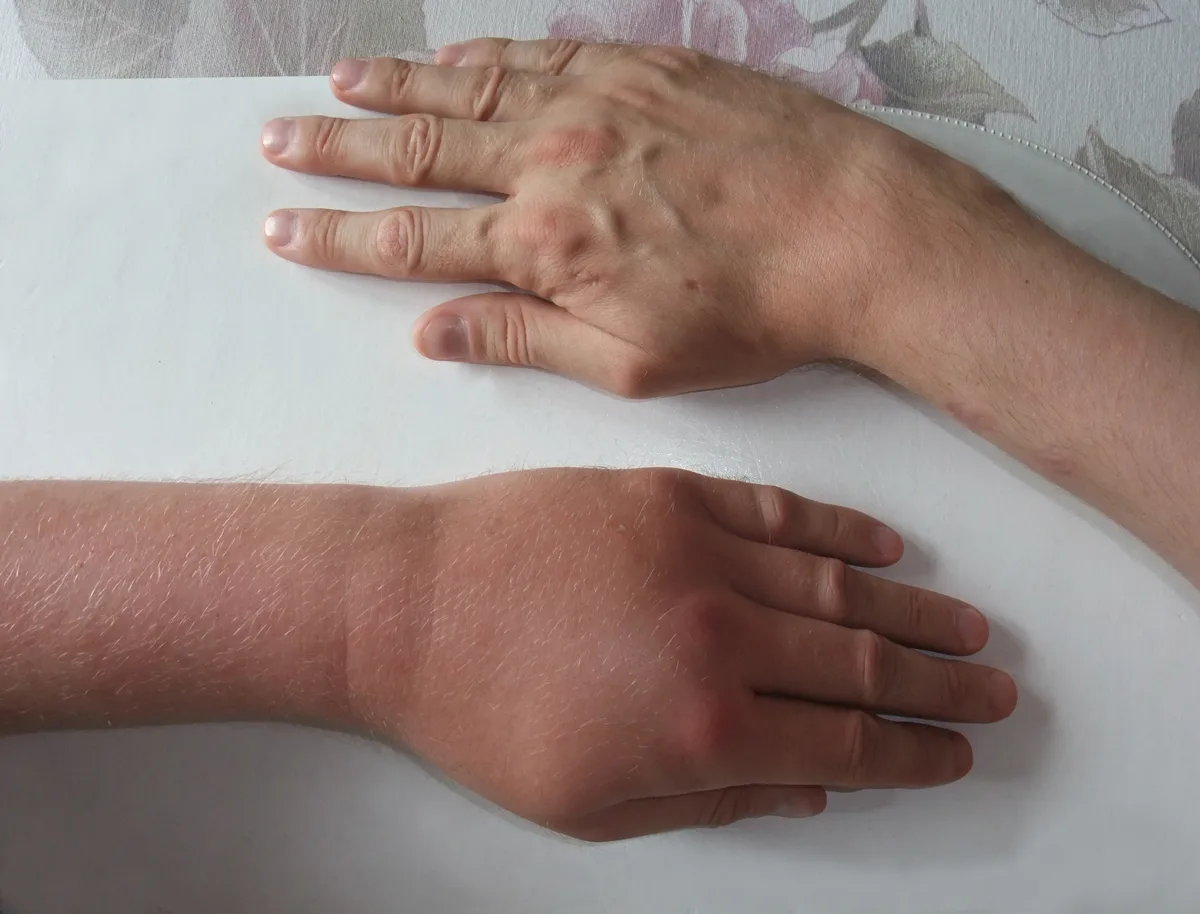
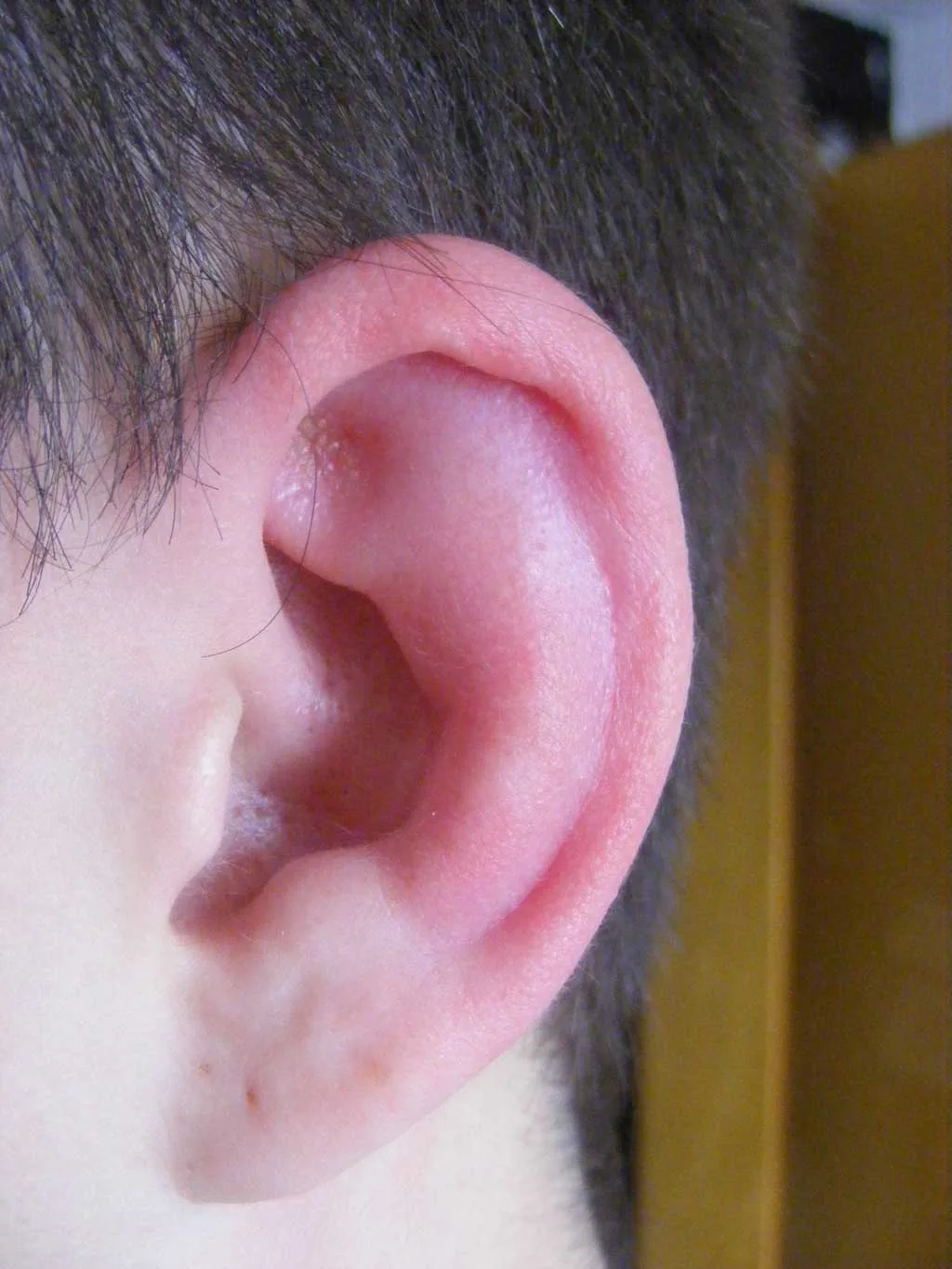
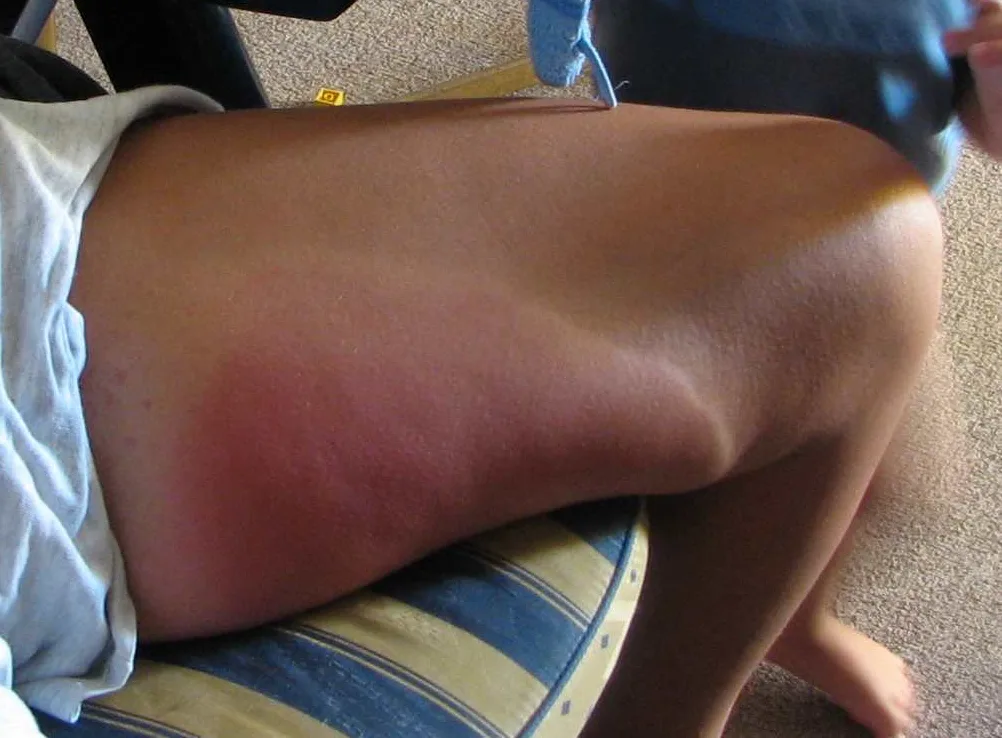
- Local reaction: pain, swelling, redness and itch; a minor local reaction resolves within 24 hours, a large local reaction (over 10 cm) may persist for up to one week.
- Allergic reaction (IgE-mediated, type I): urticaria, angio-oedema, itch, vomiting and diarrhoea up to anaphylaxis with bronchoconstriction and cardiorespiratory arrest.
- Toxic reaction: usually only after 500 or more stings.
Occurrence & epidemiology
In Europe, systemic sting reactions are reported in 0.3–8.9% of adults, more often in beekeepers and less often in children. Bee and wasp stings are a major cause of anaphylaxis, accounting for nearly half of adult cases. The severity of a reaction depends among other things on age, number of stings, previous sensitisation and comorbidities such as atopy and mastocytosis.
Clinical features
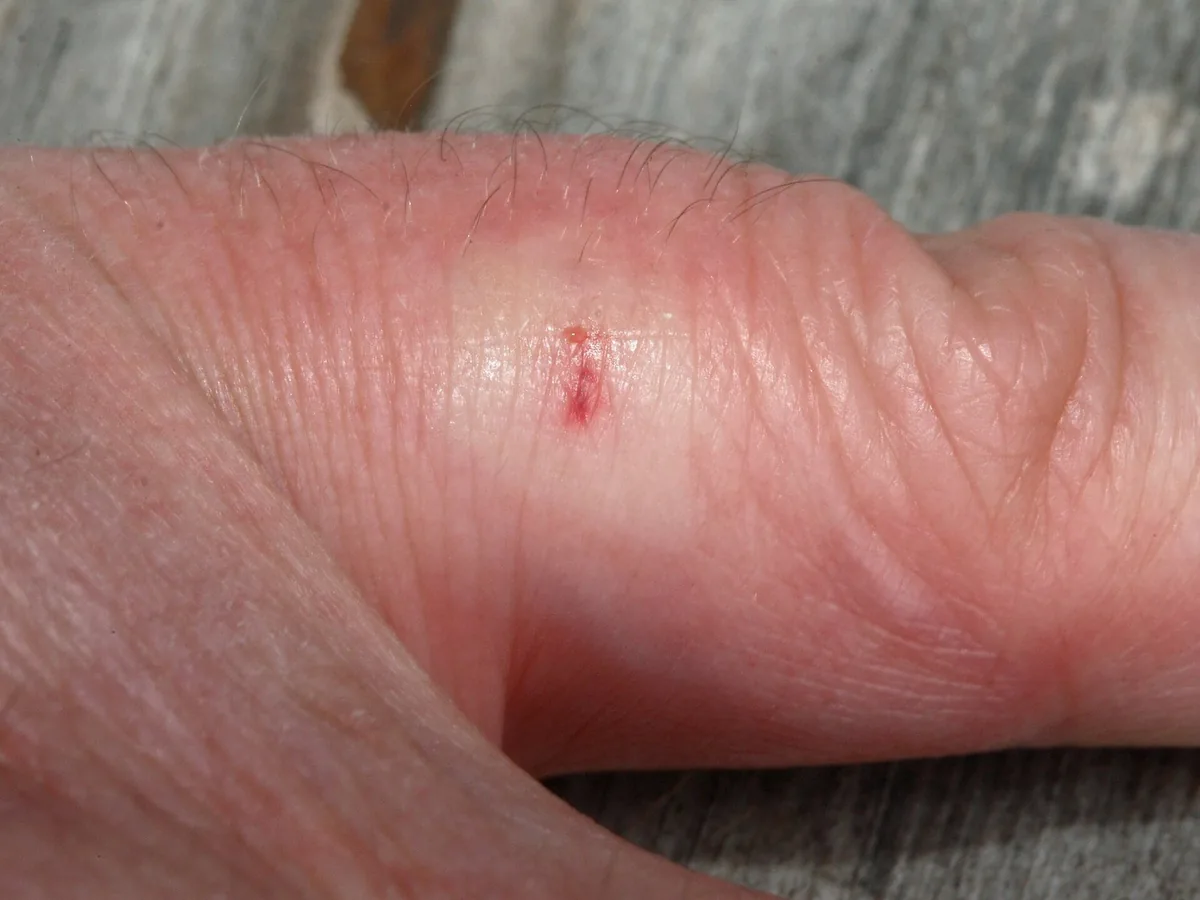
- The sting causes an immediate sharp pain, usually lasting only seconds, followed by redness and swelling; after a bee sting the stinger often remains in the skin.
- Allergic reactions typically begin about 10 minutes after the sting with urticaria, angio-oedema and itch; in anaphylaxis, dyspnoea due to bronchoconstriction, abdominal cramps and vomiting up to cardiorespiratory arrest follow.
Diagnosis
- History: insect (bee or wasp, circumstances of the sting, retained stinger), type, onset and severity of symptoms.
- Skin and blood tests in everyone with a systemic reaction, to be considered after large local reactions.
- Skin tests (prick and intradermal) with purified venom at least two weeks after the sting reaction.
- Specific IgE to the individual insect venoms; basophil activation test if the skin test is negative but specific IgE is positive.
- Baseline serum tryptase to detect a previously unrecognised mast cell disorder that predisposes to severe sting reactions.
Treatment principles
- Acute sting reactions are treated according to severity, anaphylaxis according to the emergency algorithm.
- After a systemic sting reaction, patients receive an emergency kit with an auto-injector and training in its use.
- Venom-specific immunotherapy (hyposensitisation) with the culprit venom is causal and highly effective; the indication depends on the severity of the systemic reaction and individual risk, and it is not indicated for large local reactions alone.
- An underlying mast cell disorder should be investigated.
Specific treatment regimens with drugs and doses are covered in the DermaFuchs app.
Keep learning in the app
References (selection)
Cross-references
Keep learning
Keep learning with flashcards, exam questions and spot diagnoses in the DermaFuchs app – free, in your browser or as an app.
Related pages: Contact dermatitis (contact eczema) · Mastocytosis (urticaria pigmentosa) · Nummular eczema (discoid eczema)
Note: This page is intended for medical education and does not replace diagnosis or treatment decisions in individual cases.