Prurigo nodularis
- Synonyms
- Knotige Prurigo, chronische Prurigo, Prurigo nodularis Hyde, Juckknoten, nodular prurigo, itchy nodules
- Specialty
- Dermatology · Inflammatory skin diseases
- Images
- Clinical 3 · Histology 1
- In the app
- 5 flashcards
- Last updated
- 10/2026 · Dr. Pascal Bafteh
Contents
Images (4)
 Histology
Definition
Prurigo nodularis is a chronic, intensely itchy skin disease with numerous hard, symmetrically distributed nodules that are caused and maintained by persistent scratching. It is regarded as the most severe form of prurigo; a dysregulation of cutaneous nerves (more nerve fibres in the dermis, fewer in the epidermis) maintained by the itch-scratch cycle is discussed.
Occurrence & epidemiology
It is more common in older adults and rare in children. Associations include atopy, itch-inducing drugs (e.g. antimalarials, opioids, targeted cancer drugs) and internal diseases such as cancer, diabetes mellitus, liver and chronic kidney disease, HIV infection and thyroid disorders; there is also an association with brachioradial pruritus.
Clinical features
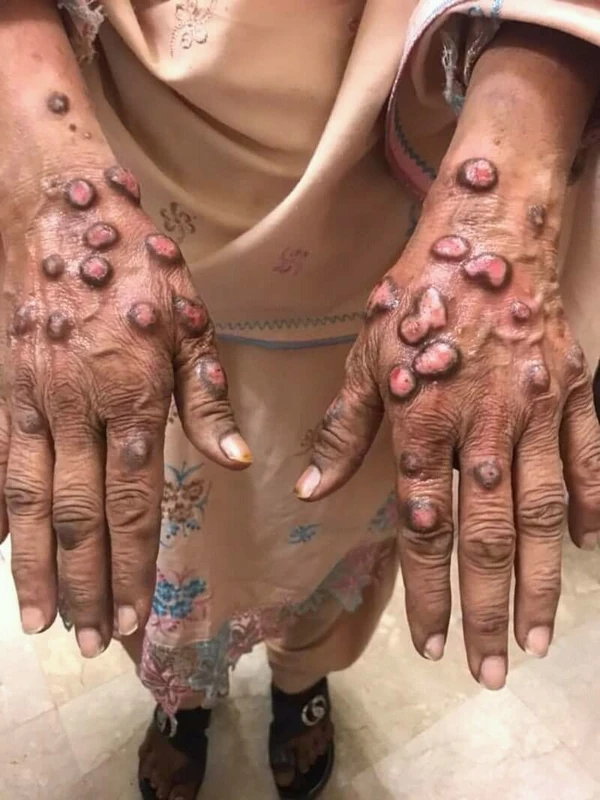
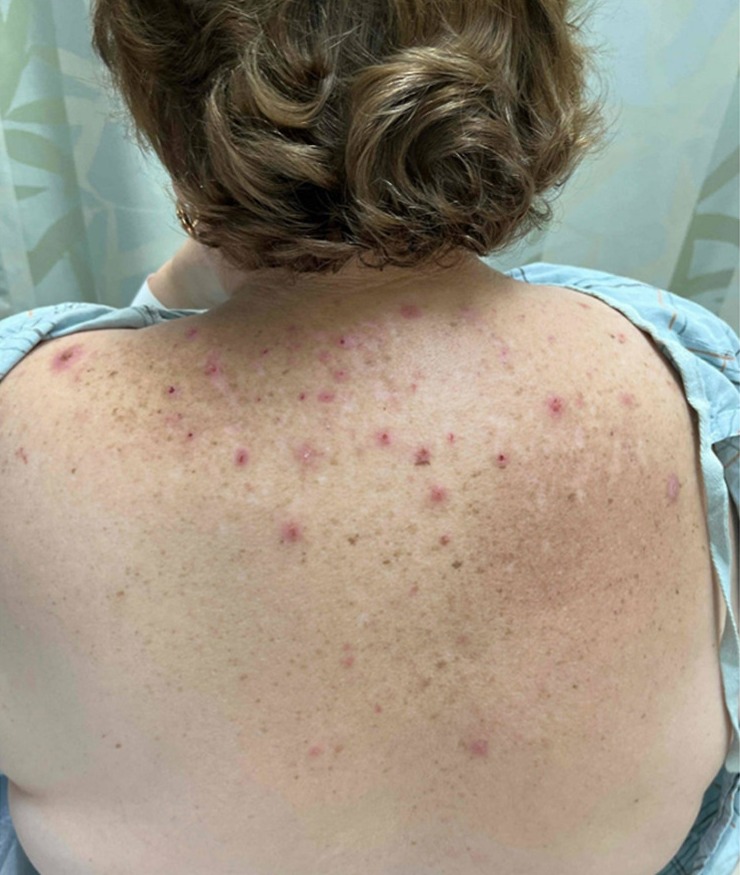
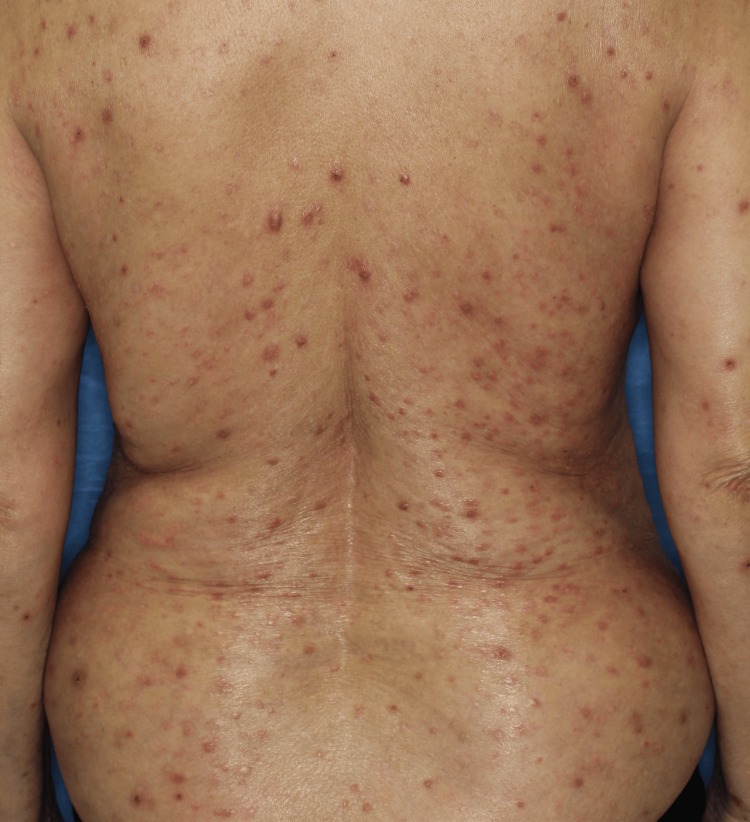
- Initially small (usually 3–8 mm), red to pink, intensely itchy papules with a hyperpigmented border; scratching produces firm, raised, sometimes warty nodules up to 3 cm, often excoriated, sometimes ulcerated; older nodules are darker.
- Grouped and symmetrical at easily reached sites: outer aspects of the arms and legs, shoulders, chest and buttocks.
- Scars and hyper- or hypopigmentation develop over time.
Diagnosis
- Clinical diagnosis; search for causes of chronic itch (blood count, kidney, liver and thyroid function, HIV test where appropriate); patch testing for an underlying allergen trigger.
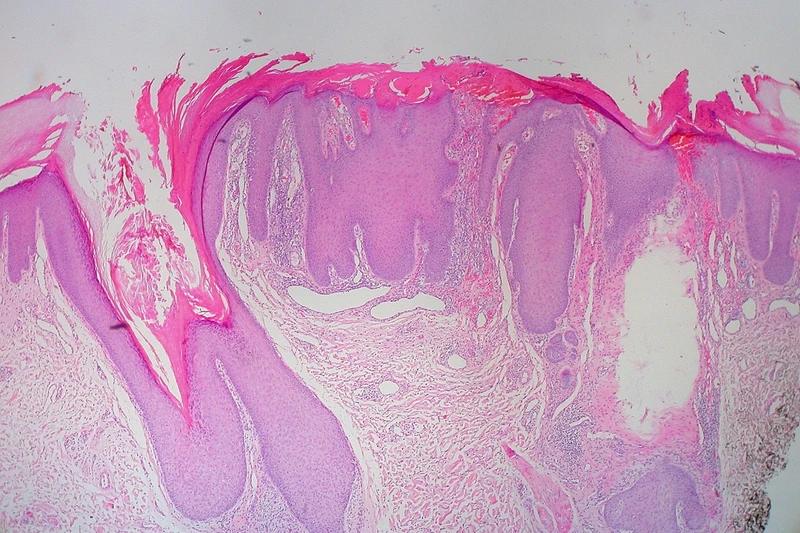
- Biopsy: marked epidermal thickening (may resemble squamous cell carcinoma), enlarged nerve fibres and endings, inflammation; direct immunofluorescence usually negative – positive in pemphigoid nodularis. Distinction from, among others, lichen planus, nodular scabies, lichen simplex and atopic dermatitis.
Differential diagnoses
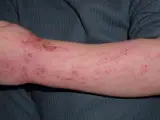 Atopic dermatitis (atopic eczema)
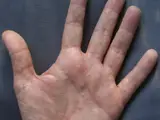 Dyshidrotic eczema (pompholyx)
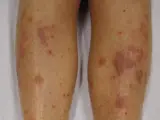 Lichen planus
 Nummular eczema (discoid eczema)
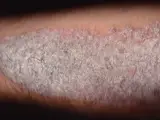 Psoriasis vulgaris (plaque psoriasis)
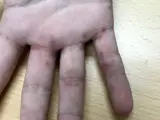 Scabies
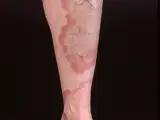 Granuloma annulare
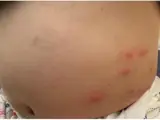 Papular urticaria
Image credits for the thumbnails
- Atopic dermatitis (atopic eczema): Eisfelder, “Atopic dermatitis child”, CC BY-SA 3.0, via Wikimedia Commons · CC BY-SA 3.0 · Source
- Dyshidrotic eczema (pompholyx): Inwe (Wikimedia Commons), “Dyshidrosis”, CC BY-SA 3.0, via Wikimedia Commons · CC BY-SA 3.0 · Source
- Lichen planus: James Heilman, MD, “Lichen Planus (2)”, CC BY-SA 3.0, via Wikimedia Commons · CC BY-SA 3.0 · Source
- Nummular eczema (discoid eczema): Ifnord, “Nummular dermatitits”, CC BY-SA 4.0, via Wikimedia Commons · CC BY-SA 4.0 · Source
- Psoriasis vulgaris (plaque psoriasis): MediaJet, “An Arm Covered With Plaque Type Psoriasis”, CC BY-SA 3.0, via Wikimedia Commons · CC BY-SA 3.0 · Source
- Scabies: Gzzz, “Scabies hand and fingers 1”, CC BY-SA 4.0, via Wikimedia Commons · CC BY-SA 4.0 · Source
- Granuloma annulare: Kreuter et al., “Generalized granuloma annulare”, CC BY-SA 2.0, via Wikimedia Commons · CC BY-SA 2.0 · Source
- Papular urticaria: Sekerel BE, Ilgun Gurel D, Sahiner UM et al. (Front Allergy 2023), CC BY 4.0, via PubMed Central (PMC10655015) · CC BY 4.0 · Source
Treatment principles
- The aim is to break the itch-scratch cycle; underlying conditions (e.g. atopic dermatitis, renal failure, hepatic or haematological disease) are investigated and treated.
- Topical and intralesional glucocorticoids are used, supplemented by emollients and phototherapy.
- Extensive disease may require systemic treatment, particularly biologics.
Specific treatment regimens with drugs and doses are covered in the DermaFuchs app.
Keep learning in the app
References (selection)
Cross-references
Mentioned in
Keep learning
Keep learning with flashcards, exam questions and spot diagnoses in the DermaFuchs app – free, in your browser or as an app.
Related pages: Atopic dermatitis (atopic eczema) · Dyshidrotic eczema (pompholyx) · Lichen planus
Note: This page is intended for medical education and does not replace diagnosis or treatment decisions in individual cases.