PLEVA (Pityriasis lichenoides et varioliformis acuta)
Overview
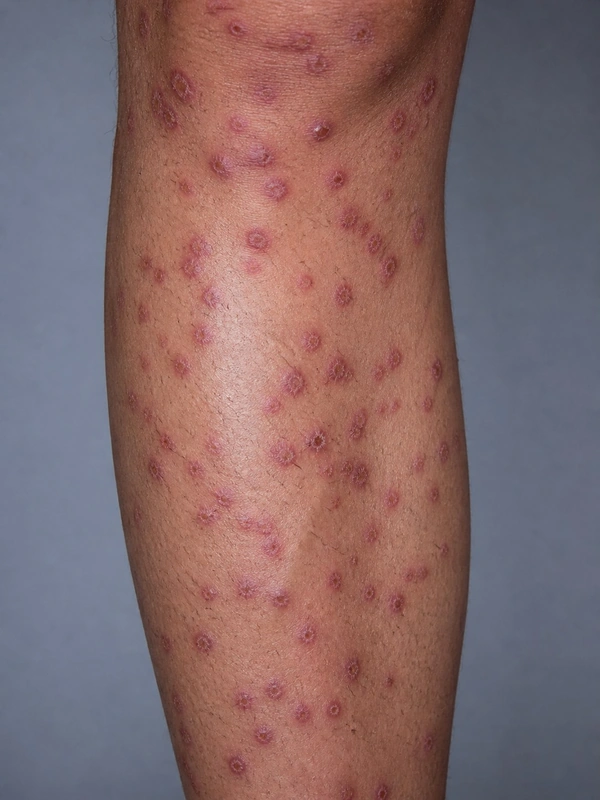
- Definition & Clinical: Acutely appearing exanthematous lymphoproliferative T-cell disease with lichenoid, polymorphic 0.5–3 cm papules, erythema, erosions, occasionally vesicles.
- Epidemiology & Distribution: Primarily in the first two decades of life; recurrent efflorescences in the same area create a varioliform appearance = Heubner's starry sky.
- Etiopathogenesis: Suspected to be infectious-allergic bacterial (hemolytic streptococci), drug-allergic, viral.
- Important Differentiation from Varicella: In PLEVA, the oral mucosa and scalp are clear (→ in varicella both are affected).
Note: A current AWMF guideline specifically for PLEVA does not exist at present (as of 2024). Medications: Gelbe Liste:
Differential diagnoses
- Pityriasis rosea
- Varicella (chickenpox)
- Impetigo
- Mycosis fungoides
- Psoriasis vulgaris (plaque psoriasis)
- Dyshidrotic hand eczema (pompholyx)
- Pityriasis lichenoides chronica (PLC)
- Herpes zoster
Practise PLEVA (Pityriasis lichenoides et varioliformis acuta) in the app
Flashcards with spaced repetition, exam questions and spot-the-diagnosis on this topic – in DermaFuchs, free of charge.
In the DermaFuchs app: 2 flashcards · 2 clinical images
Open in browser Download on the App StoreSources (selection)
More inflammatory skin diseases
- Cheilitis granulomatosa (Miescher)
- Erythema annulare centrifugum (EAC)
- Erythema nodosum
- Graft-versus-host disease (GvHD)
- Granuloma annulare
- Cutaneous sarcoidosis
- Lichen planus
- Lichen sclerosus
Note: This page is intended for medical education and does not replace diagnosis or treatment decisions in individual cases. Treatment and follow-up content is available in the app.