Erythema annulare centrifugum (EAC)
Definition & Subtypes
- Erythema annulare centrifugum (EAC, Darier 1916) = figurate (gyrate) erythema group with slowly centrifugal spread and border-emphasized morphology.
- Subtypes (Ackerman): Histologically / clinically distinguished are superficial + deep form — superficial = peripheral scaling ("trailing scale"), deep = firmer plaque without scaling.
- Special form: EAC-like neutrophilic dermatosis (paraneoplastic).
Pathogenesis & Triggers
- Pathogenesis: probably Type IV hypersensitivity to various antigens with perivascular lymphocytic infiltrate ("coat sleeve pattern").
- Triggers: Frequent triggers are infections (tinea, Borrelia, EBV, TB) + medications + tumors + pregnancy + foods.
- Paraneoplastic: Classic tumor association EAC deep: lymphoproliferative diseases (lymphomas, leukemias) — therefore tumor screening in refractory or atypical course.
Clinical Presentation
- Location: Preferred location is trunk + proximal extremities (gluteal / thigh).
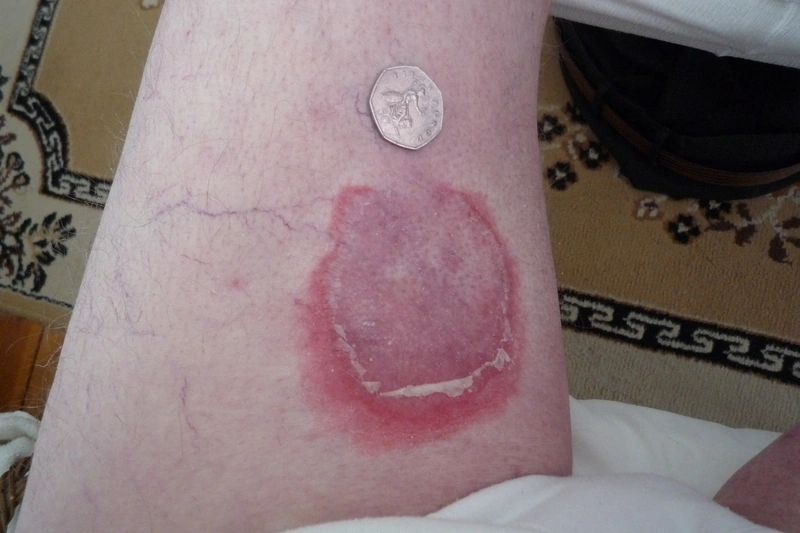
- Morphology: Classic are annular plaques with raised peripheral ridge + central clearing + inner ("trailing") scaling.
- Trailing scale: "Wool thread phenomenon" = scaling sits inside / behind the advancing border ridge — pathognomonic and DD-relevant vs. tinea (peripheral scaling)!
- Course: Individual lesions 4–6 weeks, disease course recurrent over months–years.
- Symptoms: mostly asymptomatic, occasionally mildly pruritic.
Diagnostics
- Clinical diagnosis + trigger search obligatory!
- Laboratory / tests: Standard workup includes CBC + diff + liver/kidney values + ANA + Borrelia serology + Quantiferon + KOH prep + medication history.
- Skin biopsy: superficial form: perivascular lymphocytic infiltrate ("coat sleeve") in upper dermis; deep form: additionally in middle / deep dermis.
- KOH mandatory to exclude tinea!
Overview
Definition
- Chronic-recurrent, polyetiological, inflammatory skin disease with clinical significance as a "cutaneous reaction" (skin reaction to a variety of internal triggers).
Etiopathogenesis — Trigger Spectrum
- Malignant underlying conditions: Classically Lymphomas + Leukemias plus breast / ovarian / bronchial carcinoma.
- Infections: Candidiasis of the GIT (frequent!), Borrelia, HIV, COVID-19, Zoster.
- Parasitoses: Ascarids, other helminthic diseases.
- Autoimmune diseases: Autoimmune hepatitis, polyglandular autoimmune syndrome, Hashimoto's thyroiditis, Crohn's disease, Sarcoidosis, Polychondritis, Lupus erythematosus.
- Food allergens: Tomatoes, fish proteins, peanuts, molds in cheese.
Clinical Features
- Multiple, 1–2 cm red plaques that heal centrally and expand centrifugally → arcuate confluent.
- Typically smooth-surfaced; in some cases inner fine lamellar scale collar (important DD to Tinea, which scales on the outer side!).
- Tactile finding (almost pathognomonic): the leading edge feels like "wet wool thread".
- Profound variant (Darier pseudoform): lack of epidermal involvement — DD: Lupus erythematosus tumidus, Pseudolymphomas.
Differential diagnoses
- Erythema gyratum repens
- Pityriasis rosea
- Tinea corporis
- Urticaria
- Psoriasis vulgaris (plaque psoriasis)
- Granuloma annulare
Practise Erythema annulare centrifugum (EAC) in the app
Flashcards with spaced repetition, exam questions and spot-the-diagnosis on this topic – in DermaFuchs, free of charge.
In the DermaFuchs app: 4 flashcards · 3 clinical images
Open in browser Download on the App StoreSources (selection)
More inflammatory skin diseases
- Cheilitis granulomatosa (Miescher)
- Erythema nodosum
- Graft-versus-host disease (GvHD)
- Granuloma annulare
- Cutaneous sarcoidosis
- Lichen planus
- Lichen sclerosus
- Lichenoid drug eruption
Note: This page is intended for medical education and does not replace diagnosis or treatment decisions in individual cases. Treatment and follow-up content is available in the app.