Drug eruption (maculopapular)
Exam relevance: in 8 of more than 50 board exam reports · rank 17
- Synonyms
- makulopapulöses Arzneimittelexanthem, morbilliformes Arzneimittelexanthem, Arzneimittelausschlag, Medikamentenausschlag, morbilliform drug eruption, maculopapular drug eruption, drug rash, drug allergy rash
- Specialty
- Dermatology · Inflammatory skin diseases
- Images
- Clinical 4
- In the app
- 5 flashcards
- Last updated
- 10/2026 · Dr. Pascal Bafteh
Contents
Images (4)
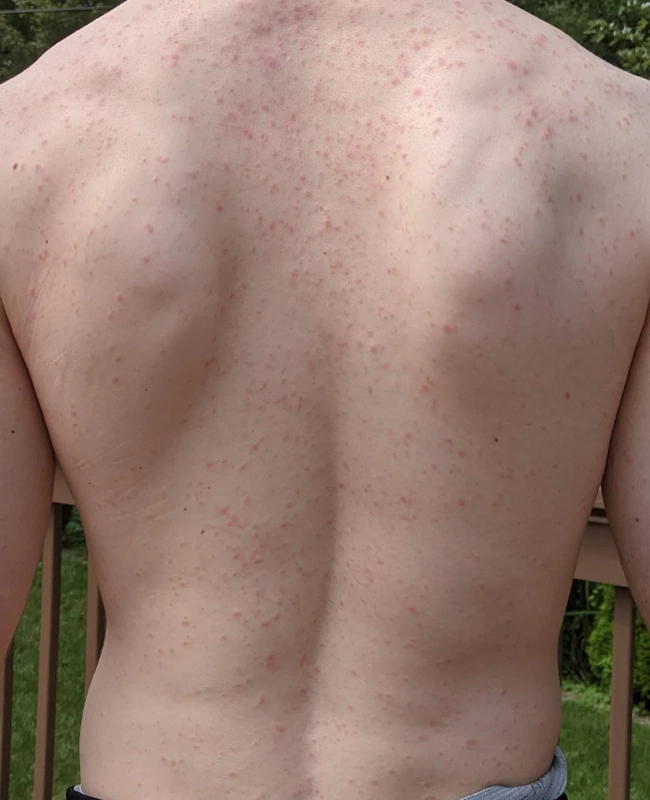
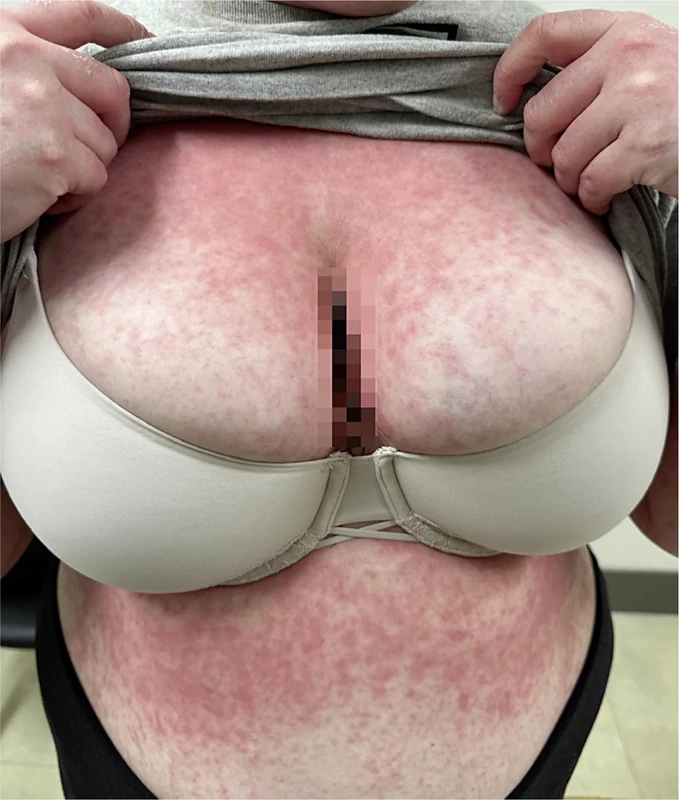
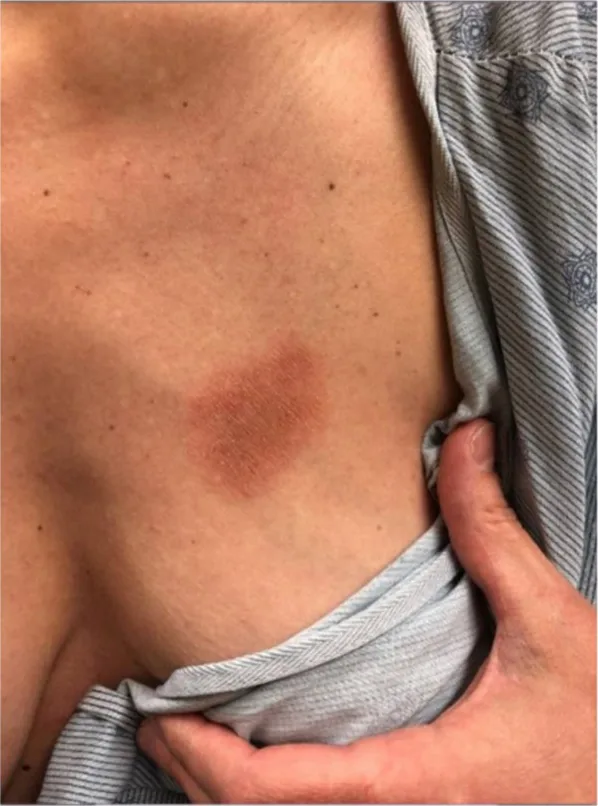
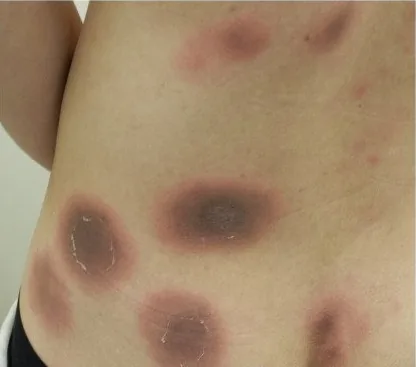
Definition
Maculopapular (morbilliform) drug eruption is the most common cutaneous drug reaction: a symmetrical eruption of small macules and papules after systemic intake of a drug. It is a delayed (type IV) reaction mediated by cytotoxic T cells; the target is the drug itself, a metabolite or a drug bound to a protein.
Occurrence & epidemiology
About 2% of newly started drugs cause a cutaneous drug reaction, about 95% of which are morbilliform. In adults, a morbilliform rash is usually drug-induced, whereas in children it is more likely to be viral. Common culprits are beta-lactams, sulfonamides, antiepileptic drugs, uricostatic agents and NSAIDs, as well as herbal products. Risk factors include previous drug reactions, viral infections (especially acute EBV infection, HHV-6 and -7), immunodeficiency (eg, HIV infection) and taking multiple drugs.
Clinical features
- Latency: on first exposure typically a few days to 2 weeks after starting, sometimes up to 1 week after stopping; on re-exposure to the same or a related drug within 1–3 days. It is very unusual after months or years of intake.
- Pink to red macules and papules, usually starting on the trunk and spreading to the limbs and neck, bilateral and symmetrical, partly merging into large erythematous areas; sometimes annular, targetoid or urticaria-like, and purpuric on the lower legs.
- Axillae, groins, hands and feet are usually spared; mucous membranes, hair and nails are not affected.
- Itch, possibly mild fever; as it resolves, the redness fades and the skin peels.
- Warning signs of a severe reaction: erythroderma, high fever or marked malaise, any mucosal involvement, skin tenderness, blisters, pustules, palpable purpura, signs of organ involvement.
Diagnosis
- Clinical diagnosis based on a typical eruption and a recently started drug. A drug calendar covering at least 2 weeks to 1 month before onset, including over-the-counter products, helps to narrow down the culprit; there is no routine test to make the diagnosis or identify the culprit drug.
- If needed, blood count, liver and kidney function tests, CRP, infection serology. Histology shows interface dermatitis and a mixed perivascular infiltrate; eosinophilia is supportive but not diagnostic.
- Distinction from severe drug reactions, which cannot be reliably told apart clinically at first: DRESS (fever, facial oedema and rash 2–6 weeks after starting, eosinophilia, atypical lymphocytes, hepatitis, lymphadenopathy), AGEP (rapidly appearing and spreading pustules), Stevens-Johnson syndrome and toxic epidermal necrolysis (painful mucosal erosions, widespread blisters).
Differential diagnoses
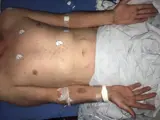
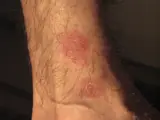
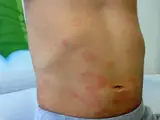
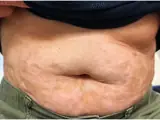
- Measles
Image credits for the thumbnails
- Secondary syphilis (lues II): Ehlers S, Sergent S, Ashurst J (Clin Pract Cases Emerg Med 2020), CC BY 4.0, via PubMed Central (PMC7676796) · CC BY 4.0 · Source
- Pityriasis rosea: Aceofhearts1968, “Pityriasis rosea-1”, Public Domain, via Wikimedia Commons · Public domain · Source
- Urticaria: Gzzz, “Urticaria child”, CC BY-SA 4.0, via Wikimedia Commons · CC BY-SA 4.0 · Source
- Graft-versus-host disease (GvHD): Choi E, Nguyen CV (JAAD Case Rep 2024), CC BY 4.0, via PubMed Central (PMC11403442) · CC BY 4.0 · Source
Treatment principles
- The most important step is withdrawal of the causative drug.
- Symptomatic treatment comprises topical glucocorticoids and oral antihistamines for pruritus; in extensive eruptions without signs of a severe cutaneous adverse reaction, short courses of systemic glucocorticoids may be used.
- The culprit drug is documented in an allergy passport, and patients are informed about possible cross-reactions.
Guideline: AWMF guideline register (no. 061-021)
Specific treatment regimens with drugs and doses are covered in the DermaFuchs app.
Keep learning in the app
References (selection)
Cross-references
Keep learning
Keep learning with flashcards, exam questions and spot diagnoses in the DermaFuchs app – free, in your browser or as an app.
Related pages: Secondary syphilis (lues II) · Pityriasis rosea · Urticaria
Note: This page is intended for medical education and does not replace diagnosis or treatment decisions in individual cases.