Psoriatic arthritis
Exam relevance: in 3 of more than 50 board exam reports · rank 45
- Synonyms
- PsA
- Specialty
- Dermatology · Inflammatory skin diseases
- Images
- Clinical 2
- In the app
- 5 flashcards
- Last updated
- 10/2026 · Dr. Pascal Bafteh
Contents
Images (2)
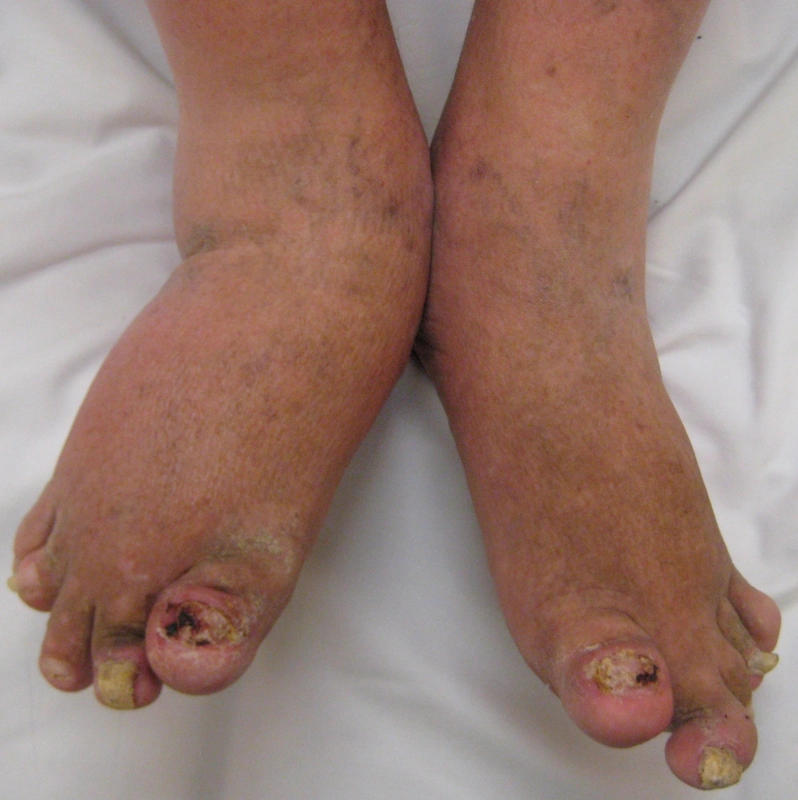
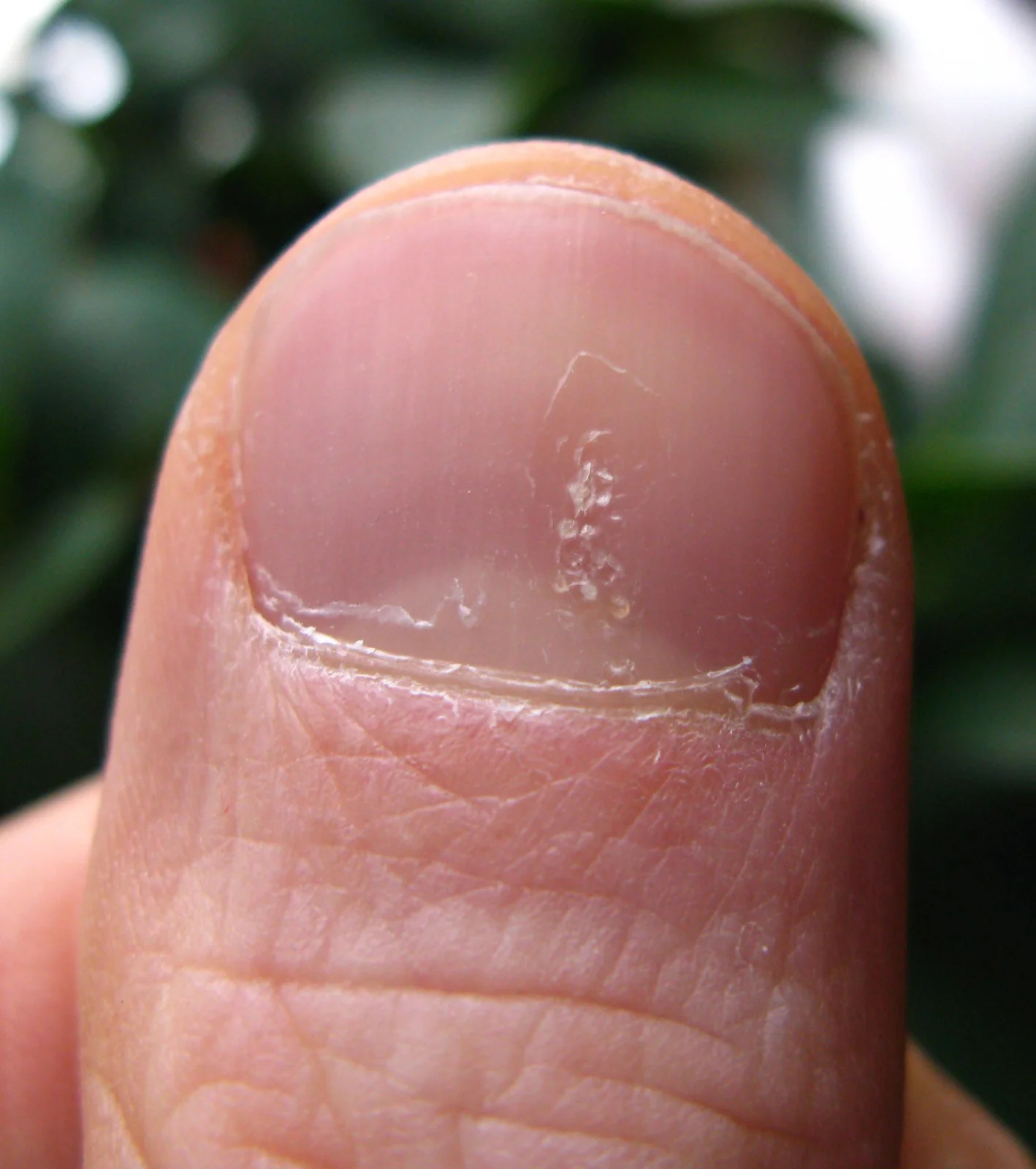
Definition
Seronegative inflammatory rheumatic manifestation in 10–30 % of psoriasis patients. Typical: asymmetric oligoarthritis, dactylitis ("sausage fingers"), enthesitis as well as axial involvement (spondyloarthritis). Frequent nail changes.
Differential diagnosis: rheumatoid arthritis (seropositive), gout, reactive arthritis, spondyloarthritis.
Inflammatory arthritis with frequent enthesitis/dactylitis. Typical: distal joint involvement, rest and night pain, start-up pain plus dactylitis ("sausage fingers"). Frequency: 6–40 % of psoriatic patients.
Occurrence & epidemiology
Psoriatic arthritis affects up to 30% of people with psoriasis (estimates 4–30%), usually about 10 years after skin disease begins; in about 15% joint involvement precedes the skin disease. Risk markers are nail psoriasis, flexural, scalp or post-auricular psoriasis, obesity, smoking and a raised CRP; the severity of skin disease does not predict the severity of arthritis.
Diagnosis
- Clinical examination of joints, entheses, digits (dactylitis) and nails; joint pain, swelling and stiffness; distal interphalangeal involvement is typical, axial involvement (especially sacroiliac joints) is possible.
- CASPAR classification criteria (mainly for research); no diagnostic blood tests – rheumatoid factor usually negative (positive in up to 10%), anti-CCP usually negative.
- Imaging: ultrasound and MRI for early synovitis and enthesitis; on X-ray erosions up to "pencil-in-cup" deformity alongside new bone formation (spurs, "ivory phalanx").
- Screening questionnaires (e.g. ToPAS2) help to identify patients with psoriatic arthritis; nail changes are found in 90% of affected patients.
Differential diagnoses
 Systemic sclerosis
 Dermatomyositis
 Psoriasis vulgaris (plaque psoriasis)
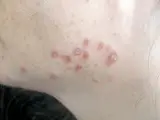 Cutaneous sarcoidosis
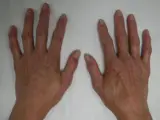 Limited systemic sclerosis (CREST syndrome)
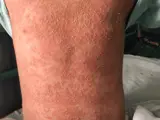 Generalized pustular psoriasis (von Zumbusch)
Image credits for the thumbnails
- Systemic sclerosis: James Heilman, “CREST2015.JPG”, CC BY-SA 4.0, via Wikimedia Commons · CC BY-SA 4.0 · Source
- Dermatomyositis: Mohammad2018, CC BY-SA 4.0 · CC BY-SA 4.0 · Source
- Psoriasis vulgaris (plaque psoriasis): MediaJet, “An Arm Covered With Plaque Type Psoriasis”, CC BY-SA 3.0, via Wikimedia Commons · CC BY-SA 3.0 · Source
- Cutaneous sarcoidosis: Nowack et al., “Cutaneous findings in systemic sarcoidosis”, CC BY-SA 2.0, via Wikimedia Commons · CC BY-SA 2.0 · Source
- Limited systemic sclerosis (CREST syndrome): James Heilman, MD, “CREST syndrome (calcinosis and sclerodactyly)”, CC BY-SA 4.0, via Wikimedia Commons · CC BY-SA 4.0 · Source
- Generalized pustular psoriasis (von Zumbusch): Bourousis E, Kotzamani MT, Maritsi DN., Cureus 2025, Figure 1, CC BY 4.0, via PMC · CC BY 4.0 · Source
Treatment principles
- Treatment is multidisciplinary with rheumatology and aims at early control of inflammation to prevent irreversible joint damage.
- Mild arthritis is treated with non-steroidal anti-inflammatory drugs and local glucocorticoid injections, otherwise with conventional synthetic disease-modifying drugs.
- Inadequate response, axial involvement or high disease burden call for biologics or targeted synthetic disease-modifying drugs, chosen according to skin, joint and comorbid disease.
Guideline: AWMF guideline register (no. 013-001)
Specific treatment regimens with drugs and doses are covered in the DermaFuchs app.
Keep learning in the app
References (selection)
Cross-references
Keep learning: test yourself
Two questions from the DermaFuchs app on Psoriatic arthritis – tap an answer.
Question 1 of 2
What is the typical joint involvement pattern in psoriatic arthritis, often accompanied by dactylitis and enthesitis?
Answer
Correct: asymmetric oligoarthritis. Psoriatic arthritis classically presents as an asymmetric oligoarthritis, distinguishing it from the symmetric polyarthritis of rheumatoid arthritis.
Question 2 of 2
What clinical finding describes the diffuse swelling of an entire digit often seen in psoriatic arthritis?
Answer
Correct: dactylitis ("sausage fingers"). Dactylitis, or "sausage digit," is caused by severe inflammation of the tendon sheaths and joints of an entire finger or toe, characteristic of psoriatic arthritis.
More questions like these – with explanations and spaced repetition – in the app.
Note: This page is intended for medical education and does not replace diagnosis or treatment decisions in individual cases.