Rosacea
Exam relevance: in 10 of more than 50 board exam reports · rank 11
- Synonyms
- rhinophyma
- Specialty
- Dermatology · Skin appendages
- Images
- Clinical 3
- In the app
- 15 flashcards
- Last updated
- 10/2026 · Dr. Pascal Bafteh
Contents
Images (3)
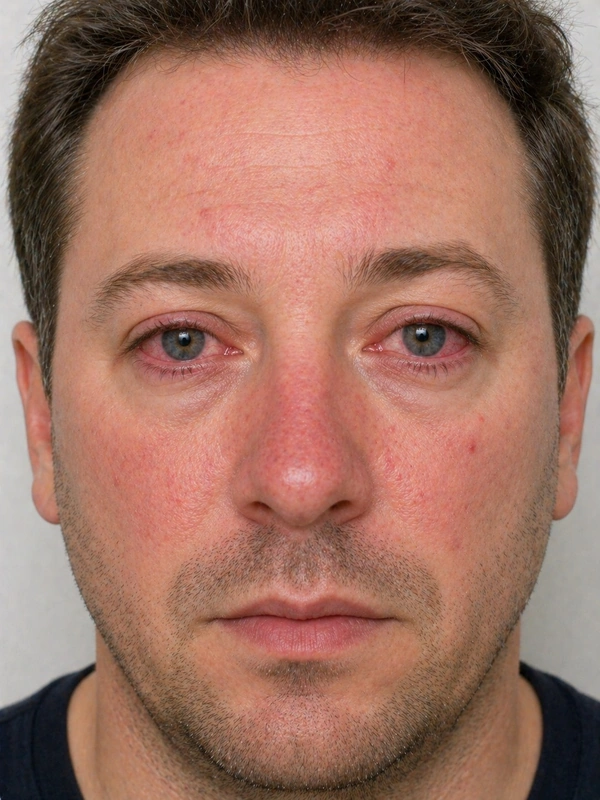
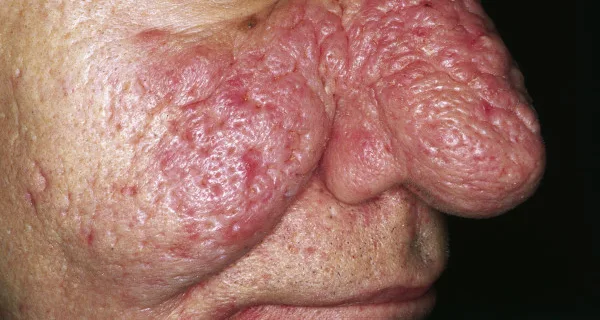
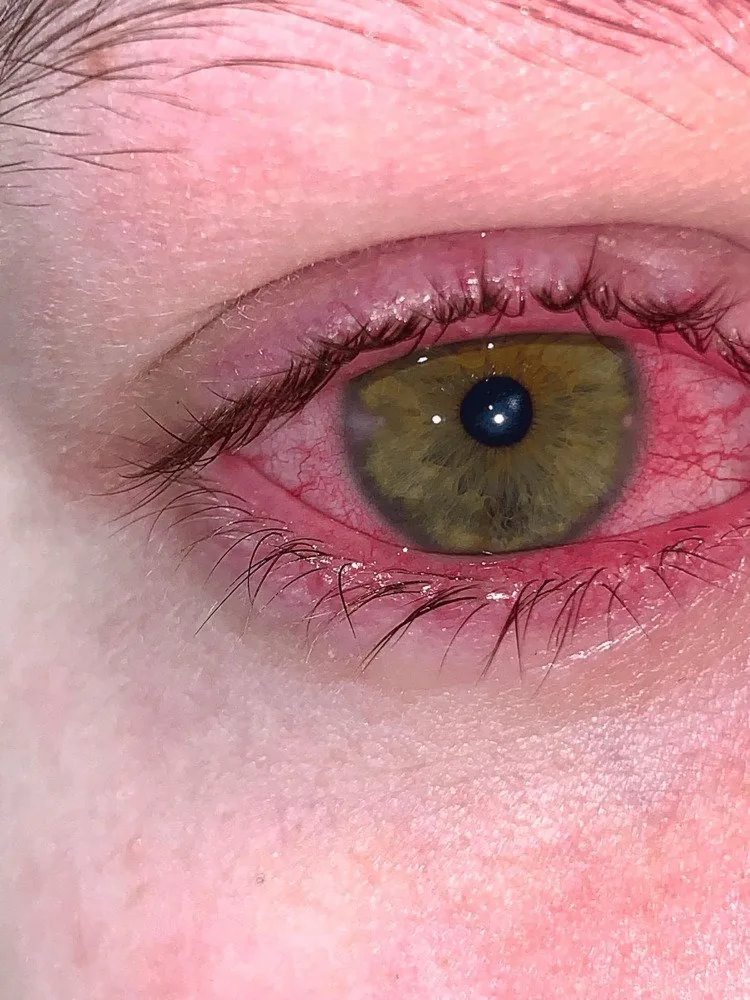
Definition
Rosacea is a common chronic inflammatory skin condition that mainly affects the central face and most often starts between the ages of 30 and 60. It is characterised by persistent facial redness and typically runs a relapsing and remitting course.
Classification
Special Forms
- Rosacea fulminans (Pyoderma faciale): Acute, young women, confluent abscesses + fistulas.
- Morbihan disease: Chronic solid facial edema.
- Granulomatous Rosacea: Firm, brownish papules (Diascopy positive).
Aetiopathogenesis
- Multifactorial: Dysregulation of innate immunity + neurovascular dysfunction. Cathelicidin/LL-37 ↑ → Inflammation. Demodex folliculorum as a cofactor.
Clinical features
Clinical – classic subtypes (replaced by phenotypes since 2017)
- I Erythematotelangiectatic Rosacea: Flush, persistent centrofacial erythema.
- II Papulopustular Rosacea: inflammatory papules/pustules, without comedones (DD Acne!).
- III Phymatous Rosacea: Rhinophyma most common. Sebaceous gland hyperplasia + fibrosis.
- IV Ocular Rosacea: Blepharitis + Conjunctivitis + Keratitis.
Differential diagnoses
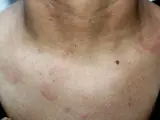
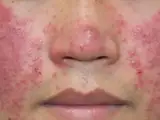
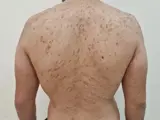
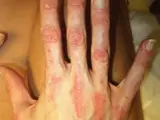
- Airborne contact dermatitis
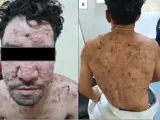
- Rosacea fulminans / Pyoderma faciale
Image credits for the thumbnails
- Seborrhoeic dermatitis: Roymishali, “Seborrhoeic dermatitis highres”, CC BY-SA 3.0, via Wikimedia Commons · CC BY-SA 3.0 · Source
- Lupus erythematosus: Meriam Hajji, CC BY 4.0, via Wikimedia Commons · CC BY 4.0 · Source
- Demodicosis: Ran Yuping et al., “Demodicosis”, CC BY-SA 3.0, via Wikimedia Commons · CC BY-SA 3.0 · Source
- Acne vulgaris: Sedef94, “Kürəkdə düyünlü və kistik sızanaqlar (Acne Vulgaris) 08”, CC BY-SA 4.0, via Wikimedia Commons · CC BY-SA 4.0 · Source
- Dermatomyositis: Mohammad2018, CC BY-SA 4.0 · CC BY-SA 4.0 · Source
- Acne fulminans: Lahrougui A, Aboudourib M, Bendaoud L, Amal S, Hocar O, Cureus 2025, Figure 1, CC BY 4.0, via PubMed Central (PMC12123476) · CC BY 4.0 · Source
Treatment principles
- Treatment is phenotype-based; the foundation is trigger avoidance, sun protection and gentle skin care.
- Persistent erythema is treated with vasoconstrictive topical agents and telangiectasia with laser or IPL; papules and pustules with anti-inflammatory or antiparasitic topical agents and, in extensive disease, systemically with anti-inflammatory tetracyclines.
- Phymas are removed by ablative laser or dermashaving; ocular rosacea requires lid hygiene and ophthalmological co-management.
Guideline: AWMF guideline register (no. 013-065)
Specific treatment regimens with drugs and doses are covered in the DermaFuchs app.
Keep learning in the app
References (selection)
Cross-references
Mentioned in
Keep learning: test yourself
One question from the DermaFuchs app on Rosacea – tap an answer.
Question 1 of 1
What diagnostic test result is associated with Granulomatous Rosacea?
Answer
Correct: Diascopy positive. Granulomatous Rosacea shows a positive diascopy test, indicating non-blanching granulomas.
More questions like these – with explanations and spaced repetition – in the app.
Note: This page is intended for medical education and does not replace diagnosis or treatment decisions in individual cases.