Port-wine stain (naevus flammeus)
- Synonyms
- Feuermal, Portweinfleck, kapilläre Malformation, port-wine stain, naevus flammeus, capillary malformation
- Specialty
- Dermatology · Vascular skin disorders
- Images
- Clinical 4
- In the app
- 6 flashcards
- Last updated
- 10/2026 · Dr. Pascal Bafteh
Contents
Images (4)
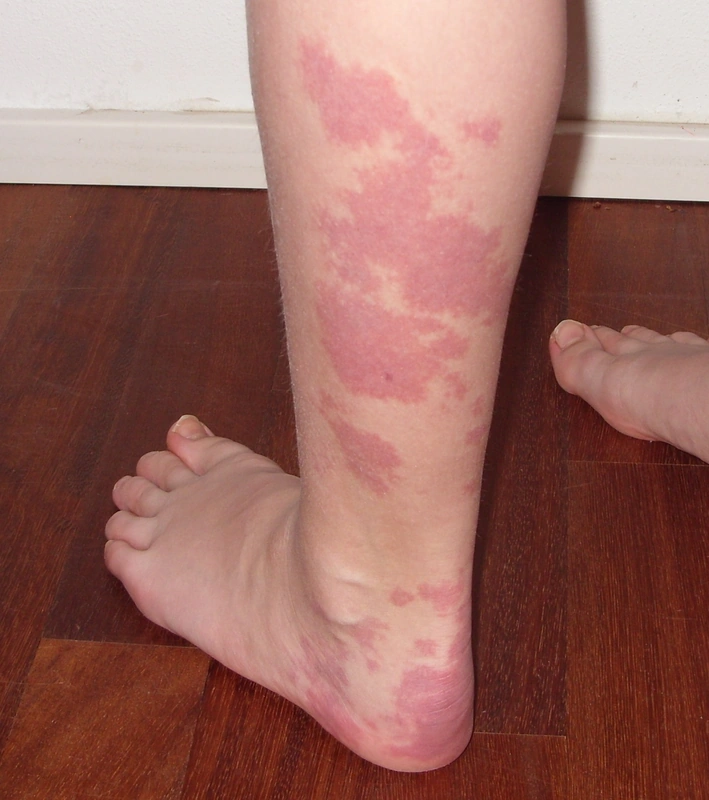
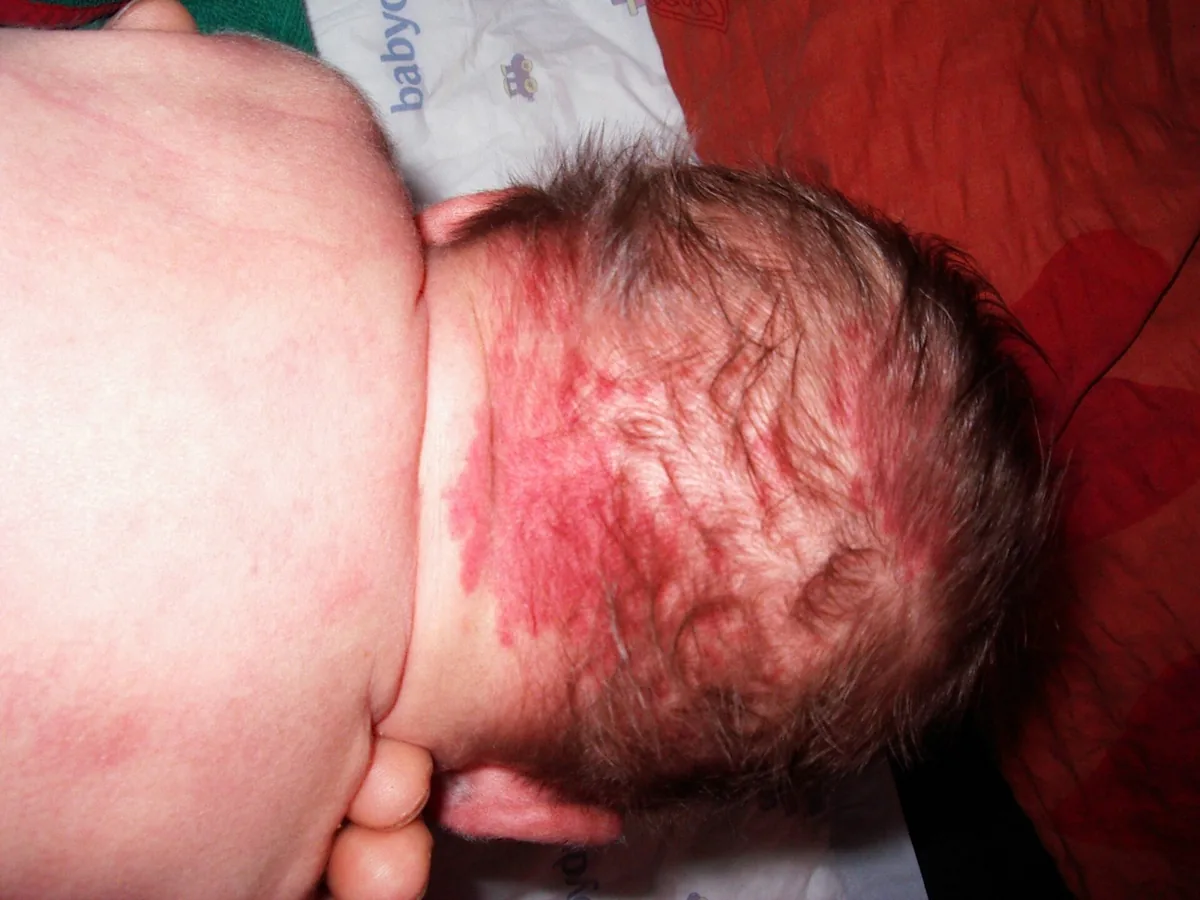
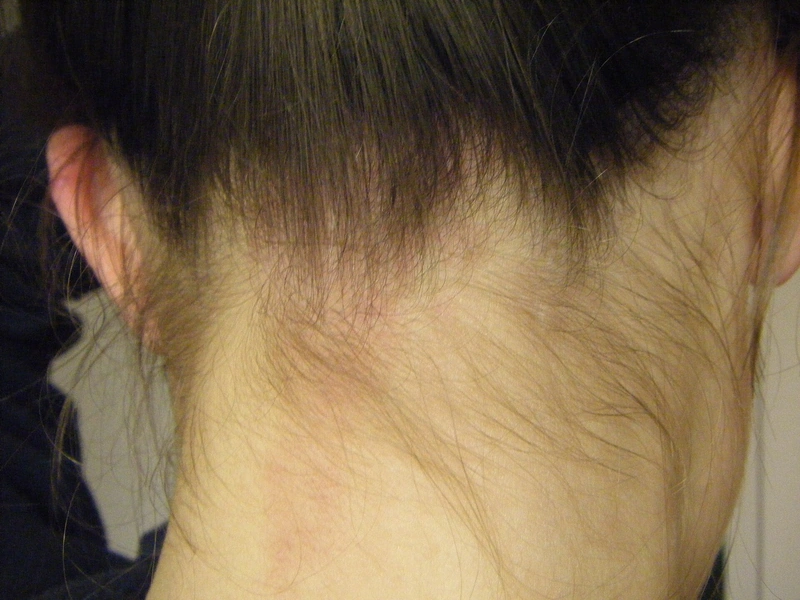
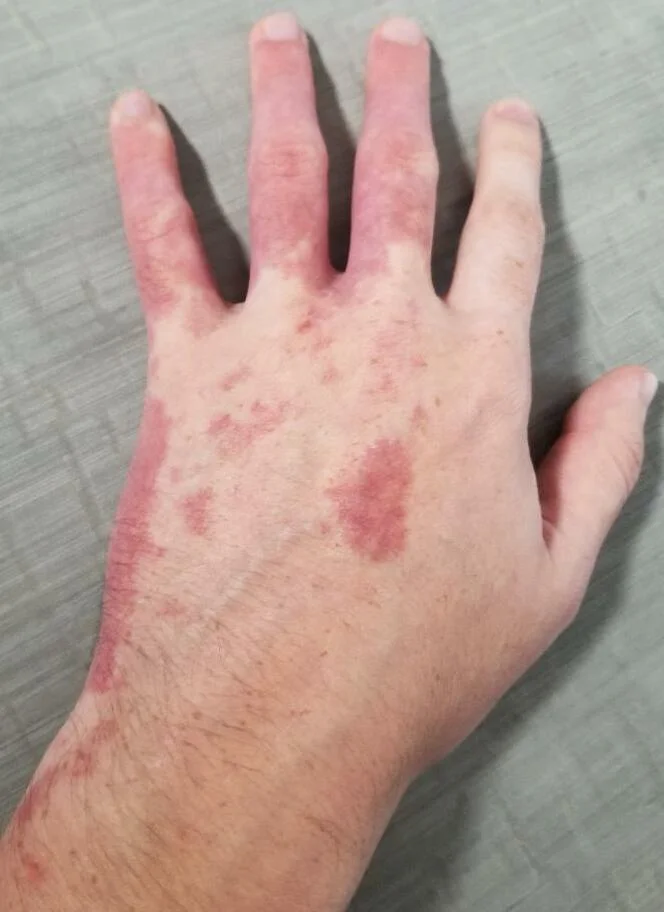
Definition
Port-wine stain (naevus flammeus) is a congenital capillary malformation of the skin with dilated, malformed blood vessels; it occurs in about 0.3% of newborns. A GNAQ mutation is found in the vast majority. It differs from the very common naevus simplex (salmon patch, in about 40% of newborns; e.g. "stork bite" on the nape, "angel's kiss" on the glabella), which usually fades within the first year – the stork bite, however, persists into adult life in about half of cases.
Clinical features
- A sharply demarcated, dark red to purple patch present at birth, usually unilateral with a sharp midline cut-off, most often on the face.
- Grows proportionately, does not regress; darkening, thickening and nodularity may develop over life.
- Associated syndromes: Sturge-Weber syndrome (facial skin in the territory of one trigeminal branch, meningeal angioma, seizures, glaucoma), Klippel-Trénaunay syndrome (additional venous and lymphatic malformation, wider and sometimes longer limb), Parkes Weber syndrome (with arteriovenous malformation).
Diagnosis
- Clinical diagnosis; distinction from infantile haemangioma, which typically appears several weeks after birth, grows rapidly and later involutes; ultrasound, and MRI if needed, when the diagnosis is uncertain or deeper tissue involvement is suspected.
- With facial involvement in the trigeminal territory consider Sturge-Weber syndrome (glaucoma, CNS involvement); with limb involvement look for side-to-side differences in girth and length (Klippel-Trénaunay, Parkes Weber syndromes).
Differential diagnoses
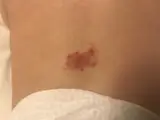
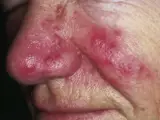
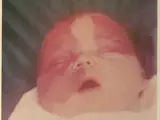
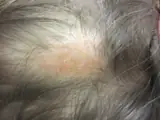
- Klippel-Trénaunay syndrome
Image credits for the thumbnails
- Infantile hemangioma: Gstk, “Infantile hemangioma, flat”, CC BY-SA 4.0, via Wikimedia Commons · CC BY-SA 4.0 · Source
- Rosacea: Michael Sand, Daniel Sand, Christina Thrandorf, Volker Paech, Peter Altmeyer, Falk G Bechara, “Rosacea”, CC BY 2.5, via Wikimedia Commons, cropped · CC BY 2.5 · Source
- Sturge-Weber syndrome: Sydney S. Gellis and Murray Feingold, Public domain · Public domain · Source
- Nevus sebaceus: Littlekidsdoc, “Nevus sebaceous”, CC BY-SA 4.0, via Wikimedia Commons · CC BY-SA 4.0 · Source
Treatment principles
- The treatment of choice is pulsed dye laser; starting treatment early in infancy and early childhood improves results, as lesions may thicken and become nodular over time.
- Many sessions are usually required, and complete clearance is often not achieved; camouflage is an alternative.
- With involvement of the forehead and upper eyelid, Sturge-Weber syndrome should be considered and ophthalmological (glaucoma) and neurological assessment arranged.
Specific treatment regimens with drugs and doses are covered in the DermaFuchs app.
Keep learning in the app
References (selection)
Cross-references
Mentioned in
Keep learning
Keep learning with flashcards, exam questions and spot diagnoses in the DermaFuchs app – free, in your browser or as an app.
Related pages: Infantile hemangioma · Rosacea · Sturge-Weber syndrome
Note: This page is intended for medical education and does not replace diagnosis or treatment decisions in individual cases.