Telogen effluvium
- Synonyms
- diffuse hair loss
- Specialty
- Dermatology · Skin appendages
- Images
- Clinical 2
- In the app
- 3 flashcards
- Last updated
- 10/2026 · Dr. Pascal Bafteh
Contents
Images (2)
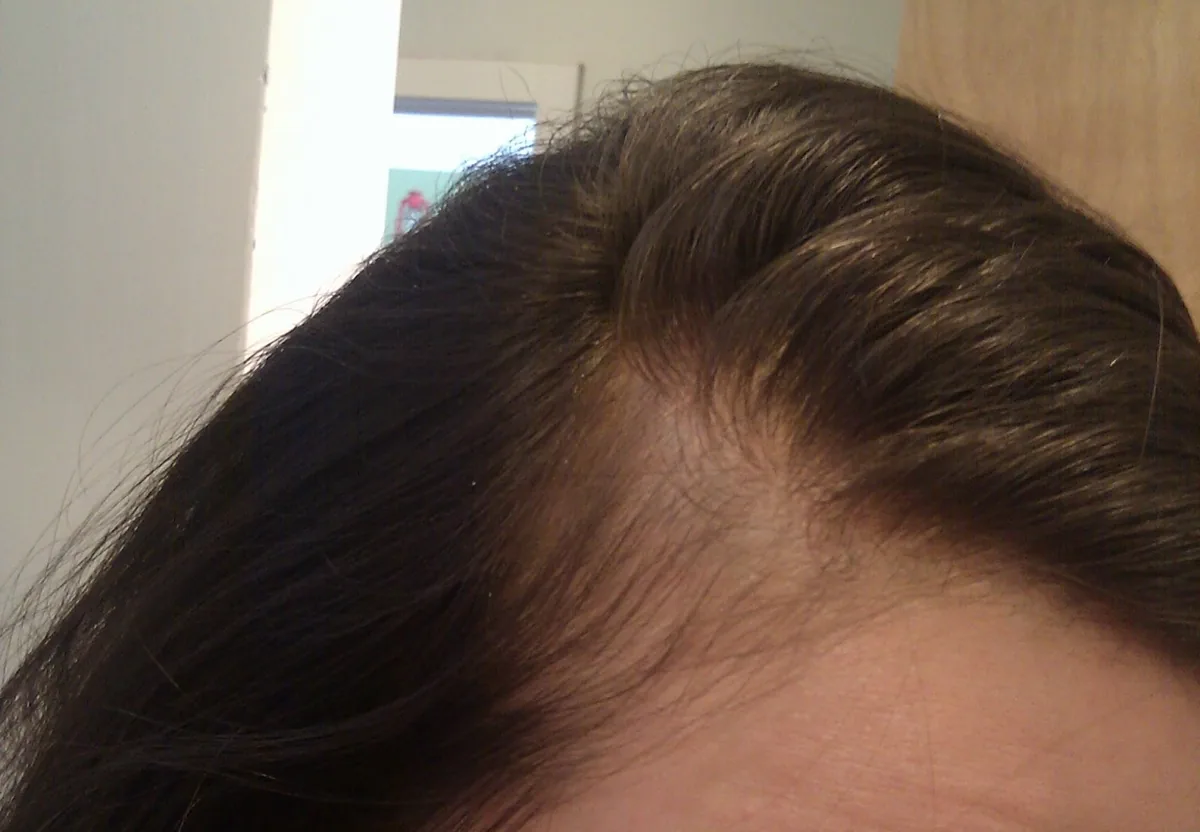
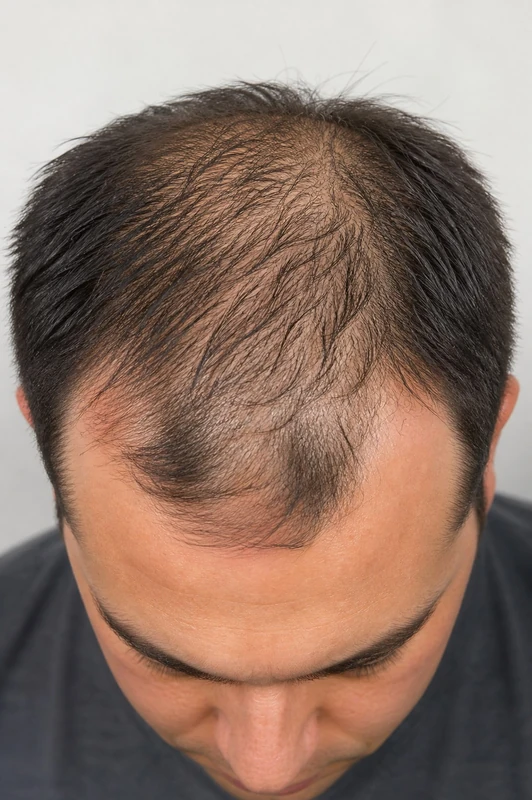 AI illustration
Definition
- Diffuse, non-scarring hair loss due to synchronous shift from anagen to telogen phase with consecutive shedding 2–4 months after trigger.
- Latency Trigger → Effluvium: ~ 2–4 months (= telogen phase duration).
Clinical features
Clinical Presentation
- Diffuse hair loss without visible bald areas, usually > 100 hairs/day.
- Pull test positive (more than 5 hairs pulled out during the bundle test, predominantly telogen hairs with root club).
- Trichogram: Telogen rate > 25% (normal 10–15%).
Diagnosis
Diagnostics
- Laboratory: Ferritin (target > 70 ng/ml), TSH, CBC, possibly vitamin D, zinc, estrogen status postpartum, syphilis serology if at risk.
- Trichoscopy: unremarkable (in contrast to AGA with caliber variation or AA with yellow dots).
Differential diagnoses
 Anagen effluvium
 Androgenetic Alopecia
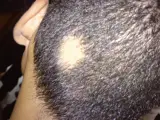 Alopecia areata
 Trichotillomania
 Psoriasis vulgaris (plaque psoriasis)
 Secondary syphilis (lues II)
Image credits for the thumbnails
- Anagen effluvium: Unnikrishnan, Vudayana, Diddi et al. (2026), “Chemotherapy and the Skin: Understanding Dermatologic Side Effects”, CC BY 4.0, via Wikimedia Commons · CC BY 4.0 · Source
- Androgenetic Alopecia: Before My Ken, “Back of man's head”, CC BY-SA 3.0, via Wikimedia Commons · CC BY-SA 3.0 · Source
- Alopecia areata: Abbassyma at English Wikipedia, “Allopecia areata”, Public Domain, via Wikimedia Commons · Public domain · Source
- Trichotillomania: יעקב הזמר, “Beard hair loss due to trichotillomania”, CC BY-SA 4.0, via Wikimedia Commons · CC BY-SA 4.0 · Source
- Psoriasis vulgaris (plaque psoriasis): MediaJet, “An Arm Covered With Plaque Type Psoriasis”, CC BY-SA 3.0, via Wikimedia Commons · CC BY-SA 3.0 · Source
- Secondary syphilis (lues II): Ehlers S, Sergent S, Ashurst J (Clin Pract Cases Emerg Med 2020), CC BY 4.0, via PubMed Central (PMC7676796) · CC BY 4.0 · Source
Treatment principles
- Telogen effluvium is self-limiting; the key steps are identifying and eliminating the trigger and explaining that hair shedding normalises with a delay once the trigger has resolved.
- Confirmed deficiencies (e.g. iron) and thyroid dysfunction are specifically treated.
- In chronic cases, androgenetic alopecia should be considered as a coexisting or differential diagnosis.
Specific treatment regimens with drugs and doses are covered in the DermaFuchs app.
Keep learning in the app
Cross-references
Keep learning: test yourself
One question from the DermaFuchs app on Telogen effluvium – tap an answer.
Question 1 of 1
What are additional triggers for telogen effluvium besides severe infection and iron deficiency?
Answer
Correct: postpartum + stress. Postpartum and stress are common triggers for telogen effluvium, causing hair shedding.
More questions like these – with explanations and spaced repetition – in the app.
Note: This page is intended for medical education and does not replace diagnosis or treatment decisions in individual cases.