Ingrown toenail (unguis incarnatus)
Overview
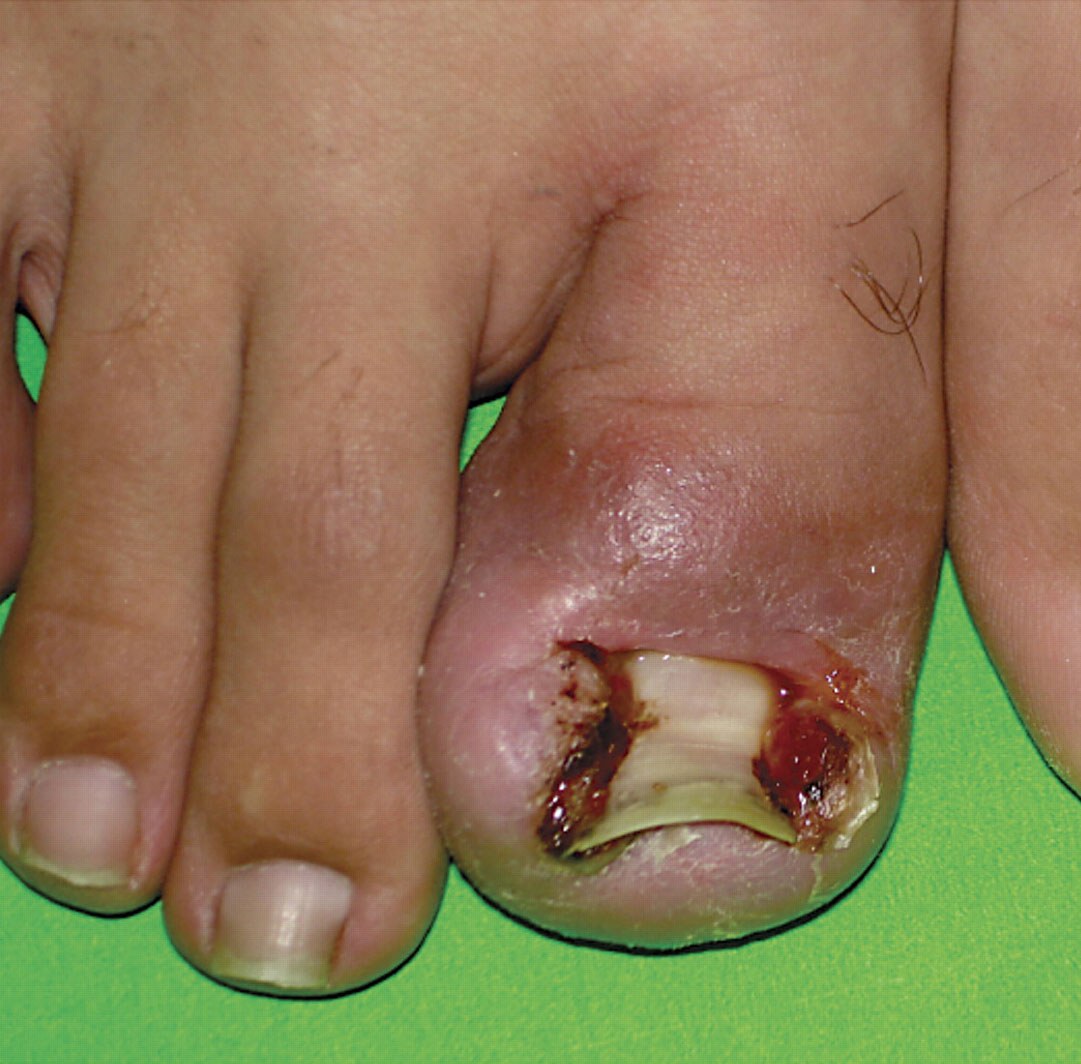
The lateral nail edge breaks through the nail fold — a foreign-body reaction, not a primary infection. The great toe is almost always affected. Common causes: nails cut too short and rounded instead of straight, tight footwear, sweating and hyperhidrosis, foot deformities, and a constitutionally broad or strongly curved nail plate.
- Stage I (inflammation): the fold is red, swollen and tender without discharge.
- Stage II (infection): plus discharge and pus, the fold overhangs the nail edge.
- Stage III (granulation): exuberant granulation tissue overgrows the plate; a chronic, relapsing course.
Distinction: the pincer nail is excessive transverse curvature of the plate that pinches the nail bed — often the reason behind a recurrent ingrown nail, and covered by the same guideline.
Practise Ingrown toenail (unguis incarnatus) in the app
Flashcards with spaced repetition, exam questions and spot-the-diagnosis on this topic – in DermaFuchs, free of charge.
In the DermaFuchs app: 1 flashcards · 3 clinical images
Open in browser Download on the App StoreMore diseases of the skin appendages
- Acne fulminans
- Hidradenitis suppurativa (acne inversa)
- Acne vulgaris
- Alopecia areata
- Androgenetic alopecia
- Folliculitis (infectious)
- Lichen planopilaris
- Milia (milium)
Note: This page is intended for medical education and does not replace diagnosis or treatment decisions in individual cases. Treatment and follow-up content is available in the app.