Perioral dermatitis
Exam relevance: in 1 of more than 50 board exam reports · rank 93
- Specialty
- Dermatology · Skin appendages
- Images
- Clinical 4
- In the app
- 6 flashcards
- Last updated
- 10/2026 · Dr. Pascal Bafteh
Contents
Images (4)
Definition
Definition & Synonyms
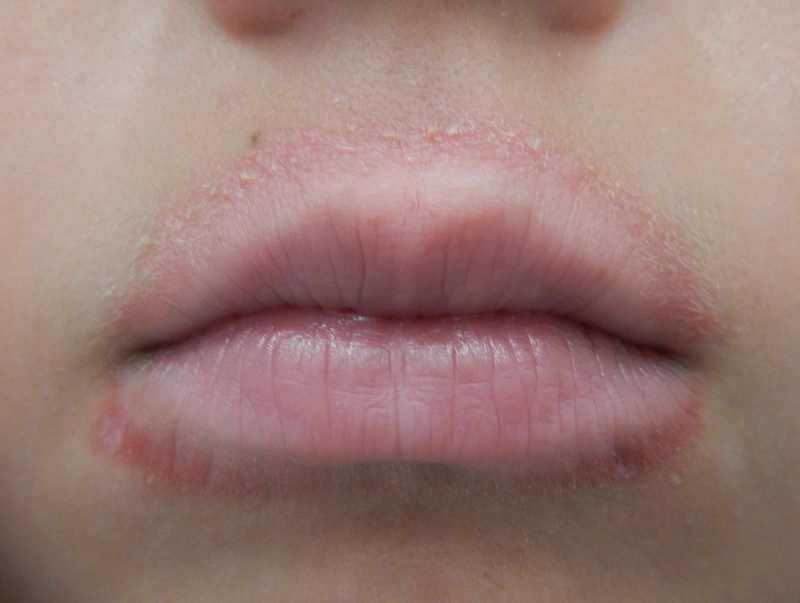
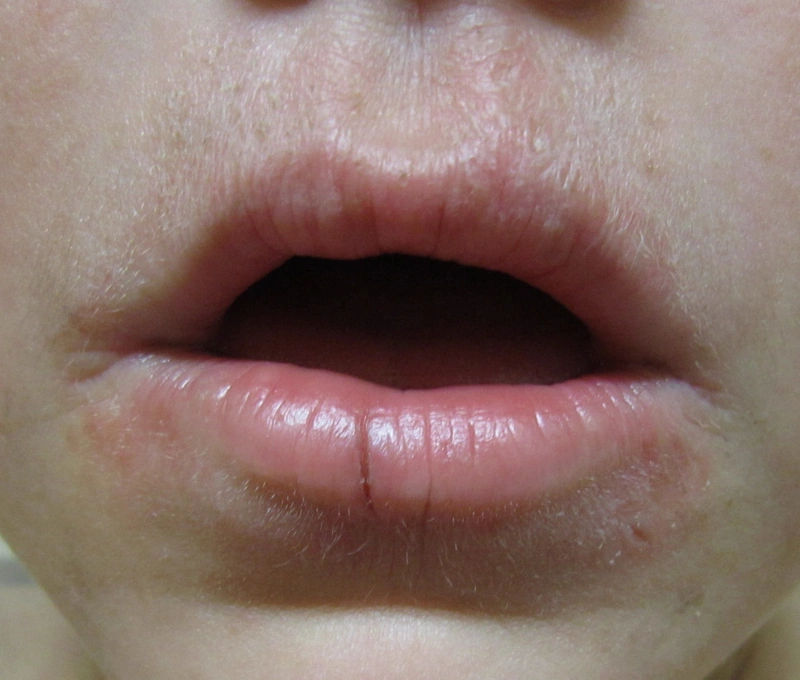
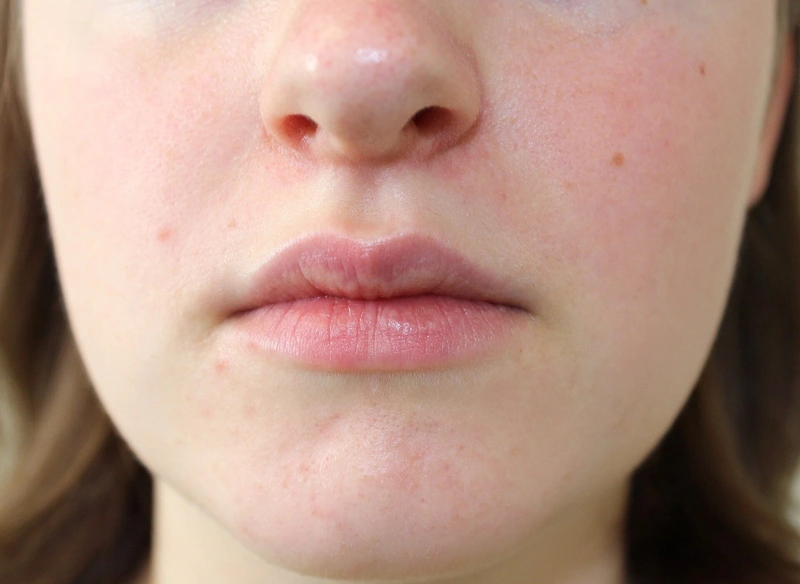
- Perioral dermatitis (POD) = chronic-recurrent, rosaceiform dermatosis with follicular papulopustules perioral / perinasal / periocular with a free zone directly around the vermilion border.
- Synonyms: Classic terms are Stewardess disease + Rosacea-like dermatitis + Light-sensitive seborrheid — first described in 1957 by Frumess and Lewis as “light-sensitive seborrheid”.
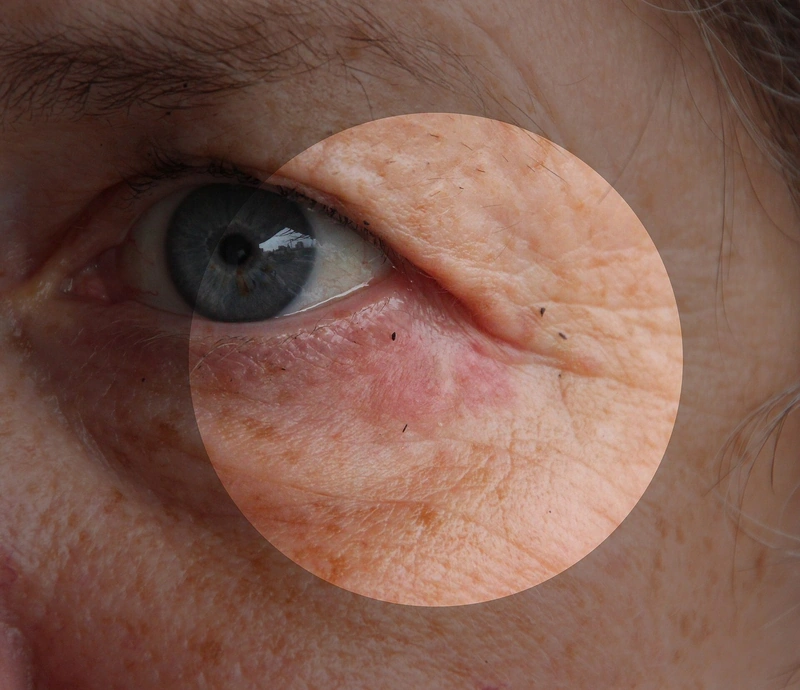
- Granulomatous perioral dermatitis (GPD) as special form with firmer red-brown papules, more common in children (FACE syndrome).
Occurrence & epidemiology
Epidemiology & Pathogenesis
- Women 20–45 yr dominate; children (about 7 months to 13 years) are also affected, including the granulomatous form.
- Pathogenesis: Probable primarily disturbed epidermal barrier; Demodex, Candida and fusiform bacteria can be cultured, but their significance is unclear.
Clinical features
Clinical Presentation
- Location: Typical is perioral with free zone at vermilion + perinasal + periocular — the narrow free zone directly around the vermilion is characteristic.
- Morphology: 1–2 mm follicular red papules + papulopustules on erythematous base + fine scaling.
- Special forms: Granulomatous POD (children, periorbital + perinasal), Lupus miliaris disseminatus faciei (adults, granulomatous, scarring healing).
Diagnosis
Diagnostics
- Clinical visual diagnosis — no specific laboratory diagnostics.
Differential diagnoses
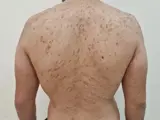
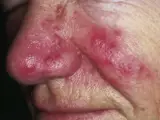
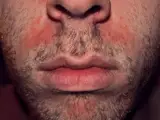
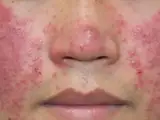
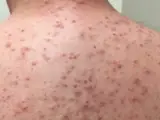
Image credits for the thumbnails
- Acne vulgaris: Sedef94, “Kürəkdə düyünlü və kistik sızanaqlar (Acne Vulgaris) 08”, CC BY-SA 4.0, via Wikimedia Commons · CC BY-SA 4.0 · Source
- Rosacea: Michael Sand, Daniel Sand, Christina Thrandorf, Volker Paech, Peter Altmeyer, Falk G Bechara, “Rosacea”, CC BY 2.5, via Wikimedia Commons, cropped · CC BY 2.5 · Source
- Seborrhoeic dermatitis: Roymishali, “Seborrhoeic dermatitis highres”, CC BY-SA 3.0, via Wikimedia Commons · CC BY-SA 3.0 · Source
- Demodicosis: Ran Yuping et al., “Demodicosis”, CC BY-SA 3.0, via Wikimedia Commons · CC BY-SA 3.0 · Source
- Acneiform drug eruption: Dunbar D, Hwang J, Driscoll M (Cureus 2026), CC BY 4.0, via PubMed Central (PMC13591024) · CC BY 4.0 · Source · cropped
Treatment principles
- The mainstay is “zero therapy”: discontinuing all topical glucocorticoids (warning the patient about the expected rebound) and avoiding occlusive cosmetics and topical products.
- Topical antimicrobial and anti-inflammatory agents are used, with topical calcineurin inhibitors as a bridge during the rebound phase.
- Extensive or refractory disease is treated with systemic tetracyclines, or macrolides in children and during pregnancy.
- With strict avoidance of steroids, the condition usually resolves completely.
Specific treatment regimens with drugs and doses are covered in the DermaFuchs app.
Keep learning in the app
References (selection)
Cross-references
Keep learning
Keep learning with flashcards, exam questions and spot diagnoses in the DermaFuchs app – free, in your browser or as an app.
Related pages: Acne vulgaris · Rosacea · Seborrhoeic dermatitis
Note: This page is intended for medical education and does not replace diagnosis or treatment decisions in individual cases.