Acrodermatitis enteropathica (zinc deficiency)
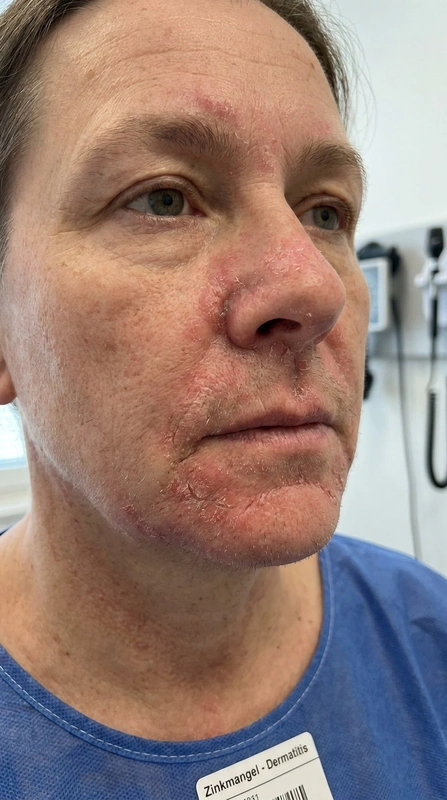
Definition and Genetics
Acrodermatitis enteropathica is an autosomal recessive inherited disorder of zinc transport, caused by mutations in the SLC39A4 gene (ZIP4 zinc transporter), leading to reduced intestinal zinc absorption.
Pathophysiology
Zinc is essential for the stability of cell membranes and function of numerous enzymes and acts as a cofactor in processes such as cell proliferation, differentiation, and wound healing. A deficiency leads to disturbances in epithelial integrity and immune function.
Clinical Features
Typical features are vesiculopustular and eczematous dermatitis with pluriorificial (perioral, perianal, genital) and acral distribution, combined with diarrhea and alopecia. Further symptoms may include growth retardation, susceptibility to infections, and paronychia.
Diagnostics
Diagnosis is based on clinical features and laboratory findings with decreased serum zinc level (< 70 μg/dl) and, if applicable, genetic confirmation. Differential diagnoses include essential fatty acid deficiency states, atopic dermatitis, and periorificial dermatoses.
Differential diagnoses
- Atopic dermatitis (atopic eczema)
- Dyshidrotic hand eczema (pompholyx)
- Palmoplantar psoriasis
- Ecthyma
- Pyoderma gangrenosum
- Psoriasis inversa
- Candida intertrigo
- Erythrasma
Practise Acrodermatitis enteropathica (zinc deficiency) in the app
Flashcards with spaced repetition, exam questions and spot-the-diagnosis on this topic – in DermaFuchs, free of charge.
In the DermaFuchs app: 4 flashcards · 3 clinical images
Open in browser Download on the App StoreSources (selection)
More metabolic skin disorders
Note: This page is intended for medical education and does not replace diagnosis or treatment decisions in individual cases. Treatment and follow-up content is available in the app.