Pitted keratolysis
- Synonyms
- Keratoma sulcatum, keratoma plantare sulcatum
- Specialty
- Dermatology · Bacterial infections
- Images
- Clinical 3
- In the app
- 1 flashcard
- Last updated
- 10/2026 · Dr. Pascal Bafteh
Contents
Images (3)
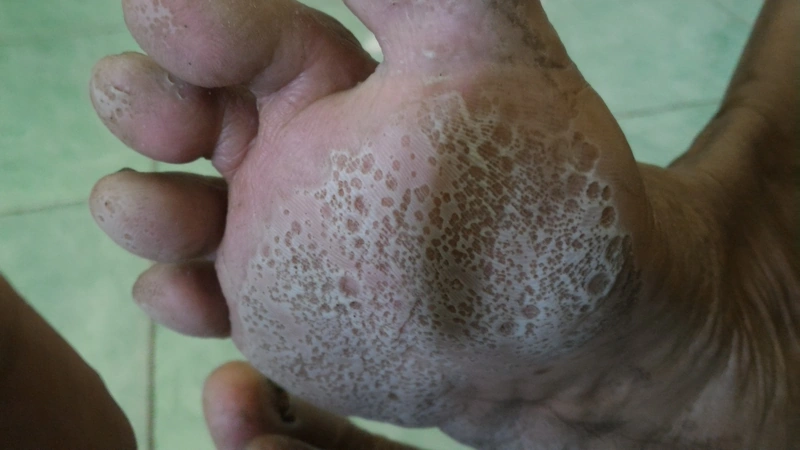
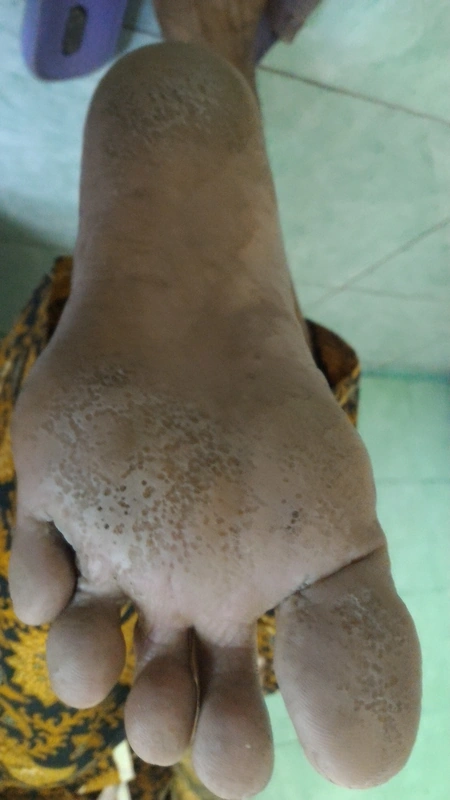
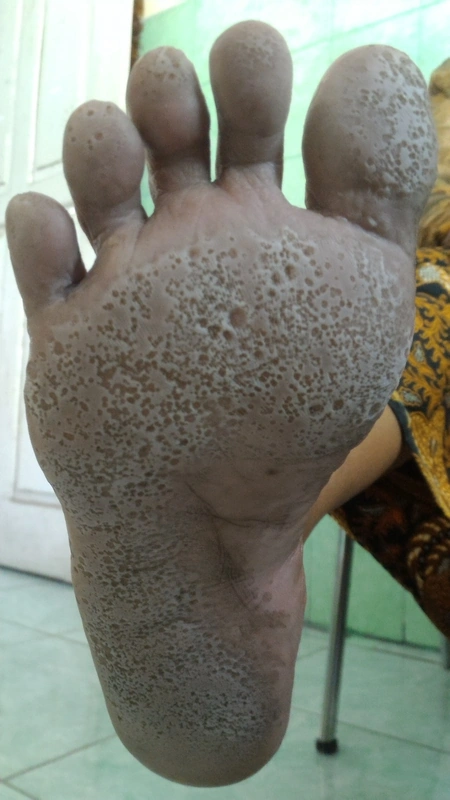
Definition
Pathogens are Corynebacterium / Kytococcus — Gram-positive bacteria.
Typical patients are young athletes / soldiers with hyperhidrosis + occlusive footwear.
Pathogenesis is extracellular proteinases (keratolytic pits, sulfide odor).
Clinical presentation: round pits at pressure points with foul odor.
Diagnosis
- Clinical diagnosis: numerous small crater-like pits in the stratum corneum of the soles (ball of the foot, heel), best seen when the feet are wet; unpleasant odour and hyperhidrosis.
- Wood's light may show coral-red fluorescence; distinction from plantar warts, tinea pedis and erythrasma.
Differential diagnoses
 Tinea pedis
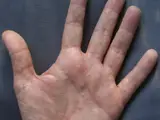 Dyshidrotic eczema (pompholyx)
 Miliaria rubra (heat rash)
 Erythrasma
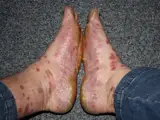 Palmoplantar psoriasis
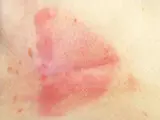 Intertrigo
Image credits for the thumbnails
- Tinea pedis: Tang21237, “Interdigital tinea between the 3rd and 4th interdigital spaces”, CC BY-SA 4.0, via Wikimedia Commons · CC BY-SA 4.0 · Source
- Dyshidrotic eczema (pompholyx): Inwe (Wikimedia Commons), “Dyshidrosis”, CC BY-SA 3.0, via Wikimedia Commons · CC BY-SA 3.0 · Source
- Miliaria rubra (heat rash): Sentient Planet, “Miliaria rubra mild”, CC BY-SA 3.0, via Wikimedia Commons · CC BY-SA 3.0 · Source
- Erythrasma: unknown (Commons user), “Erythrasma”, CC BY-SA 4.0, via Wikimedia Commons · CC BY-SA 4.0 · Source
- Palmoplantar psoriasis: MCvanVeen, “Psoriasis July 2016”, CC BY-SA 4.0, via Wikimedia Commons · CC BY-SA 4.0 · Source
- Intertrigo: Pera F, Suman C, Cosma M, Mazza S, Brunani A, Cancello R (J Cosmet Dermatol 2025), CC BY 4.0, via PubMed Central (PMC12042251) – panel B “before” (cropped) · CC BY 4.0 · Source
Treatment principles
- Treatment targets the bacterial infection and the predisposing factors: topical antibiotics or antiseptics usually clear the lesions and the odour quickly.
- Lasting success depends on treating plantar hyperhidrosis, breathable footwear, frequent changes of socks and keeping the feet dry, as recurrences are otherwise common.
Specific treatment regimens with drugs and doses are covered in the DermaFuchs app.
Keep learning in the app
References (selection)
Cross-references
Mentioned in
Keep learning: test yourself
One question from the DermaFuchs app on Pitted keratolysis – tap an answer.
Question 1 of 1
In addition to round pits at pressure points, what is the other hallmark clinical feature of pitted keratolysis?
Answer
Correct: foul odor. The degradation of keratin by bacterial enzymes releases sulfur compounds, resulting in a characteristic foul odor.
More questions like these – with explanations and spaced repetition – in the app.
Note: This page is intended for medical education and does not replace diagnosis or treatment decisions in individual cases.