Sweet syndrome (acute febrile neutrophilic dermatosis)
Exam relevance: in 2 of more than 50 board exam reports · rank 69
- Synonyms
- akute febrile neutrophile Dermatose, Sweet syndrome, acute febrile neutrophilic dermatosis
- Specialty
- Dermatology · Inflammatory skin diseases
- Images
- Histology 1 · Clinical 2
- In the app
- 5 flashcards
- Last updated
- 10/2026 · Dr. Pascal Bafteh
Contents
Images (3)
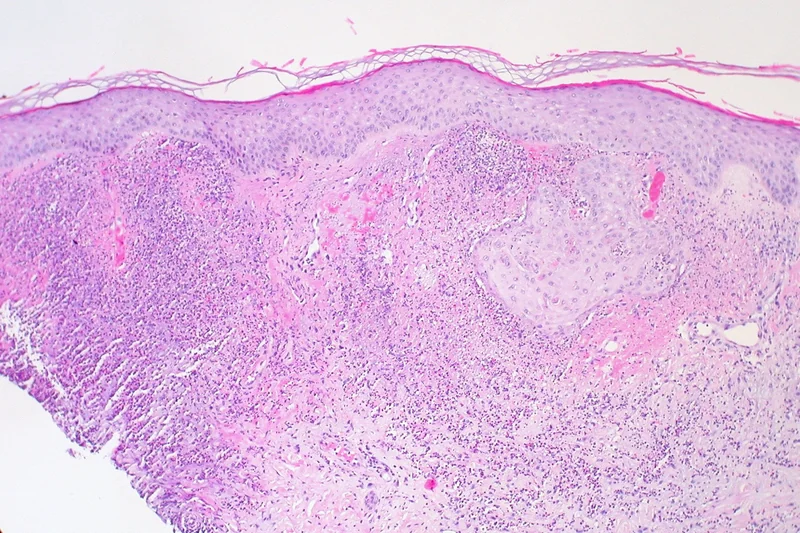 Histology
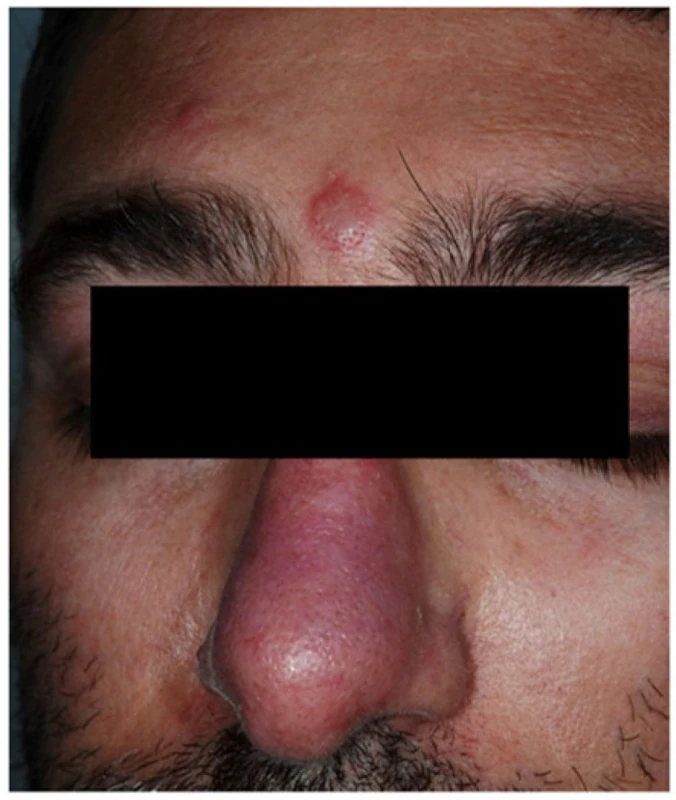
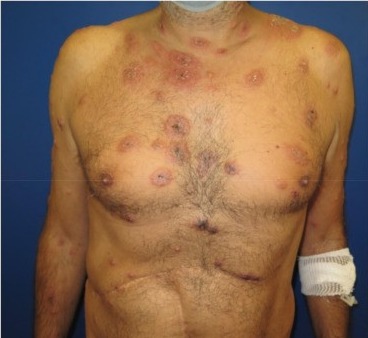
Clinical features
Clinical Features & Triggers
- Bullous Variant: A bullous Sweet's variant with tense blisters is typically associated with myeloid neoplasia (especially AML) — obligatory hematological screening.
- Associated underlying disorders: besides the para-/post-infectious forms (above all upper respiratory streptococcal infection, yersiniosis) and the paraneoplastic forms, Sweet's syndrome is associated with autoimmune diseases — first and foremost rheumatoid arthritis and inflammatory bowel disease (ulcerative colitis, Crohn's disease, often in parallel with flares); further with thyroid disease, Behçet's disease and pregnancy. Consequence: every Sweet's syndrome warrants a targeted history for joint and bowel symptoms plus haematological screening.
- Pathogenesis: Activation of neutrophilic granulocytes by cytokines such as G-CSF + IL-1 + IL-17.
- Clinical Presentation: Typical are painful succulent plaques on the upper back / dorsum of hands, pseudo-vesicular appearance due to dermal edema.
- General: Typical are high fever + arthralgias plus Neutrophilia + leukocytosis.
Diagnosis
Diagnostic Criteria (Su / Liu, Walker / Cohen)
- 2 Major + 2 Minor ⇒ Diagnosis.
- Major: Abrupt eruption + histology with dense neutrophilic infiltrate without vasculitis.
Differential diagnoses
 Erythema nodosum
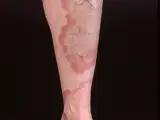 Granuloma annulare
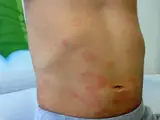 Urticaria
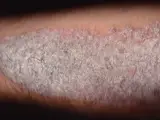 Psoriasis vulgaris (plaque psoriasis)
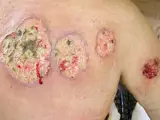 Pyoderma gangrenosum
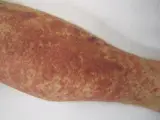 Leukocytoclastic vasculitis
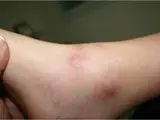 Polyarteritis nodosa
Image credits for the thumbnails
- Erythema nodosum: James Heilman, MD, “ENlegs”, CC BY-SA 3.0, via Wikimedia Commons · CC BY-SA 3.0 · Source
- Granuloma annulare: Kreuter et al., “Generalized granuloma annulare”, CC BY-SA 2.0, via Wikimedia Commons · CC BY-SA 2.0 · Source
- Urticaria: Gzzz, “Urticaria child”, CC BY-SA 4.0, via Wikimedia Commons · CC BY-SA 4.0 · Source
- Psoriasis vulgaris (plaque psoriasis): MediaJet, “An Arm Covered With Plaque Type Psoriasis”, CC BY-SA 3.0, via Wikimedia Commons · CC BY-SA 3.0 · Source
- Pyoderma gangrenosum: Monopol, “Pyoderma gangrenosum 01”, CC BY-SA 3.0, via Wikimedia Commons · CC BY-SA 3.0 · Source
- Leukocytoclastic vasculitis: James Heilman, MD, “LV22010 (leukocytoclastic vasculitis)”, CC BY-SA 3.0, via Wikimedia Commons · CC BY-SA 3.0 · Source
- Polyarteritis nodosa: Ruby Haviv, Maya Capua, Jacob Amir, Liora Harel, “Cutaneous polyarteritis nodosa”, CC BY 4.0, via Wikimedia Commons · CC BY 4.0 · Source
Treatment principles
- Systemic glucocorticoids are the treatment of choice, usually producing rapid improvement of fever and skin lesions.
- Alternative agents acting on neutrophils or immunosuppressants are used where steroids are contraindicated or in relapse.
- It is important to look for and treat triggers and associated conditions, particularly haematological malignancies, infections, inflammatory bowel disease and drugs.
Specific treatment regimens with drugs and doses are covered in the DermaFuchs app.
Keep learning in the app
References (selection)
Cross-references
Keep learning: test yourself
One question from the DermaFuchs app on Sweet syndrome (acute febrile neutrophilic dermatosis) – tap an answer.
Question 1 of 1
What are the hallmark symptoms of Sweet Syndrome?
Answer
Correct: fever and painful erythematous plaques. Sweet Syndrome is characterized by fever and painful erythematous plaques due to neutrophilic infiltration.
More questions like these – with explanations and spaced repetition – in the app.
Note: This page is intended for medical education and does not replace diagnosis or treatment decisions in individual cases.