PASH syndrome
Exam relevance: in 1 of more than 50 board exam reports · rank 93
- Specialty
- Dermatology · Inflammatory skin diseases
- In the app
- 4 flashcards
- Last updated
- 10/2026 · Dr. Pascal Bafteh
Contents
Definition
PASH syndrome is an autoinflammatory condition made up of the triad Pyoderma gangrenosum, Acne and Suppurative Hidradenitis (hidradenitis suppurativa, acne inversa). The term was coined in 2012 (published online in 2011) by Braun-Falco and colleagues in Munich, who described two unrelated patients with this combination. The key observation was that both lacked the pyogenic arthritis typical of PAPA syndrome; instead, they had hidradenitis suppurativa. The absence of joint inflammation remains the most important feature separating PASH from PAPA and PAPASH.
Today, PASH syndrome is regarded as a form of syndromic hidradenitis suppurativa: hidradenitis that occurs together with other neutrophilic or autoinflammatory diseases and usually runs a more severe course than ordinary hidradenitis.
Occurrence
- Very rare; the literature consists of case reports and small series, and reliable prevalence figures are lacking.
- Acne and hidradenitis usually begin after puberty; PASH is often only diagnosed in adulthood when pyoderma gangrenosum appears.
- Unlike familial PAPA syndrome, PASH is mostly sporadic.
- Crohn's disease has repeatedly been described as an associated condition. Whether smoking and overweight, known factors in hidradenitis suppurativa, play the same role in PASH has not been studied systematically.
Aetiopathogenesis and genetics
PASH syndrome is considered autoinflammatory: the inflammation results from overactivation of the innate immune system, not from autoantibodies or pathogens. No single causative genetic change is known; the findings to date are heterogeneous.
Genetic findings
- PSTPIP1: in the first description, the coding regions (exons 1 to 15) were normal. However, both patients showed an increased repetition of the CCTG microsatellite on one allele in the PSTPIP1 promoter – a change also linked to aseptic abscess syndrome. Commonly affected regions of MEFV, NLRP3 and TNFRSF1A were normal.
- Other genes: in a series of five patients (Marzano 2014), four carried changes in genes known from other autoinflammatory diseases, including inflammatory bowel disease; the fifth patient, without a genetic finding, had clinically evident Crohn's disease.
- Nicastrin (NCSTN): in 2015, an NCSTN mutation was described in PASH for the first time. Nicastrin is a component of γ-secretase; mutations in genes of this enzyme complex are known from familial forms of hidradenitis suppurativa. This places PASH close to genetically determined hidradenitis.
Inflammatory pattern in the skin
In lesional skin of patients with PASH, interleukin-1β and its receptors as well as neutrophil-attracting chemokines (IL-8, CXCL1/2/3, CXCL16, RANTES) were overexpressed, as were the Fas/Fas ligand and CD40/CD40 ligand systems. Serum levels of IL-1β, TNF-α and IL-17, by contrast, were within the normal range – suggesting that inflammation in PASH syndrome takes place mainly in the skin. The starting point is probably the occluded, rupturing hair follicle in acne and hidradenitis.
Clinical features
The three components need not be present at the same time. Acne or hidradenitis has often been known for years, and the diagnosis is only made when pyoderma gangrenosum develops.
- Hidradenitis suppurativa: painful, deep-seated nodules, abscesses and sinus tracts in the axillae, groin, inframammary, gluteal and anogenital regions; over time, rope-like and sometimes bridging scars. In PASH syndrome, hidradenitis is often extensive.
- Acne: usually severe inflammatory acne up to acne conglobata, with nodules, cysts, double comedones and scars on the face, back and chest.
- Pyoderma gangrenosum: begins as a painful pustule or nodule and rapidly turns into an ulcer with a violaceous, undermined border; as in isolated pyoderma gangrenosum, it favours the lower legs but can occur at other sites. Pain is often more severe than the findings suggest. New lesions after minor injury (pathergy) may occur but are absent in many patients.
- No arthritis: joint pain alone does not exclude PASH. Objective arthritis, however, leads to a different classification (PAPASH, PsAPASH or PASS, see "How to tell it apart").
Histology
- Pyoderma gangrenosum: at the border of active lesions, dense neutrophilic infiltrates in the dermis, often with abscess formation and ulceration. The finding is not specific and serves mainly to exclude other causes.
- Hidradenitis suppurativa: occlusion of the follicular infundibulum, perifollicular inflammation with neutrophils, lymphocytes and plasma cells, epithelialised sinus tracts and foreign-body-type granulomas.
- Research: increased expression of IL-1β and neutrophil-attracting chemokines has been shown in PASH lesions; this plays no role in routine diagnosis.
Diagnosis
The diagnosis is clinical: pyoderma gangrenosum, acne and hidradenitis suppurativa without arthritis. More important than any single test are the exclusion of infection and the search for associated diseases.
- Confirming pyoderma gangrenosum: biopsy from the active border with histology and tissue cultures (bacteria, mycobacteria, fungi) to distinguish deep infection, vasculitis and malignancy. Structured diagnostic tools are provided by the Delphi consensus criteria for ulcerative pyoderma gangrenosum (Maverakis 2018) and the PARACELSUS score (Jockenhöfer 2019).
- Classifying hidradenitis: Hurley staging and documentation of the affected regions; swabs if secondary infection is suspected.
- Examining the joints: history and clinical examination for peripheral arthritis, inflammatory back pain and psoriatic arthritis; rheumatological assessment if abnormal.
- Investigating the bowel: targeted history (diarrhoea, abdominal pain, blood in the stool, weight loss); if suspected, faecal calprotectin and gastroenterological work-up, as Crohn's disease has been described as an associated condition.
- Laboratory: CRP, ESR and full blood count as non-specific activity markers.
- Genetics: may support classification in individual cases (PSTPIP1 including the promoter region, genes of autoinflammatory diseases, NCSTN). A negative result does not exclude PASH.
How to tell it apart
- PAPA syndrome: pyogenic arthritis instead of hidradenitis, autosomal dominant inheritance, onset in childhood, detectable PSTPIP1 mutation.
- PAPASH syndrome: all features of PASH syndrome plus sterile pyogenic arthritis.
- PsAPASH and PASS: PASH components together with psoriatic arthritis or axial spondyloarthritis, respectively.
- Isolated hidradenitis suppurativa with ulceration: secondarily infected or chronically ulcerated hidradenitis lesions can resemble pyoderma gangrenosum; the undermined, violaceous border and biopsy help to tell them apart.
- Cutaneous Crohn's disease: granulomatous ulcers and fistulas, often perianal; histologically non-caseating granulomas instead of predominantly neutrophilic infiltrates.
- Acne fulminans: severe ulcerating acne with fever and joint or bone pain, mainly in adolescent boys – without hidradenitis and without pyoderma gangrenosum.
- Infections: rule out ecthyma gangrenosum, deep mycoses and atypical mycobacterial infections by culture and special stains.
Exam essentials
- PASH = pyoderma gangrenosum + acne + suppurative hidradenitis – without arthritis; this is the difference from PAPA and PAPASH.
- First described in 2012 by Braun-Falco et al. (Munich): PSTPIP1 exons normal, increased CCTG repeats in the promoter.
- Mostly sporadic, no uniform mutation; reported findings include changes in genes of autoinflammatory diseases and a nicastrin mutation (γ-secretase).
- Watch for associated disease: Crohn's disease or other inflammatory bowel disease.
- Inflammation is predominantly cutaneous: IL-1β and chemokines are raised in the skin, whereas serum cytokines were normal in the case series.
Differential diagnoses
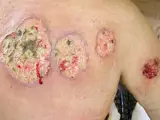 Pyoderma gangrenosum
 Hidradenitis suppurativa (acne inversa)
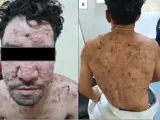 Acne fulminans
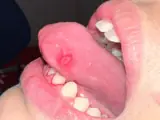 Behçet's disease
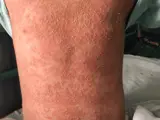 Generalized pustular psoriasis (von Zumbusch)
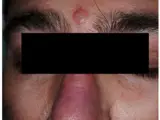 Sweet syndrome (acute febrile neutrophilic dermatosis)
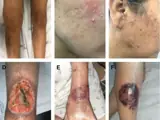 PAPA syndrome
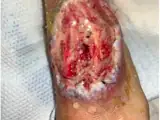 PAPASH syndrome
Image credits for the thumbnails
- Pyoderma gangrenosum: Monopol, “Pyoderma gangrenosum 01”, CC BY-SA 3.0, via Wikimedia Commons · CC BY-SA 3.0 · Source
- Hidradenitis suppurativa (acne inversa): Dr. Thomas Brinkmeier, “Acne inversa, Hurley-Stadium II, ©WIKIDERM”, CC BY 4.0, via Wikimedia Commons · CC BY 4.0 · Source
- Acne fulminans: Lahrougui A, Aboudourib M, Bendaoud L, Amal S, Hocar O, Cureus 2025, Figure 1, CC BY 4.0, via PubMed Central (PMC12123476) · CC BY 4.0 · Source
- Behçet's disease: El Omari S, Barhoud O, Elarabi S et al. (Cureus 2026), CC BY 4.0, via PubMed Central (PMC13561507) · CC BY 4.0 · Source · cropped
- Generalized pustular psoriasis (von Zumbusch): Bourousis E, Kotzamani MT, Maritsi DN., Cureus 2025, Figure 1, CC BY 4.0, via PMC · CC BY 4.0 · Source
- Sweet syndrome (acute febrile neutrophilic dermatosis): Antonelli E et al. (J Clin Med 2021), CC BY 4.0, via PubMed Central (PMC7835974) · CC BY 4.0 · Source
- PAPA syndrome: Alvarez-Payares JC, Ramírez-Urrea S, Correa-Parra L et al. (Cureus 2021), CC BY 4.0, via PubMed Central (PMC8439267) · CC BY 4.0 · Source
- PAPASH syndrome: Shaked Y, Pulumati A, Kucharik AH et al. (JAAD Case Rep 2026), CC BY 4.0, via PubMed Central (PMC13213215) · CC BY 4.0 · Source
Treatment principles
- Management is guided by the leading component, usually hidradenitis suppurativa and pyoderma gangrenosum, and is interdisciplinary; the data come from case reports and small case series.
- Systemic glucocorticoids and biologics from the groups of TNF-α and interleukin-1 antagonists are used; interleukin-17 antagonists, which are approved for hidradenitis suppurativa, have only been reported in single cases of PASH; paradoxical pyoderma gangrenosum under IL-17 blockade has also been described. There is no uniform regimen.
- Because of the pathergy of pyoderma gangrenosum, surgery on hidradenitis lesions is planned, where possible, only once inflammation is controlled; as in hidradenitis suppurativa, smoking cessation and weight reduction are accompanying measures.
Specific treatment regimens with drugs and doses are covered in the DermaFuchs app.
Keep learning in the app
References (selection)
- Braun-Falco M, Kovnerystyy O, Lohse P, Ruzicka T. Pyoderma gangrenosum, acne, and suppurative hidradenitis (PASH) – a new autoinflammatory syndrome distinct from PAPA syndrome. J Am Acad Dermatol. 2012;66(3):409-15. PMID 21745697
- Marzano AV et al. Association of pyoderma gangrenosum, acne, and suppurative hidradenitis (PASH) shares genetic and cytokine profiles with other autoinflammatory diseases. Medicine (Baltimore). 2014;93(27):e187. PMID 25501066
- Duchatelet S et al. First nicastrin mutation in PASH (pyoderma gangrenosum, acne and suppurative hidradenitis) syndrome. Br J Dermatol. 2015;173(2):610-2. PMID 25601011
- Garcovich S, Genovese G, Moltrasio C, Malvaso D, Marzano AV. PASH, PAPASH, PsAPASH, and PASS: the autoinflammatory syndromes of hidradenitis suppurativa. Clin Dermatol. 2021;39(2):240-7. PMID 34272017
- Maverakis E et al. Diagnostic criteria of ulcerative pyoderma gangrenosum: a Delphi consensus of international experts. JAMA Dermatol. 2018;154(4):461-6. PMID 29450466
- Jockenhöfer F et al. The PARACELSUS score: a novel diagnostic tool for pyoderma gangrenosum. Br J Dermatol. 2019;180(3):615-20. PMID 29388188
- Metko D, Mehta S, McMullen E, Piguet V. Biologic management of PASH syndrome: a systematic review. Arch Dermatol Res. 2024;317(1):32. PMID 39560772
Cross-references
Keep learning
Keep learning with flashcards, exam questions and spot diagnoses in the DermaFuchs app – free, in your browser or as an app.
Related pages: Pyoderma gangrenosum · Hidradenitis suppurativa (acne inversa) · Acne fulminans
Note: This page is intended for medical education and does not replace diagnosis or treatment decisions in individual cases.