Wells syndrome (eosinophilic cellulitis)
- Synonyms
- eosinophile Zellulitis, Wells syndrome, eosinophilic cellulitis
- Specialty
- Dermatology · Inflammatory skin diseases
- Images
- Clinical 2
- In the app
- 1 flashcard
- Last updated
- 10/2026 · Dr. Pascal Bafteh
Contents
Images (2)
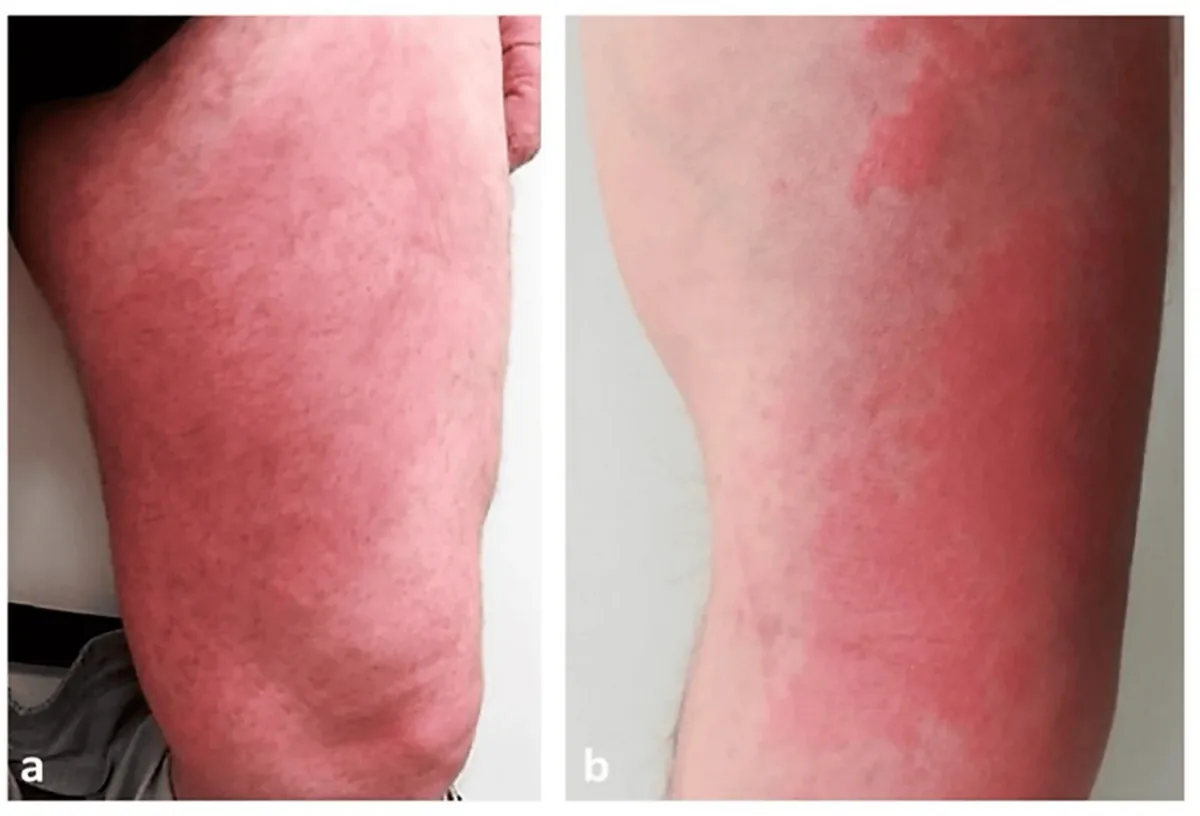
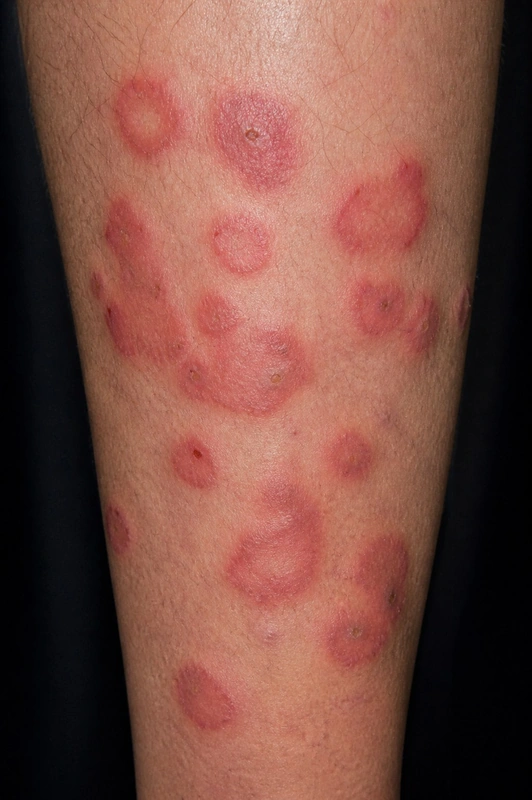 AI illustration
Definition
Wells syndrome (eosinophilic cellulitis) is a rare, usually recurrent inflammatory skin disease with plaques resembling cellulitis or erysipelas; a local hypersensitivity reaction is suspected. Histologically the acute phase shows dermal oedema with an eosinophilic infiltrate without vasculitis, later "flame figures" and finally a granulomatous picture.
- Etiology: Reaction to various triggers:
- Pathogenesis: Tissue reaction to the release of "Eosinophil Major Basic Protein" (MBP) with the involvement of leukotrienes.
- Histology: Characteristic (but not pathognomonic) are Flame Figures as degranulated eosinophil aggregates on collagen with MBP coating.
Clinical features
- Itchy or burning red nodules or plaques, usually on a limb, also on the face and trunk; variants include granuloma annulare-like, urticaria-like, papulovesicular or bullous; sometimes fever and joint pain.
- Lesions resolve spontaneously but typically recur; blood eosinophilia is present in about 50%.
- Mostly idiopathic; reported triggers are infections, arthropod bites, drugs, and haematological disorders and malignancies.
Differential diagnoses
 Erythema nodosum
 Folliculitis
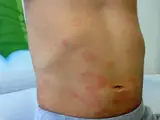 Urticaria
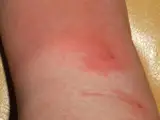 Erysipelas
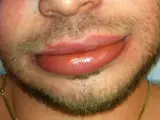 Angioedema
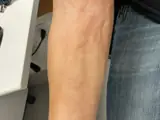 Eosinophilic fasciitis (Shulman)
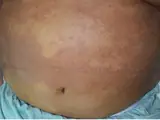 Hypereosinophilic syndrome (HES)
- Giant urticaria
Image credits for the thumbnails
- Erythema nodosum: James Heilman, MD, “ENlegs”, CC BY-SA 3.0, via Wikimedia Commons · CC BY-SA 3.0 · Source
- Folliculitis: Da pacem Domine, “Folliculitis2”, CC0, via Wikimedia Commons · CC0 · Source
- Urticaria: Gzzz, “Urticaria child”, CC BY-SA 4.0, via Wikimedia Commons · CC BY-SA 4.0 · Source
- Erysipelas: Poupou l'quourouce, “Erysipel”, CC BY-SA 3.0, via Wikimedia Commons · CC BY-SA 3.0 · Source
- Angioedema: James Heilman, MD, “AngioedemaFra”, CC BY-SA 3.0, via Wikimedia Commons · CC BY-SA 3.0 · Source
- Eosinophilic fasciitis (Shulman): Matthews C, Thomas D, Monteagudo L et al. (Clin Case Rep 2025), CC BY 4.0, via PubMed Central (PMC11926566) · CC BY 4.0 · Source
- Hypereosinophilic syndrome (HES): Hida Y, Hara T (JAAD Case Rep 2026), CC BY 4.0, via PubMed Central (PMC13280059) – cropped (abdomen) · CC BY 4.0 · Source
Treatment principles
- Wells syndrome is often self-limiting but tends to recur.
- Mild cases are treated with topical glucocorticoids and antihistamines, and more severe cases with systemic glucocorticoids, under which lesions usually resolve rapidly.
- Possible triggers such as insect bites, drugs, infections or haematological disorders are sought and avoided or treated.
Specific treatment regimens with drugs and doses are covered in the DermaFuchs app.
Keep learning in the app
References (selection)
Cross-references
Keep learning
Keep learning with flashcards, exam questions and spot diagnoses in the DermaFuchs app – free, in your browser or as an app.
Related pages: Erythema nodosum · Folliculitis · Urticaria
Note: This page is intended for medical education and does not replace diagnosis or treatment decisions in individual cases.