Cheilitis granulomatosa (Miescher)
Exam relevance: in 2 of more than 50 board exam reports · rank 69
- Synonyms
- Miescher, cheilitis granulomatosa, Melkersson-Rosenthal syndrome
- Specialty
- Dermatology · Inflammatory skin diseases
- Images
- Clinical 2
- In the app
- 1 flashcard
- Last updated
- 10/2026 · Dr. Pascal Bafteh
Contents
Images (2)
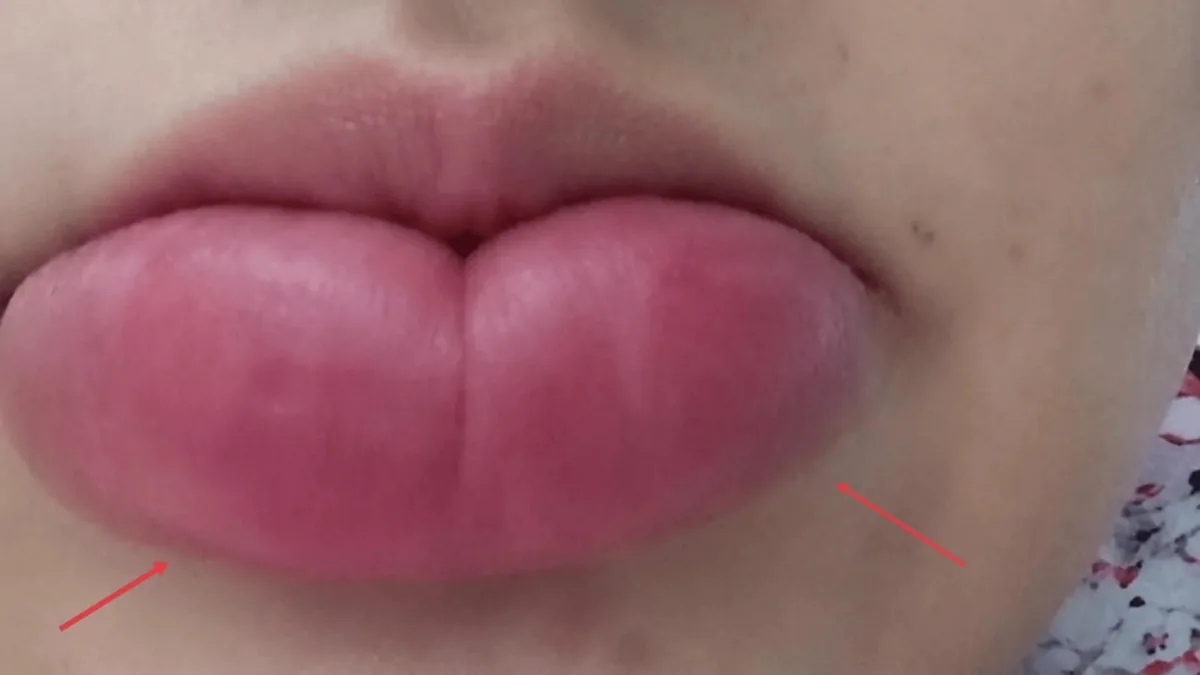
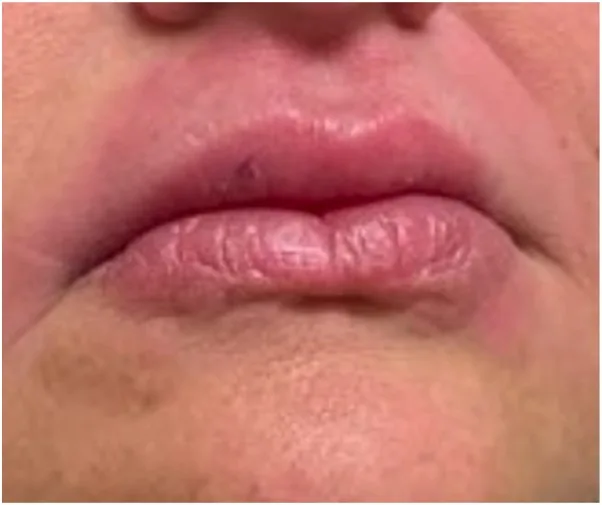
Definition
- Cheilitis granulomatosa Miescher: chronic-recurrent, painless swelling of the lips (often upper lip), histologically non-caseating granulomas. Tends to affect younger people; both sexes equally.
- Melkersson-Rosenthal Syndrome: The classic triad is granulomatous cheilitis + lingua plicata (fissured tongue) + facial palsy. Complete triad is rare — also mono- / oligosymptomatic course possible (mostly isolated granulomatous cheilitis Miescher); swelling can also occur on the tongue or palate.
Diagnosis
Diagnosis — a diagnosis of exclusion
- Principle: granulomatous cheilitis and Melkersson-Rosenthal syndrome are diagnoses of exclusion: the non-caseating granulomas are non-specific and occur equally in sarcoidosis, Crohn's disease and foreign-body reactions.
- Biopsy: deep lip biopsy showing non-caseating epithelioid cell granulomas, lymphoedema and a perivascular lymphocytic infiltrate; in early stages granulomas may still be absent (only oedema and infiltrate) — repeat biopsy is justified.
- To be excluded:
- Sarcoidosis: chest X-ray or CT (bihilar lymphadenopathy), sACE, serum and urinary calcium, soluble IL-2 receptor, ophthalmological examination.
- Crohn's disease / orofacial granulomatosis: gastroenterological work-up (faecal calprotectin, endoscopy if indicated) — orofacial granulomatosis may precede intestinal disease by years, especially in children and adolescents.
- Infections: tuberculosis (IGRA), atypical mycobacteriosis, deep mycoses.
- Contact allergy / foreign body: patch testing including the dental material series (amalgam/mercury, gold, nickel, palladium) as well as flavourings and preservatives (cinnamaldehyde, benzoates); contact allergy can perpetuate granulomatous cheilitis — plus dental restoration.
- With facial palsy: exclude other causes (neuroborreliosis, zoster oticus, space-occupying lesion) by serology and, if needed, MRI.
Differential diagnoses
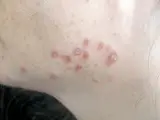
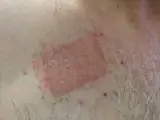
- Fissured tongue (lingua plicata)
Image credits for the thumbnails
- Angioedema: James Heilman, MD, “AngioedemaFra”, CC BY-SA 3.0, via Wikimedia Commons · CC BY-SA 3.0 · Source
- Erysipelas: Poupou l'quourouce, “Erysipel”, CC BY-SA 3.0, via Wikimedia Commons · CC BY-SA 3.0 · Source
- Cutaneous sarcoidosis: Nowack et al., “Cutaneous findings in systemic sarcoidosis”, CC BY-SA 2.0, via Wikimedia Commons · CC BY-SA 2.0 · Source
- Contact dermatitis (contact eczema): Dr.khatmando, “Severe contact dermatitis buprenorphine transdermal patch”, CC BY-SA 4.0, via Wikimedia Commons · CC BY-SA 4.0 · Source
Treatment principles
- Treatment is often difficult and protracted; intralesional glucocorticoids are frequently used.
- At the same time, associated diseases and triggers are sought, such as Crohn's disease, sarcoidosis, dental foci or contact allergens, which are treated or avoided accordingly.
- In refractory cases, systemic anti-inflammatory therapy and, in a stable phase, surgical reduction cheiloplasty are options.
Specific treatment regimens with drugs and doses are covered in the DermaFuchs app.
Keep learning in the app
Cross-references
Keep learning
Keep learning with flashcards, exam questions and spot diagnoses in the DermaFuchs app – free, in your browser or as an app.
Related pages: Angioedema · Erysipelas · Cutaneous sarcoidosis
Note: This page is intended for medical education and does not replace diagnosis or treatment decisions in individual cases.