Scarlet fever
For patients: easy-to-read leaflets in English (page in German) →
- Synonyms
- Scarlatina, Streptokokken-Angina mit Exanthem, Himbeerzunge, Erdbeerzunge, strawberry tongue
- Specialty
- Dermatology · Bacterial infections
- Images
- Clinical 3
- In the app
- 3 flashcards
- Last updated
- 10/2026 · Dr. Pascal Bafteh
Contents
Images (3)
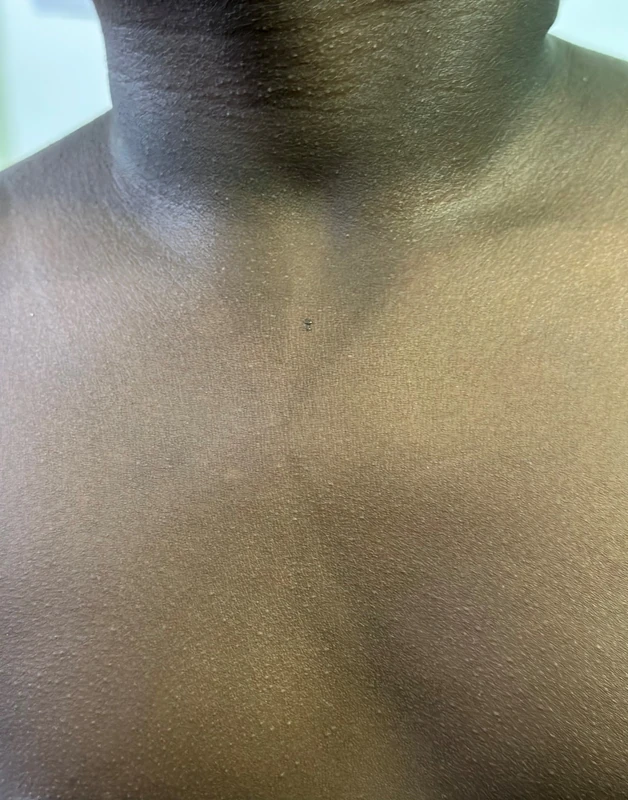
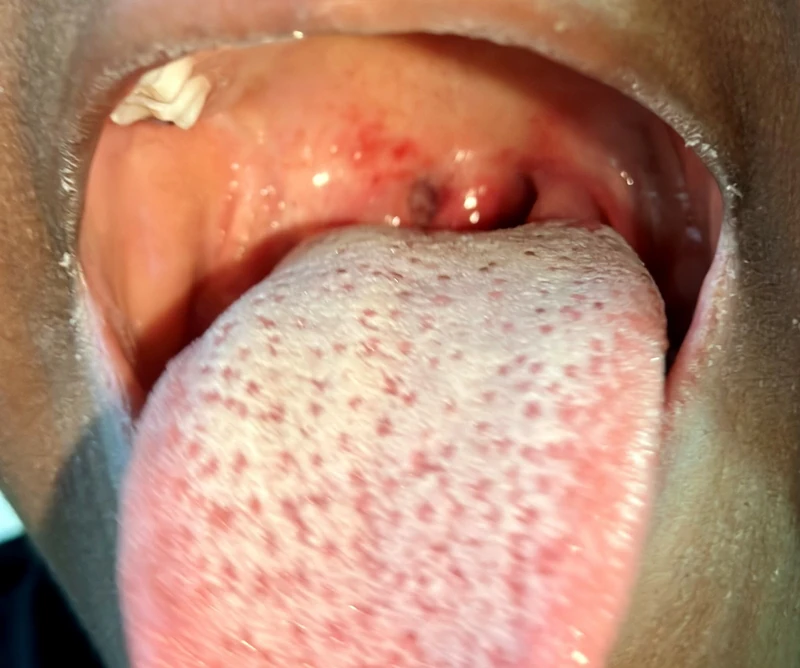
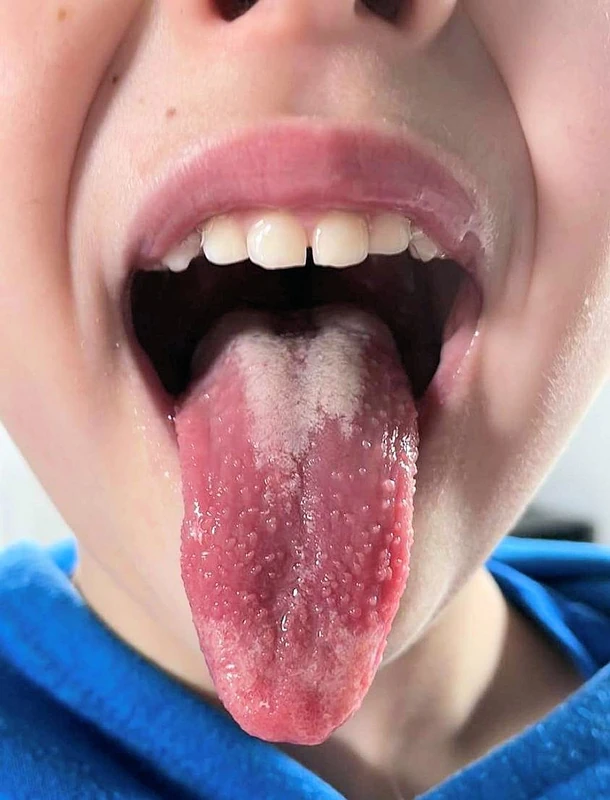
Definition
Scarlet fever is an infection with group A beta-haemolytic streptococci (Streptococcus pyogenes), usually tonsillopharyngitis, in which pyrogenic exotoxins (superantigens) cause a typical rash and enanthem.
Occurrence & epidemiology
Children aged 4–8 years are most often affected (risk especially from age 3); streptococcal pharyngitis in temperate zones occurs mainly in winter and spring. Transmission is by direct or indirect contact and droplets, also via asymptomatic carriers. Because there are several toxin types, repeated illness is possible.
Clinical features
- Sudden onset with fever, sore throat, headache, nausea, vomiting, swollen neck glands; usually as tonsillopharyngitis.
- Tongue: initially white-coated, then bright red with prominent papillae ("strawberry tongue").
- Rash: starts on the first or second day of illness, finely punctate, velvety rough ("sandpaper"), starting on the neck and chest, accentuated in the groins and axillae; circumoral pallor; in skin folds (especially axillae and elbows) linear petechial streaks (Pastia lines).
- Later coarse peeling, especially on the palms and soles.
- Sequelae are acute rheumatic fever and post-streptococcal glomerulonephritis.
Diagnosis
- Clinical picture; throat or tonsil swab: culture (gold standard), rapid molecular tests or rapid antigen tests (very specific but less sensitive); additionally antistreptolysin O and anti-DNase B titres.
- Distinction from, among others, measles, rubella, Kawasaki disease and drug eruption.
Differential diagnoses
 Kawasaki disease (mucocutaneous lymph node syndrome)
 Roseola infantum (exanthem subitum)
 Rubella (German measles)
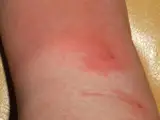 Erysipelas
 Measles
Image credits for the thumbnails
- Kawasaki disease (mucocutaneous lymph node syndrome): Dong Soo Kim, CC BY-SA 4.0, via Wikimedia Commons · CC BY-SA 4.0 · Source
- Roseola infantum (exanthem subitum): Emiliano Burzagli, Public domain, via Wikimedia Commons · Public domain · Source
- Rubella (German measles): CDC, “Rubella”, Public domain, via Wikimedia Commons · Public domain · Source · CDC PHIL #4514
- Erysipelas: Poupou l'quourouce, “Erysipel”, CC BY-SA 3.0, via Wikimedia Commons · CC BY-SA 3.0 · Source
- Measles: CDC/Dr. Heinz F. Eichenwald, “Morbillivirus measles infection”, Public Domain, via Wikimedia Commons · Public Domain · Source · CDC PHIL #3168
Treatment principles
- Scarlet fever is treated with antibiotics; penicillins are the drugs of choice, with alternative antibiotics in case of allergy.
- Treatment shortens the illness, reduces infectivity and prevents suppurative complications and sequelae such as rheumatic fever.
- Fever and sore throat are treated symptomatically alongside.
Specific treatment regimens with drugs and doses are covered in the DermaFuchs app.
Keep learning in the app
References (selection)
Cross-references
Mentioned in
Keep learning
Keep learning with flashcards, exam questions and spot diagnoses in the DermaFuchs app – free, in your browser or as an app.
Related pages: Kawasaki disease (mucocutaneous lymph node syndrome) · Roseola infantum (exanthem subitum) · Rubella (German measles)
Note: This page is intended for medical education and does not replace diagnosis or treatment decisions in individual cases.