Ecthyma
- Synonyms
- deep impetigo
- Specialty
- Dermatology · Bacterial infections
- Images
- Clinical 2
- In the app
- 7 flashcards
- Last updated
- 10/2026 · Dr. Pascal Bafteh
Contents
Images (2)
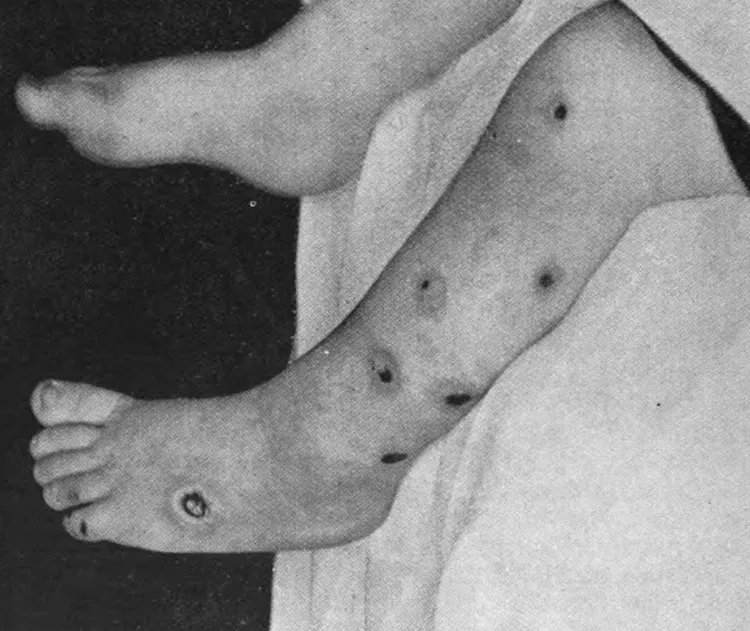
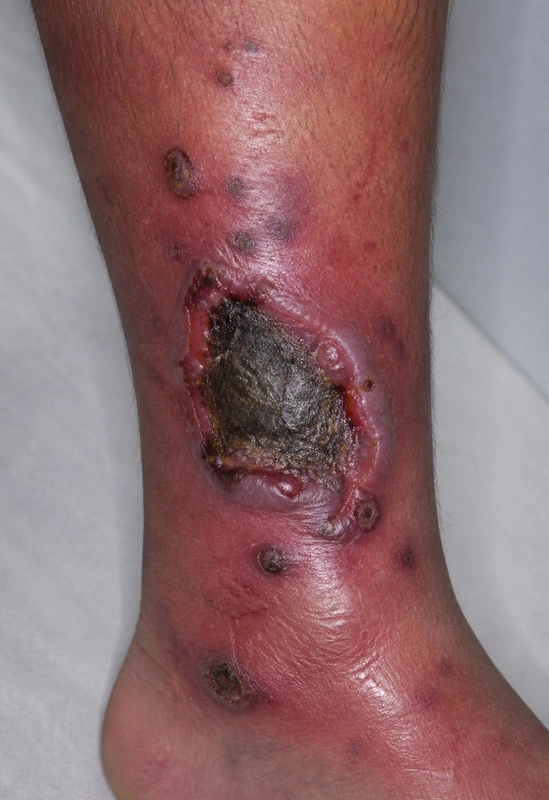 AI illustration
Definition
Ecthyma is a deep form of pyoderma that extends beyond the epidermis into the dermis and therefore leaves scars. It is usually caused by group A beta-haemolytic streptococci, often together with Staphylococcus aureus.
- Risk Factors: Typical risks are DM + HIV + CVI, poor hygiene, and entry points (prurigo, scabies).
- Pathogens: Frequently Strep. pyogenes + Staph. aureus.
- Complication: Post-streptococcal glomerulonephritis.
Clinical features
- Begins as a vesicle or pustule on an inflamed base, soon covered by a hard, adherent crust beneath which lies an indurated, red, pus-covered ulcer; usually 0.5–3 cm in size.
- Mainly the buttocks, thighs, legs, ankles and feet; occasionally painful regional lymphadenopathy.
- A different disease is ecthyma gangrenosum, usually associated with Pseudomonas bacteraemia in critically ill, immunocompromised patients, with haemorrhagic pustules that evolve into necrotic ulcers.
Differential diagnoses
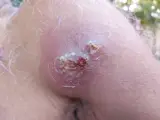
Image credits for the thumbnails
- Pyoderma gangrenosum: Monopol, “Pyoderma gangrenosum 01”, CC BY-SA 3.0, via Wikimedia Commons · CC BY-SA 3.0 · Source
- Impetigo (impetigo contagiosa): Littlekidsdoc, “Bullous impetigo”, CC BY-SA 4.0, via Wikimedia Commons · CC BY-SA 4.0 · Source
- Furuncle and carbuncle: Medicalpal, “Carbuncle”, CC BY-SA 4.0, via Wikimedia Commons · CC BY-SA 4.0 · Source
Treatment principles
- Because the streptococcal or staphylococcal infection extends deeper than in impetigo, systemic antibiotic treatment is usually given, supplemented by local antiseptic wound care and removal of crusts.
- Predisposing factors such as poor hygiene, diabetes mellitus, immunosuppression or pre-existing skin lesions are addressed as well.
- The ulcers usually heal with scarring; ecthyma gangrenosum in Pseudomonas infection is a distinct condition requiring emergency treatment.
Specific treatment regimens with drugs and doses are covered in the DermaFuchs app.
Keep learning in the app
References (selection)
Cross-references
Mentioned in
Keep learning
Keep learning with flashcards, exam questions and spot diagnoses in the DermaFuchs app – free, in your browser or as an app.
Related pages: Pyoderma gangrenosum · Arterial (ischaemic) ulcer · Impetigo (impetigo contagiosa)
Note: This page is intended for medical education and does not replace diagnosis or treatment decisions in individual cases.