Hidradenitis suppurativa (acne inversa)
Exam relevance: in 3 of more than 50 board exam reports · rank 45
- Synonyms
- Hidradenitis suppurativa, acne inversa
- Specialty
- Dermatology · Skin appendages
- Images
- Clinical 2
- In the app
- 9 flashcards
- Last updated
- 10/2026 · Dr. Pascal Bafteh
Contents
Images (2)
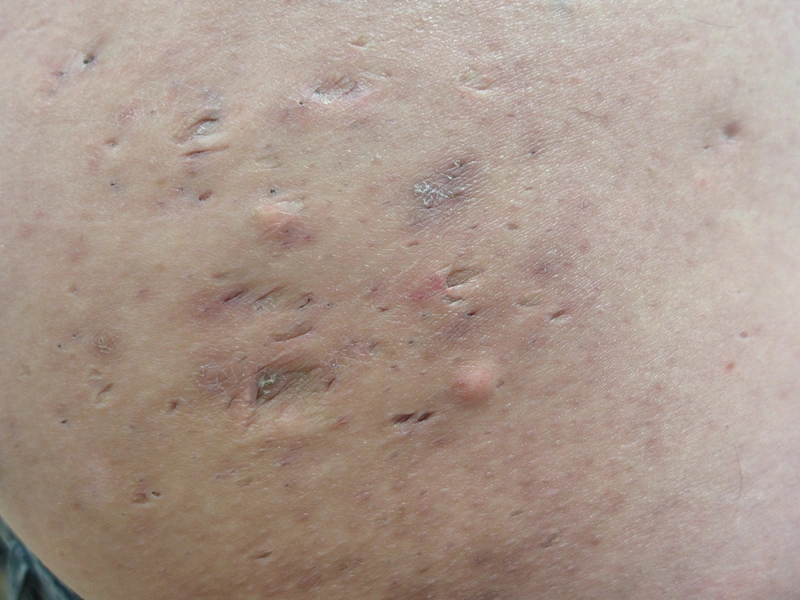
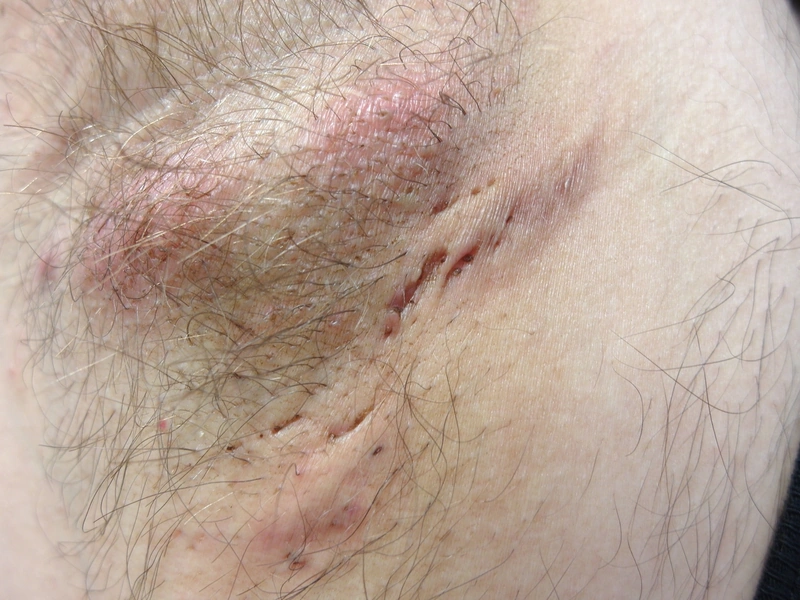
Definition
Definition & Pathogenesis
- Acne inversa / Hidradenitis suppurativa (HS) = chronic-recurrent inflammatory skin disease of the pilosebaceous unit in areas with apocrine sweat glands (axillary, inguinal, anogenital, submammary).
- Pathomechanism: Pathogenetically central is follicular occlusion with rupture into the dermis and neutrophil-rich inflammation → sinus tract formation + scarring.
- Key cytokines + cells: Driving factors are TNF-α + IL-1β + IL-17 plus neutrophils + macrophages.
- Risk factors: Classic factors are smoking + obesity + γ-secretase mutations.
- Comorbidities: Acne conglobata, Crohn's disease, Spondyloarthritis, PCOS, Pyoderma gangraenosum, metabolic syndrome, depression.
Clinical features
Clinical Presentation & Severity
- Clinical presentation: painful, deep-seated inflammatory nodules + abscesses + sinus tracts + hypertrophic scars + double comedones in typical locations.
- Hurley Stages (clinical-historical):
- Stage I: isolated nodules/abscesses
- Stage II: recurrent abscesses + scattered sinus tracts / scars
- Stage III: diffusely affected + communicating sinus tract systems
Diagnosis
Diagnostics
- Clinical history and examination: typical localization + ≥ 2 flares in 6 months.
- MRI for perianal / anorectal involvement (Crohn's disease DD).
- Laboratory tests: ESR / CRP, CBC, HbA1c, lipid profile (comorbidities), no specific marker.
Exam essentials
- Clinical diagnosis when three features combine: typical lesions (painful nodules, abscesses, tunnels, scars), typical locations (axillae, groin, anogenital region, inframammary) and a chronic, relapsing course.
- Hurley stages: I = abscesses without tunnels or scarring; II = recurrent abscesses with tunnels and scarring, separated by normal skin; III = diffuse involvement with interconnected tunnels.
- Typical clue: double (bridged) comedones in the affected areas.
- Important associated factors: smoking and obesity; consider associated diseases such as Crohn's disease.
- Assess severity dynamically with the IHS4 score (nodules, abscesses, draining tunnels).
Differential diagnoses
 Hidrocystoma (eccrine and apocrine)
 Acne vulgaris
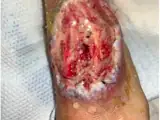 PAPASH syndrome
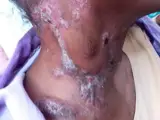 Scrofuloderma (Tuberculosis cutis colliquativa)
Image credits for the thumbnails
- Hidrocystoma (eccrine and apocrine): unknown (Commons user), “Eccrine hydrocystoma 01”, CC BY 2.0, via Wikimedia Commons · CC BY 2.0 · Source
- Acne vulgaris: Sedef94, “Kürəkdə düyünlü və kistik sızanaqlar (Acne Vulgaris) 08”, CC BY-SA 4.0, via Wikimedia Commons · CC BY-SA 4.0 · Source
- PAPASH syndrome: Shaked Y, Pulumati A, Kucharik AH et al. (JAAD Case Rep 2026), CC BY 4.0, via PubMed Central (PMC13213215) · CC BY 4.0 · Source
- Scrofuloderma (Tuberculosis cutis colliquativa): Mohammad2018, “Scrofuloderma”, CC BY-SA 4.0, via Wikimedia Commons · CC BY-SA 4.0 · Source
Related conditions: how to tell them apart
- Furuncle and carbuncle – single acute abscess without tunnels or a relapsing pattern
- Acne vulgaris – follicular disease of face and trunk, no intertriginous tunnels
Treatment principles
- The foundation is smoking cessation, weight reduction and avoidance of friction.
- Drug treatment is graded by severity: topical antiseptics or antibiotics and intralesional glucocorticoids for mild disease, and systemic antibiotics and biologics for moderate to severe disease.
- Surgical procedures such as deroofing or wide excision of the affected areas are an integral part of management, as established sinus tracts generally do not heal with drug therapy alone.
Guideline: AWMF guideline register (no. 013-012)
Specific treatment regimens with drugs and doses are covered in the DermaFuchs app.
Keep learning in the app
References (selection)
Cross-references
Mentioned in
Keep learning: test yourself
One question from the DermaFuchs app on Hidradenitis suppurativa (acne inversa) – tap an answer.
Question 1 of 1
What elements are used in the iHS4-Score for monitoring acne inversa?
Answer
Correct: nodules + abscesses + sinus tracts. The iHS4-Score for acne inversa is based on the presence of nodules, abscesses, and sinus tracts to assess disease severity.
More questions like these – with explanations and spaced repetition – in the app.
Note: This page is intended for medical education and does not replace diagnosis or treatment decisions in individual cases.