Alopecia areata
Definition & Epidemiology
- AA = non-scarring, autoimmune-mediated hair loss disorder with circumscribed bald areas.
- Lifetime prevalence: ~ 2%, both sexes equally affected, often first manifestation between 20–40 years of age, but any age possible.
- Comorbidities: Typical are atopy + thyroid autoimmunity plus DM-1, lupus, psoriasis.
Pathogenesis
- Loss of immune privilege of the hair follicle → CD8+ T-cells with IFN-γ + JAK-STAT signaling pathway activation attack anagen follicle bulb.
- Key cytokines: Driving factors are IFN-γ + IL-15 + JAK-STAT — therefore JAK inhibitors are therapeutically effective.
Clinical Features & Subtypes
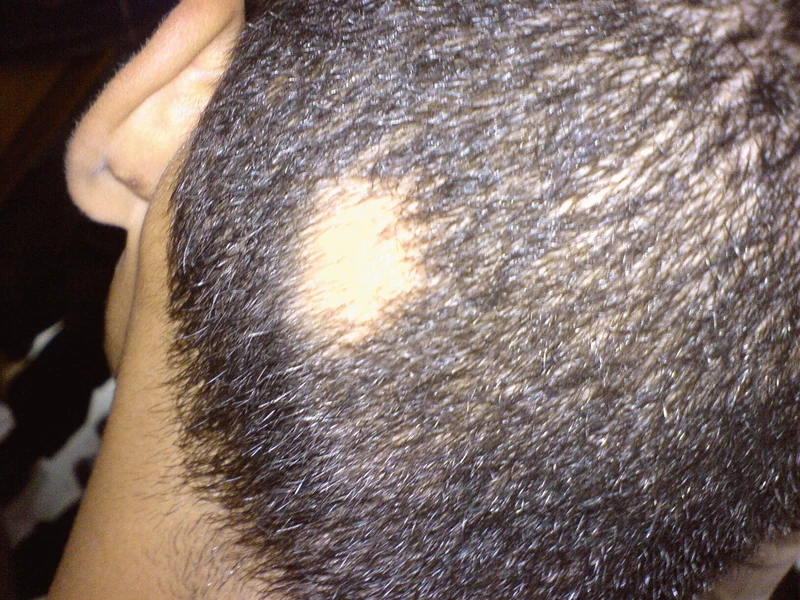
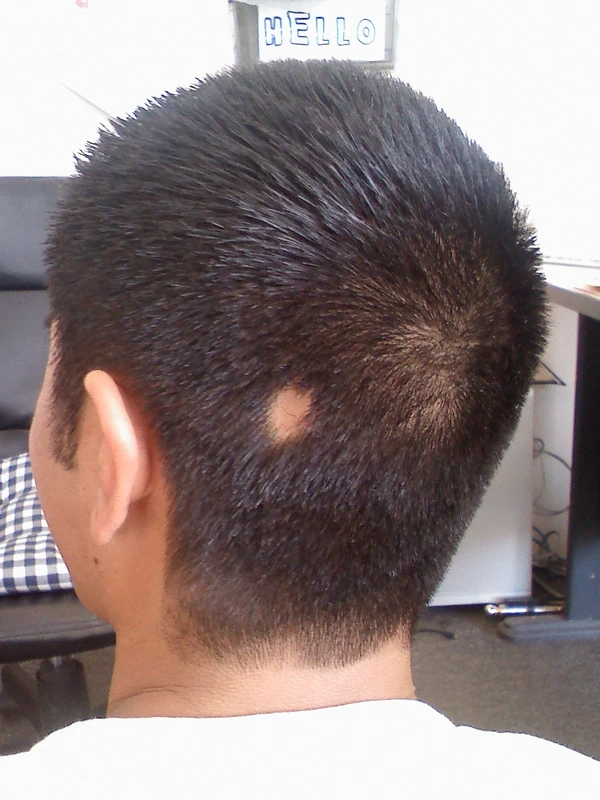
- Alopecia areata circumscripta: oval hairless areas, sharply demarcated, smooth scalp without scaling / erythema, hair follicle openings preserved.
- Alopecia areata totalis: complete loss of scalp hair.
- Alopecia areata universalis: loss of all body hair (incl. eyelashes, eyebrows).
- Alopecia ophiasis: band-shaped involvement at the temporo-occipital hairline — poorer prognosis.
- Alopecia areata diffusa: diffuse telogen effluvium-like course — trichoscopy aids differential diagnosis.
- Beard manifestation possible (alopecia areata barbae).
Trichoscopy / Dermoscopy
- Typical for AA are yellow/black dots + exclamation mark hairs plus short vellus hairs.
- "Pigtail hairs" = new hairs curling back in as a sign of regeneration.
Nail Dystrophy
- Typical are nail pitting + trachyonychia in 10–66% of cases.
Differential diagnoses
- Anagen effluvium
- Androgenetic Alopecia
- Atopic dermatitis (atopic eczema)
- Folliculitis decalvans
- Lichen planopilaris
- Telogen effluvium
- Tinea capitis
- Trichotillomania
Practise Alopecia areata in the app
Flashcards with spaced repetition, exam questions and spot-the-diagnosis on this topic – in DermaFuchs, free of charge.
In the DermaFuchs app: 9 flashcards · 6 clinical images
Open in browser Download on the App StoreSources (selection)
More diseases of the skin appendages
- Acne fulminans
- Hidradenitis suppurativa (acne inversa)
- Acne vulgaris
- Androgenetic alopecia
- Folliculitis (infectious)
- Lichen planopilaris
- Milia (milium)
- Perioral dermatitis
Note: This page is intended for medical education and does not replace diagnosis or treatment decisions in individual cases. Treatment and follow-up content is available in the app.