SAPHO syndrome
- Synonyms
- Synovitis-Akne-Pustulose-Hyperostose-Osteitis, pustulöse Arthroosteitis, Pustulosis palmoplantaris mit Osteitis, SAPHO, synovitis acne pustulosis hyperostosis osteitis, pustulotic arthro-osteitis
- Specialty
- Dermatology · Inflammatory skin diseases
- Images
- Clinical 1
- In the app
- 4 flashcards
- Last updated
- 10/2026 · Dr. Pascal Bafteh
Contents
Images (1)
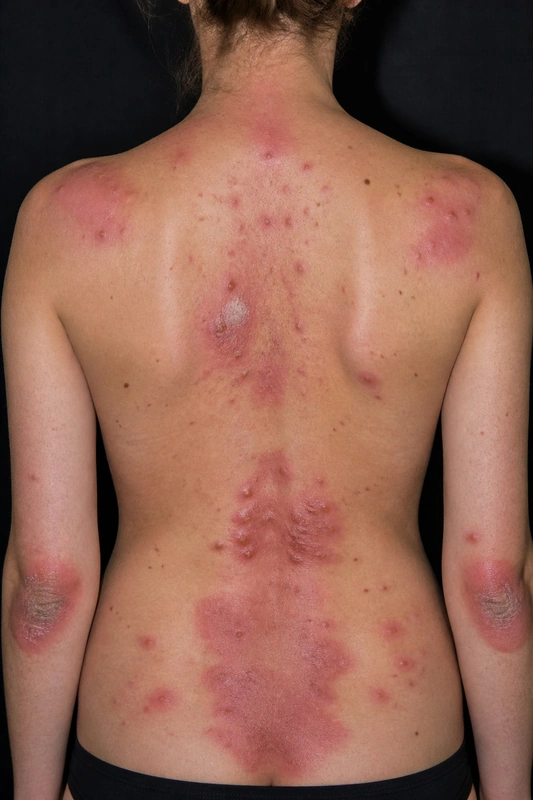 AI illustration
Definition
SAPHO stands for synovitis, acne, pustulosis, hyperostosis and osteitis. This rare syndrome affects bones, joints and skin; the features can occur in any combination. It is most likely an autoinflammatory disease and is closely related to chronic non-bacterial osteitis (CNO) of childhood.
Occurrence & epidemiology
A frequency of about 1 in 10,000 has been reported in the white population; the true incidence is unknown. Mainly people in their third to fifth decades are affected, women more often. In a Japanese survey, over 80% of cases were pustulotic arthro-osteitis, whereas in Israel severe acne was the most common skin manifestation.
Aetiopathogenesis
Multifactorial, involving genetic susceptibility, immune dysregulation and infectious or environmental factors. Neutrophil hyperactivity and raised interleukin-1 levels, among other findings, point to an autoinflammatory origin.
Clinical features
- Bones and joints: sterile osteitis, mainly of the anterior chest wall (sternum, clavicles) with pain, tenderness and swelling; also the axial skeleton, peripheral joints, mandible, long bones and pelvis.
- Skin (in 60–90%): palmoplantar pustulosis, psoriasis vulgaris, severe acne (acne conglobata or fulminans); less often hidradenitis suppurativa, dissecting cellulitis of the scalp and neutrophilic dermatoses.
- Systemic symptoms such as fever, weight loss and fatigue.
Histology
Skin lesions show neutrophilic pseudoabscesses; bone biopsies show sterile osteomyelitis.
Diagnosis
- Suspected when a pustular skin disease is combined with rheumatic pain.
- MRI: inflammation of bone marrow or joints at characteristic sites (clavicle, sternum, pelvis, heel, mandible).
- Laboratory: no specific findings; in active disease raised ESR and CRP, mild leucocytosis and thrombocytosis.
- Validated classification and diagnostic criteria are lacking; diagnosis is often delayed.
Differential diagnoses
Keep learning in the app
References (selection)
Cross-references
Note: This page is intended for medical education and does not replace diagnosis or treatment decisions in individual cases.