AGEP (acute generalized exanthematous pustulosis)
- Synonyms
- akute generalisierte exanthematische Pustulose, acute generalised exanthematous pustulosis, pustular drug eruption
- Specialty
- Dermatology · Drug reactions
- Images
- Clinical 2
- In the app
- 4 flashcards
- Last updated
- 10/2026 · Dr. Pascal Bafteh
Contents
Images (2)
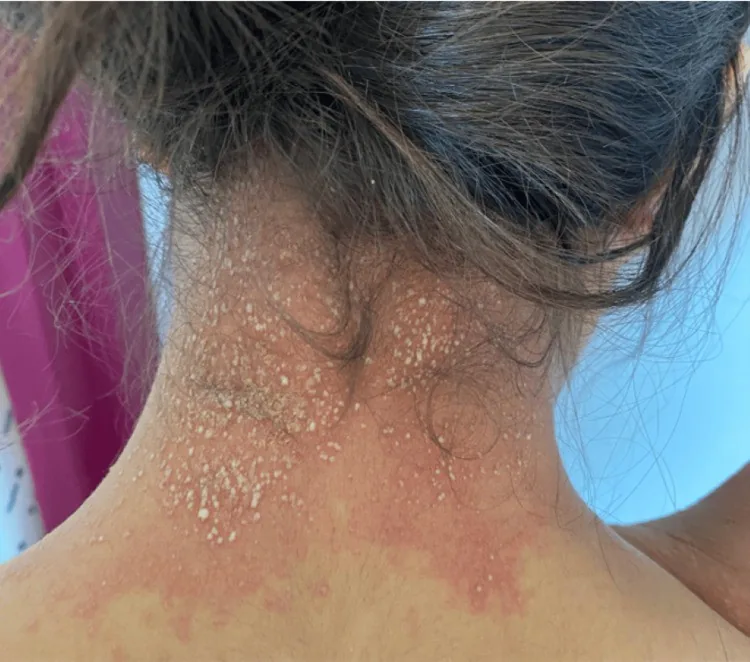
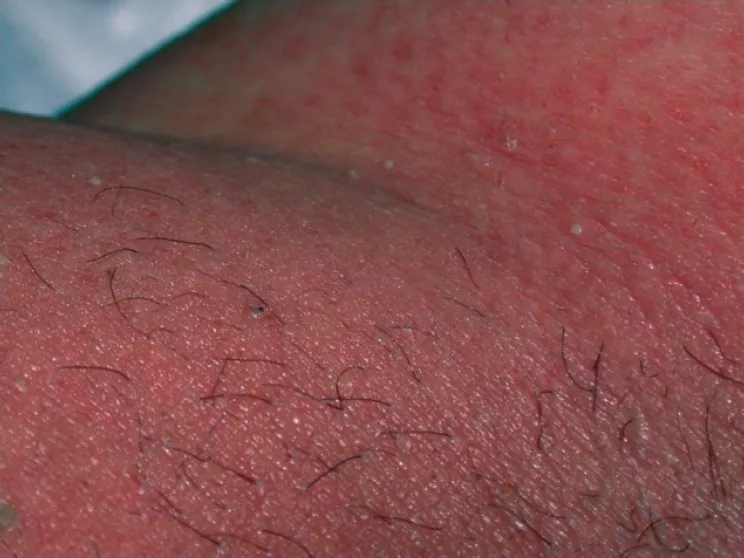
Definition
Acute generalised exanthematous pustulosis (AGEP) is a rare severe cutaneous reaction triggered by drugs in over 90% of cases. Within a short time numerous sterile, non-follicular pustules arise on widespread erythema.
- Incidence: rare reaction (1–5 / million / year).
- Latency: usually 1–2 days.
- Other triggers: Terbinafine, (hydroxy)chloroquine, diltiazem.
- Clinical features: Erythema with hundreds of sterile pustules (<5 mm), flexural emphasis, fever, neutrophilia.
- Pathogenesis: CXCL8/GM-CSF-mediated.
- Important: no provocation / re-exposure — diagnosis is clinical + histological.
Diagnosis
- Clinical picture with typical time course (onset usually within 2 days of exposure to the culprit drug) and fever; blood neutrophilia, sometimes eosinophilia.
- Histology: subcorneal and intraepidermal spongiform pustules, papillary oedema, mixed infiltrate with neutrophils and eosinophils.
- EuroSCAR validation score; distinction from, among others, generalised pustular psoriasis (histologically usually less spongiosis and no dermal eosinophils), SJS/TEN and DRESS.
Differential diagnoses
 Impetigo (impetigo contagiosa)
 Folliculitis
 Pemphigus foliaceus
 Generalized pustular psoriasis (von Zumbusch)
- TEN (toxic epidermal necrolysis)
- DRESS-Syndrom
Image credits for the thumbnails
- Impetigo (impetigo contagiosa): Littlekidsdoc, “Bullous impetigo”, CC BY-SA 4.0, via Wikimedia Commons · CC BY-SA 4.0 · Source
- Folliculitis: Da pacem Domine, “Folliculitis2”, CC0, via Wikimedia Commons · CC0 · Source
- Pemphigus foliaceus: Masryyy, “Pemphigus new photo due to antihypertensive drug”, CC BY-SA 4.0, via Wikimedia Commons · CC BY-SA 4.0 · Source
- Generalized pustular psoriasis (von Zumbusch): Bourousis E, Kotzamani MT, Maritsi DN., Cureus 2025, Figure 1, CC BY 4.0, via PMC · CC BY 4.0 · Source
Treatment principles
- The key step is immediate withdrawal of the causative drug, after which the pustules usually resolve spontaneously within a short time.
- Supportive care corrects fluid and electrolyte balance and includes skin care; topical glucocorticoids are usually sufficient.
- Short courses of systemic glucocorticoids are considered only in severe cases, and the culprit drug is documented in an allergy passport.
Specific treatment regimens with drugs and doses are covered in the DermaFuchs app.
Keep learning in the app
References (selection)
- Acute generalized exanthematous pustulosis: European expert consensus for diagnosis and management
- DermNet: Acute generalised exanthematous pustulosis
- DermNet: AGEP pathology
- Etiopathological and Clinical Study of Acute Generalized Exanthematous Pustulosis: Experience from a Tertiary Care Hospital in North India
Cross-references
Keep learning: test yourself
One question from the DermaFuchs app on AGEP (acute generalized exanthematous pustulosis) – tap an answer.
Question 1 of 1
What is the typical latency period for the onset of Acute Generalized Exanthematous Pustulosis (AGEP)?
Answer
Correct: 1–12 days. AGEP typically develops rapidly, with a latency of 1 to 12 days after drug exposure.
More questions like these – with explanations and spaced repetition – in the app.
Note: This page is intended for medical education and does not replace diagnosis or treatment decisions in individual cases.