Pediculosis capitis
For patients: easy-to-read leaflets in English (page in German) →
- Synonyms
- head lice, lice, nits
- Specialty
- Dermatology · Parasitic skin diseases
- Images
- Clinical 2
- In the app
- 1 flashcard
- Last updated
- 10/2026 · Dr. Pascal Bafteh
Contents
Images (2)
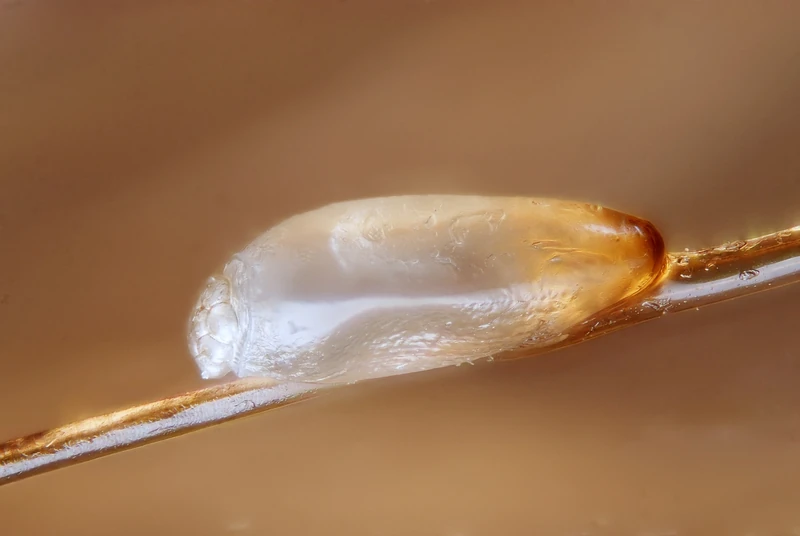
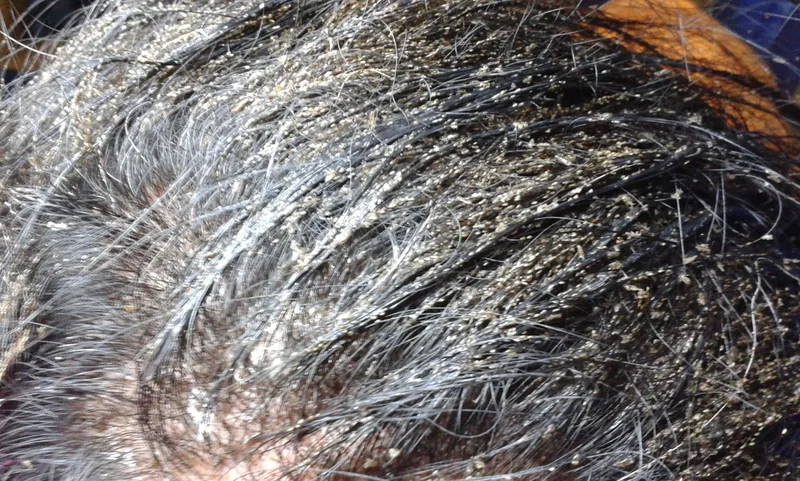
Definition
Environmental & General Measures
- Wash bed linen/towels/caps at ≥ 60 °C or store in sealed plastic bags for at least 3 days at room temperature.
- Clean combs/brushes in hot soapy water.
Aetiopathogenesis
Pathogen & Predilection Sites
- Pediculus humanus capitis (head louse): photophobic; infests the scalp, preferentially retroauricular and on the nape.
- Pediculus humanus corporis (body louse): lives in clothing, seeks warm skin areas for the blood meal; vector for Rickettsia prowazekii, Bartonella quintana, Borrelia recurrentis.
- Pthirus pubis (pubic louse): infests the genital area; in children also the eyelashes.
Transmission
- Direct contact or sharing of combs, brushes, hats.
- Pthirus pubis is usually sexually transmitted — in children, consider sexual abuse as a differential.
Clinical features
Clinical Presentation
- Cardinal symptom: pruritus, erythema, secondary impetiginization from scratching.
- Eggs (nits): attached to the hair shaft in chitin shell (yellowish); viable nits near the scalp, empty shells further distally.
- Head louse: retroauricular + neck, often cervical lymphadenopathy.
- Body louse: excoriated maculopapules on the trunk (shoulders, back, hips); chronic → hyperpigmentation ("vagabond's skin").
- Pubic louse: maculae caeruleae (bluish-gray spots) at bite sites are regarded as the classic sign — but they are frequently absent (short infestation, fair skin type, after shaving); neither photograph shows them. Proof comes from lice and nits on the terminal hairs, not from the blue macule.
Diagnosis
Diagnostics
- Clinical + wet combing (gold standard for head lice): comb wet hair with a fine-toothed louse comb.
- Dermatoscopy: viable nits with intact embryo directly on the hair shaft.
- Vector detection of the body louse in the seams of clothing.
Differential diagnoses
 Scabies
 Cimicosis (bed bug bites)
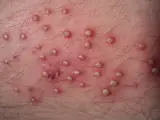 Folliculitis
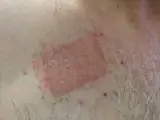 Contact dermatitis (contact eczema)
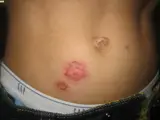 Impetigo (impetigo contagiosa)
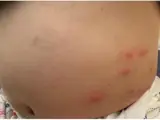 Papular urticaria
Image credits for the thumbnails
- Scabies: Gzzz, “Scabies hand and fingers 1”, CC BY-SA 4.0, via Wikimedia Commons · CC BY-SA 4.0 · Source
- Cimicosis (bed bug bites): unknown (Commons user), “Skin infection”, CC0, via Wikimedia Commons · CC0 · Source
- Folliculitis: Da pacem Domine, “Folliculitis2”, CC0, via Wikimedia Commons · CC0 · Source
- Contact dermatitis (contact eczema): Dr.khatmando, “Severe contact dermatitis buprenorphine transdermal patch”, CC BY-SA 4.0, via Wikimedia Commons · CC BY-SA 4.0 · Source
- Impetigo (impetigo contagiosa): Littlekidsdoc, “Bullous impetigo”, CC BY-SA 4.0, via Wikimedia Commons · CC BY-SA 4.0 · Source
- Papular urticaria: Sekerel BE, Ilgun Gurel D, Sahiner UM et al. (Front Allergy 2023), CC BY 4.0, via PubMed Central (PMC10655015) · CC BY 4.0 · Source
Treatment principles
- First choice is physically acting silicone oil-based preparations, to which no resistance is known; neurotoxic pediculicides are an alternative.
- Because lice eggs can survive the first application, topical treatment is repeated after a defined interval and success is checked by wet combing with a nit comb.
- If treatment fails, systemic therapy may be considered; contacts should be examined and treated if necessary.
Specific treatment regimens with drugs and doses are covered in the DermaFuchs app.
Keep learning in the app
References (selection)
Cross-references
Keep learning
Keep learning with flashcards, exam questions and spot diagnoses in the DermaFuchs app – free, in your browser or as an app.
Related pages: Scabies · Cimicosis (bed bug bites) · Folliculitis
Note: This page is intended for medical education and does not replace diagnosis or treatment decisions in individual cases.