Tungiasis
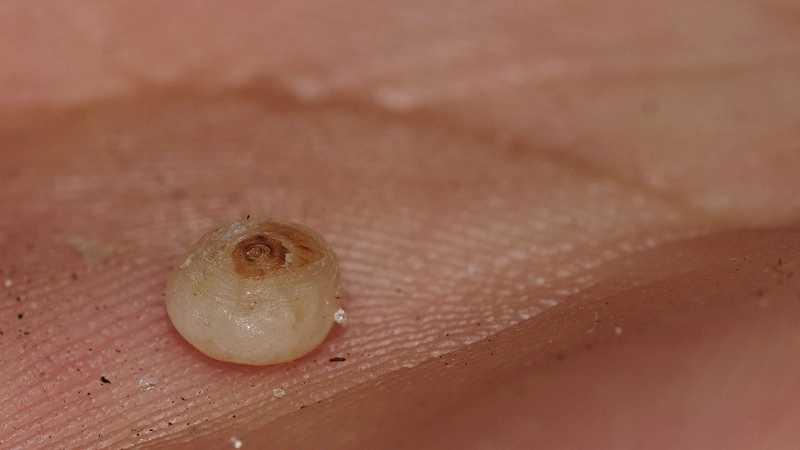
Overview
- Causative agent: Tunga penetrans — the gravid female sand flea burrows into the skin, swells as it produces eggs and dies after a few weeks.
- Occurrence: tropical / subtropical regions (Caribbean, Latin America, Sub-Saharan Africa, India) — walking barefoot; the travel history (e.g. a beach holiday in the Dominican Republic) together with the local findings on toes and heels leads to the diagnosis.
- Clinical presentation: Characteristic is a papule with central black dot (breathing hole of the female flea) on toes/heels, secondary superinfection (tetanus, sepsis) possible.
- Diagnosis: clinical + histology.
Differential diagnoses
- Scabies
- Cutaneous myiasis
- Pediculosis capitis
- Verruca vulgaris
- Cornu cutaneum
- Cutaneous larva migrans
- Carbuncle
- Folliculitis (infectious)
Practise Tungiasis in the app
Flashcards with spaced repetition, exam questions and spot-the-diagnosis on this topic – in DermaFuchs, free of charge.
In the DermaFuchs app: 1 flashcards · 5 clinical images
Open in browser Download on the App StoreMore parasitic skin diseases
- Demodicosis
- Filariasis
- Cutaneous leishmaniasis
- Cutaneous larva migrans
- Pediculosis capitis
- Caterpillar dermatitis caused by oak processionary moth (Thaumetopoea processionea)
- Crusted (Norwegian) scabies
- Scabies
Note: This page is intended for medical education and does not replace diagnosis or treatment decisions in individual cases. Treatment and follow-up content is available in the app.