Sunburn
Exam relevance: in 1 of more than 50 board exam reports · rank 93
- Synonyms
- solar dermatitis
- Specialty
- Dermatology · Environmental & photodermatoses
- Images
- Clinical 3
- In the app
- 1 flashcard
- Last updated
- 10/2026 · Dr. Pascal Bafteh
Contents
Images (3)
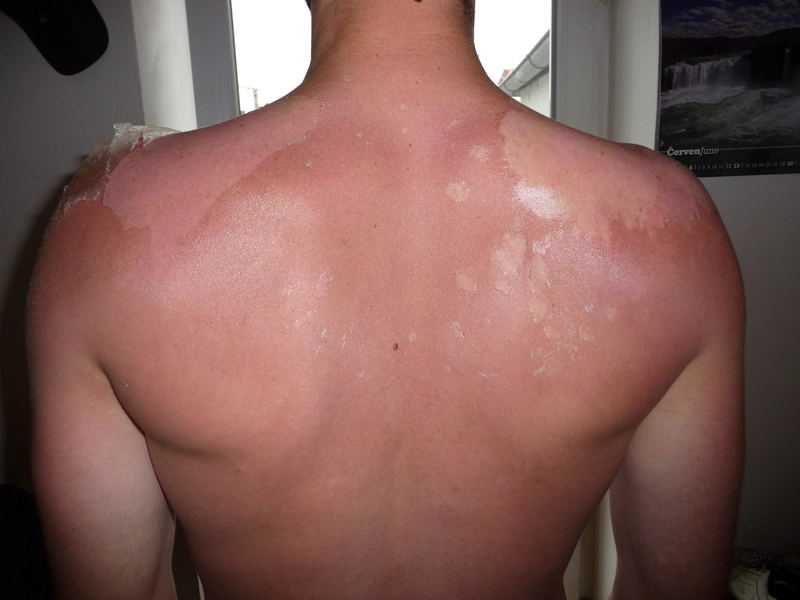
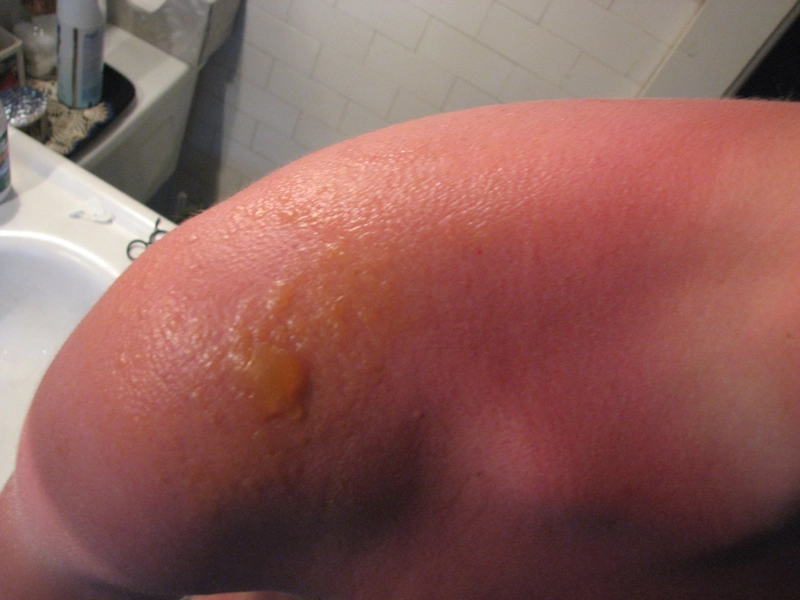
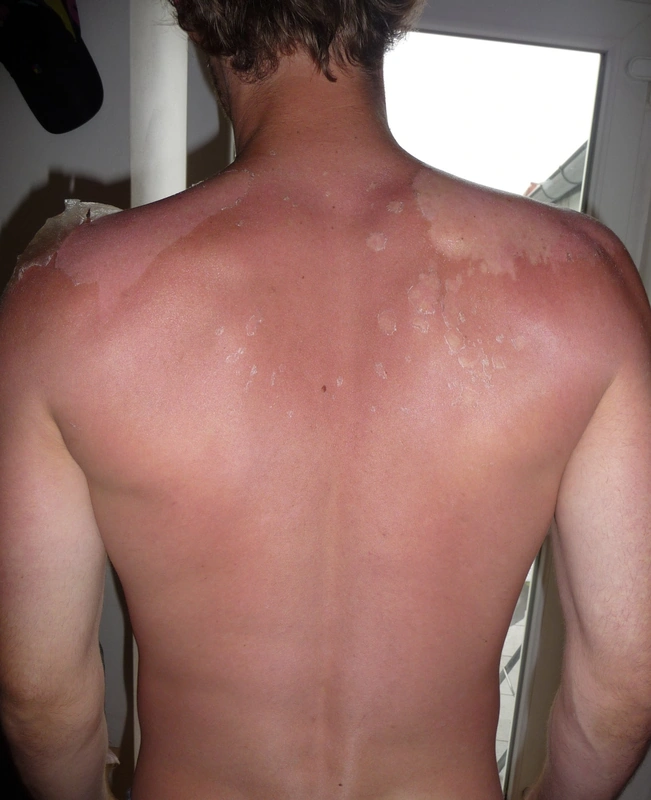
Definition
Dermatitis solaris (sunburn) is an acute phototoxic inflammation of the skin after excessive exposure to ultraviolet light, mainly UVB (280–315 nm).
- Latency: 2–6 h, max 12–24 h.
- Clinical presentation: sharply demarcated erythema on UV-exposed areas, pain, possibly bullae in severe forms, later desquamation.
- Pathogenesis: UV-B-induced apoptosis ("sunburn cells") + prostaglandins + cytokines.
Occurrence & epidemiology
The risk depends on the Fitzpatrick skin type, UV intensity (midday, altitude, proximity to the equator, reflection from water, snow and ice) and photosensitising substances. Repeated sunburns, especially in childhood and adolescence, increase the risk of melanoma and other skin cancers.
Clinical features
- Redness, swelling, warmth and pain strictly limited to exposed areas, with a sharp border at clothing lines.
- Erythema after 2–6 hours, peaking at 12–24 hours; in severe cases blisters and systemic symptoms such as nausea, vomiting, headache, fever and chills.
- Peeling after about 4–7 days; on fair skin persistent solar lentigines may develop afterwards.
Differential diagnoses
 Phototoxic dermatitis
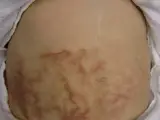 Erythema ab igne
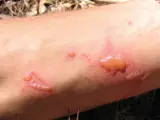 Phytophotodermatitis (meadow grass dermatitis)
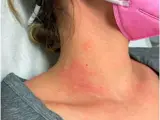 Photoallergic reaction (photoallergic contact dermatitis)
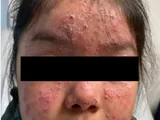 Actinic prurigo
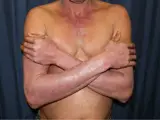 Actinic reticuloid
Image credits for the thumbnails
- Phototoxic dermatitis: Dragan Marjanovic, “Phytophotodermatitis-Severe-Case”, CC BY-SA 3.0, via Wikimedia Commons · CC BY-SA 3.0 · Source
- Erythema ab igne: James Heilman, MD, “Hotbottlerash”, CC BY-SA 3.0, via Wikimedia Commons · CC BY-SA 3.0 · Source
- Phytophotodermatitis (meadow grass dermatitis): Vincent, Public domain, via Wikimedia Commons · Public domain · Source
- Photoallergic reaction (photoallergic contact dermatitis): Afvari S, Zippin JH (JAAD Case Rep 2024), CC BY 4.0, via PubMed Central (PMC10825262) · CC BY 4.0 · Source
- Actinic prurigo: Barker CS, Sattele L, Strat N et al. (JAAD Case Rep 2024), CC BY 4.0, via PubMed Central (PMC10992274) – left panel (cropped) · CC BY 4.0 · Source
- Actinic reticuloid: Isaacs T, Lehloenya R (Front Allergy 2023), CC BY 4.0, via PubMed Central (PMC10192905) · CC BY 4.0 · Source
Treatment principles
- Treatment is symptomatic: cooling, wet compresses and topical glucocorticoids relieve inflammation, and non-steroidal anti-inflammatory drugs provide analgesia and reduce inflammation.
- Extensive, blistering sunburn with systemic symptoms requires adequate fluid intake and, if necessary, inpatient care.
- Prevention through consistent photoprotection is essential, as repeated sunburn increases the risk of skin cancer.
Specific treatment regimens with drugs and doses are covered in the DermaFuchs app.
Keep learning in the app
References (selection)
Cross-references
Mentioned in
Keep learning
Keep learning with flashcards, exam questions and spot diagnoses in the DermaFuchs app – free, in your browser or as an app.
Related pages: Phototoxic dermatitis · Phytophotodermatitis · Erythema ab igne
Note: This page is intended for medical education and does not replace diagnosis or treatment decisions in individual cases.