Burns of the skin
- Synonyms
- Combustio, Brandverletzung, Verbrühung, burns, scald, thermal burn
- Specialty
- Dermatology · Environmental & photodermatoses
- Images
- Clinical 2
- In the app
- 1 flashcard
- Last updated
- 10/2026 · Dr. Pascal Bafteh
Contents
Images (2)
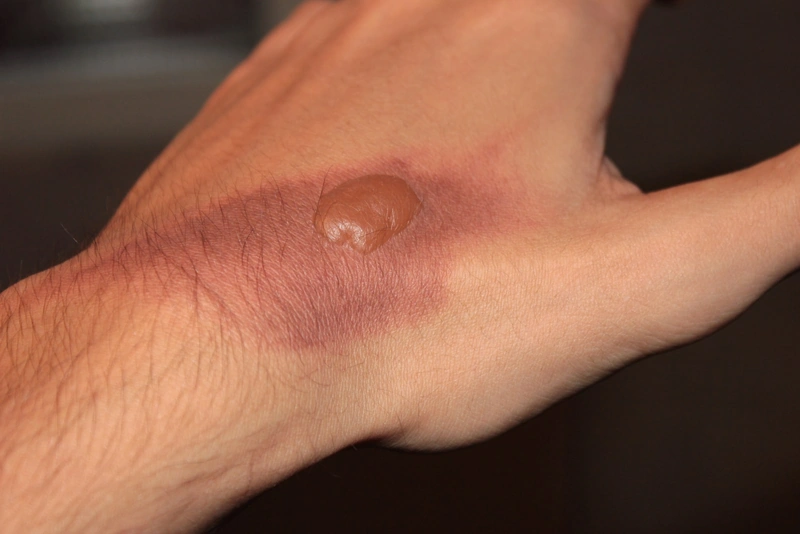
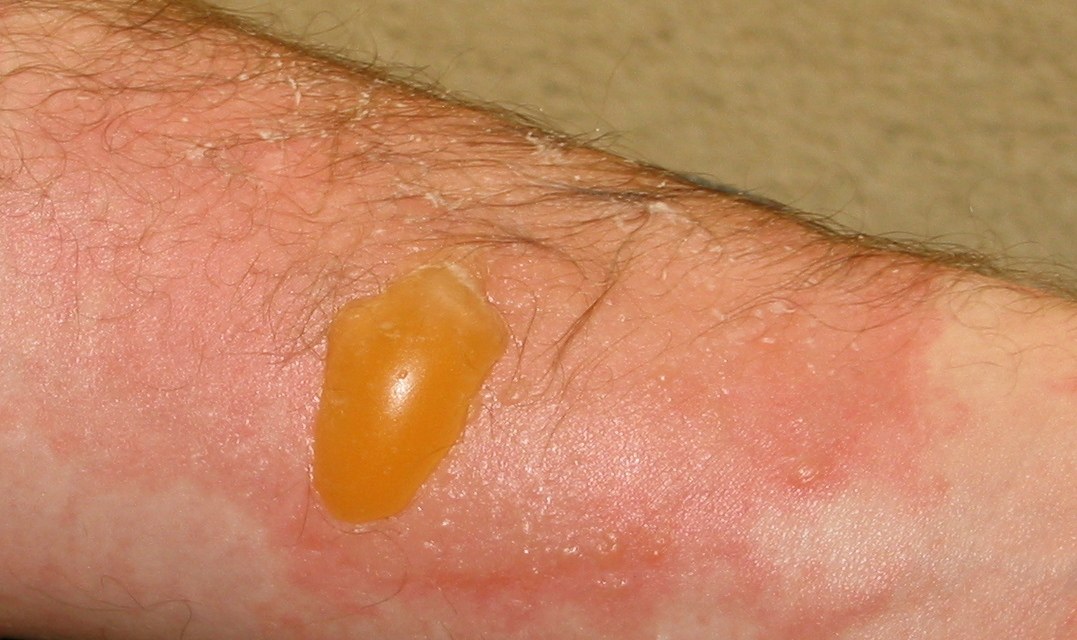
Definition
A thermal burn is damage to the skin and possibly deeper tissues caused by an external heat source, such as naked flames, steam or hot liquids (scald) or contact with hot objects. Burns from ionising rays, sunburn, chemical and electrical burns are distinct types. In large burns, airway, gas exchange and circulatory stability are the priority.
Classification
- Superficial (first degree): only the epidermis is involved; painful, red and warm, no blisters.
- Partial thickness (second degree): epidermis and part of the dermis; depending on depth superficial partial (painful, blisters) or deep partial (pain may be absent because nerve endings are destroyed; hair usually lost).
- Full thickness (third degree): all skin layers destroyed, including nerve endings, small blood vessels, hair follicles and sweat glands; painless, pearly white or charred, dry and leathery; in severe cases fat, muscle and bone are also involved.
Diagnosis
- Assessment of extent (body surface burned by the rule of nines) and depth; depth is often underestimated at first examination; symptoms depend mainly on how many skin layers are affected.
- History of the injury (e.g. suspected carbon monoxide poisoning in house fires); burns of the face, hands and genitals are regarded as serious.
- Signs of wound infection: increasing redness, swelling and pain of the surrounding skin in the first days (streptococci) or a change in colour, new discharge and a sickly sweet odour of the eschar (Pseudomonas, other Gram-negative bacteria).
Differential diagnoses
 Contact dermatitis (contact eczema)
 Phototoxic dermatitis
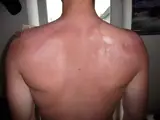 Sunburn
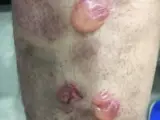 Bullous pemphigoid
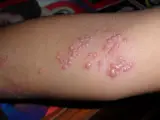 Herpes zoster
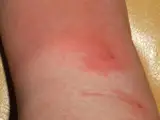 Erysipelas
Image credits for the thumbnails
- Contact dermatitis (contact eczema): Dr.khatmando, “Severe contact dermatitis buprenorphine transdermal patch”, CC BY-SA 4.0, via Wikimedia Commons · CC BY-SA 4.0 · Source
- Phototoxic dermatitis: Dragan Marjanovic, “Phytophotodermatitis-Severe-Case”, CC BY-SA 3.0, via Wikimedia Commons · CC BY-SA 3.0 · Source
- Sunburn: Wikimedia user, “Sunburnt back (2)”, CC BY-SA 3.0, via Wikimedia Commons · CC BY-SA 3.0 · Source
- Bullous pemphigoid: Mohammad2018, “Bullous pemphigoid new image”, CC BY-SA 4.0, via Wikimedia Commons · CC BY-SA 4.0 · Source
- Herpes zoster: Asvmdrn, “Herpes zoster, elbow”, CC BY-SA 3.0, via Wikimedia Commons · CC BY-SA 3.0 · Source
- Erysipelas: Poupou l'quourouce, “Erysipel”, CC BY-SA 3.0, via Wikimedia Commons · CC BY-SA 3.0 · Source
Treatment principles
- Treatment depends on burn depth and the body surface area involved.
- Superficial burns usually heal without scarring under conservative wound care; deep dermal and full-thickness burns require necrosectomy and skin grafting.
- Extensive burns, burns to the face, hands, feet or genitals and inhalation injuries are treated in a burns centre, including fluid resuscitation and analgesia; tetanus immunisation status is checked.
Specific treatment regimens with drugs and doses are covered in the DermaFuchs app.
Keep learning in the app
References (selection)
Cross-references
Keep learning
Keep learning with flashcards, exam questions and spot diagnoses in the DermaFuchs app – free, in your browser or as an app.
Related pages: Contact dermatitis (contact eczema) · Phototoxic dermatitis · Sunburn
Note: This page is intended for medical education and does not replace diagnosis or treatment decisions in individual cases.