Phototoxic reaction
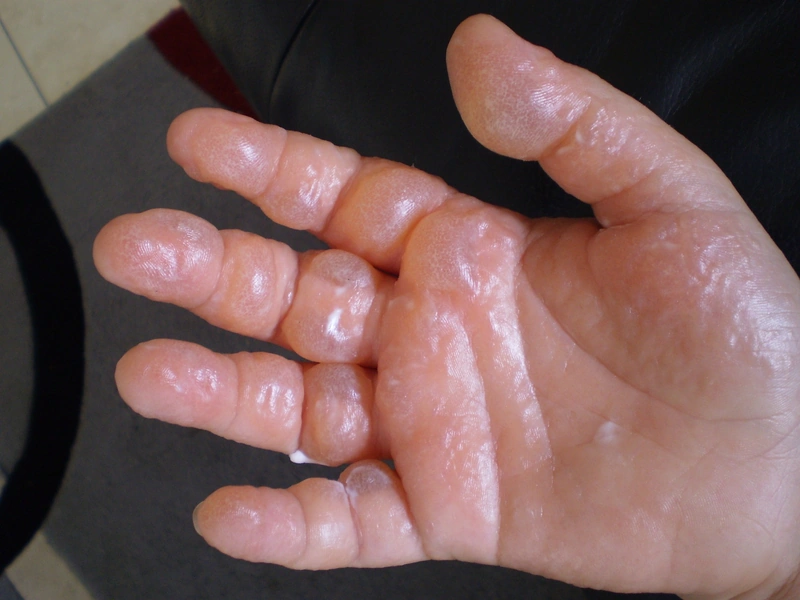
Clinical Comparison
Phototoxic Reaction
- Latency: Minutes to hours post-sun exposure.
- Clinical presentation: Sunburn-like erythema + bullae, sharply demarcated to exposed areas, burning.
- Common triggers: Tetracyclines as well as Amiodarone + furocoumarins.
- Amiodarone-specific pigmentation (Spot diagnosis!): Clinical presentation centrofacial slate-grey / bluish pigmentation (esp. nose / cheeks) due to lipofuscin-containing granules with UV exposure + long-term amiodarone use. Classic constellation: elderly patient with antiarrhythmics in their home medication — remember this for every spot diagnosis question.
Photoallergic Reaction
- Latency: 24–72 h post-sun exposure (Type IV reaction).
- Clinical presentation: Erythema + papules + vesicles + pruritus, with spreading beyond exposed areas.
- Common triggers: chemical sunscreens (benzophenones, octocrylene, older PABA derivatives), phenothiazines, sulfonamides, topical NSAIDs (ketoprofen gel — very common!), antifungals (bifonazole, fenticonazole), plants (Compositae, ivy).
- Diagnostics: Photopatch test (see flashcard "Light-induced diseases — Basics").
Differential diagnoses
- Phototoxic dermatitis
- Photoallergic reaction
- Allergic contact dermatitis
- Urticaria
- Phytophotodermatitis
- Lupus erythematosus gesicht
Practise Phototoxic reaction in the app
Flashcards with spaced repetition, exam questions and spot-the-diagnosis on this topic – in DermaFuchs, free of charge.
In the DermaFuchs app: 3 flashcards · 7 clinical images
Open in browser Download on the App StoreMore environmental and photodermatoses
- Erythema ab igne
- Miliaria Profunda
- Miliaria Pustulosa
- Miliaria rubra (heat rash)
- Favre-Racouchot disease
Note: This page is intended for medical education and does not replace diagnosis or treatment decisions in individual cases. Treatment and follow-up content is available in the app.