Photoallergic reaction
- Specialty
- Dermatology · Environmental & photodermatoses
- Images
- Clinical 1
- In the app
- 1 flashcards
- Last updated
- 10/2026 · Dr. Pascal Bafteh
Contents
Images (1)
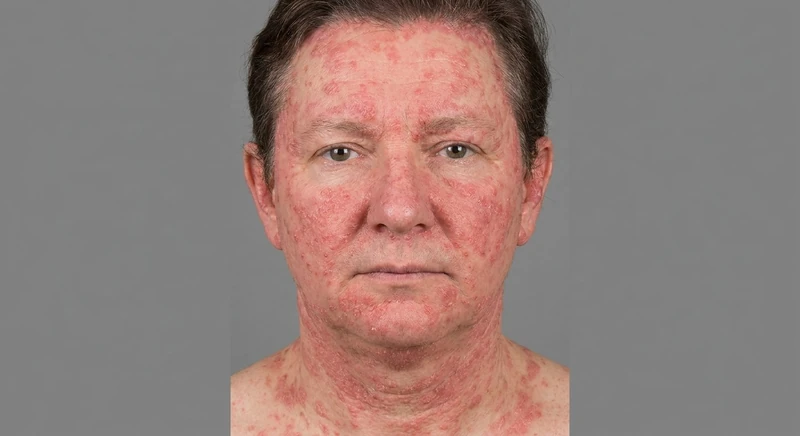 AI illustration
Definition
A photoallergic reaction is a delayed-type (type IV) hypersensitivity reaction to a substance that becomes an allergen only under the influence of light, mainly UVA. Clinically it resembles allergic contact dermatitis on light-exposed skin. Together with the phototoxic reaction, it belongs to the photocontact dermatitides.
Aetiopathogenesis
Under the influence of light, part of the substance (hapten) binds to skin proteins and forms a photoallergen against which specific T cells become sensitised; sensitisation typically takes 7–10 days. Common photoallergens are chemical UV filters in cosmetics (e.g. benzophenones, cinnamates) and NSAID-containing gels. Photoallergic reactions are mostly caused by substances placed on the skin, phototoxic reactions more often by substances taken systemically.
Clinical features
- Itchy, eczematous picture with erythema, papulovesicles, sometimes oozing and crusting; lichenification with repeated exposure.
- Onset 24–72 hours after renewed light exposure.
- Mainly on light-exposed sites (face, neck, V of the chest, backs of the hands and forearms); usually spared are the upper eyelids, the area under the chin, behind the ears and the neck folds.
- The lesions may be poorly demarcated and spread to unexposed skin.
- Rarely, progression to chronic actinic dermatitis.
Diagnosis
- Suspected when there is a temporal link between contact with a photoreactive substance, sun exposure and the skin changes.
- Photopatch testing for confirmation.
- Distinction from the phototoxic reaction: this is non-immunological, can affect anyone given enough substance and light, starts within minutes to hours, resembles an exaggerated sunburn with burning and pain (blisters in severe cases) and is sharply confined to light-exposed skin.
Differential diagnoses
Keep learning in the app
References (selection)
Cross-references
Mentioned in
More environmental and photodermatoses
Note: This page is intended for medical education and does not replace diagnosis or treatment decisions in individual cases.