Phytophotodermatitis (meadow grass dermatitis)
- Synonyms
- Wiesengräserdermatitis, Dermatitis bullosa striata pratensis, phototoxische Kontaktdermatitis, Phytophotodermatitis, Meadow grass dermatitis, Dermatitis pratensis
- Specialty
- Dermatology · Environmental & photodermatoses
- Images
- Clinical 1
- Last updated
- 10/2026 · Dr. Pascal Bafteh
Contents
Images (1)
Definition
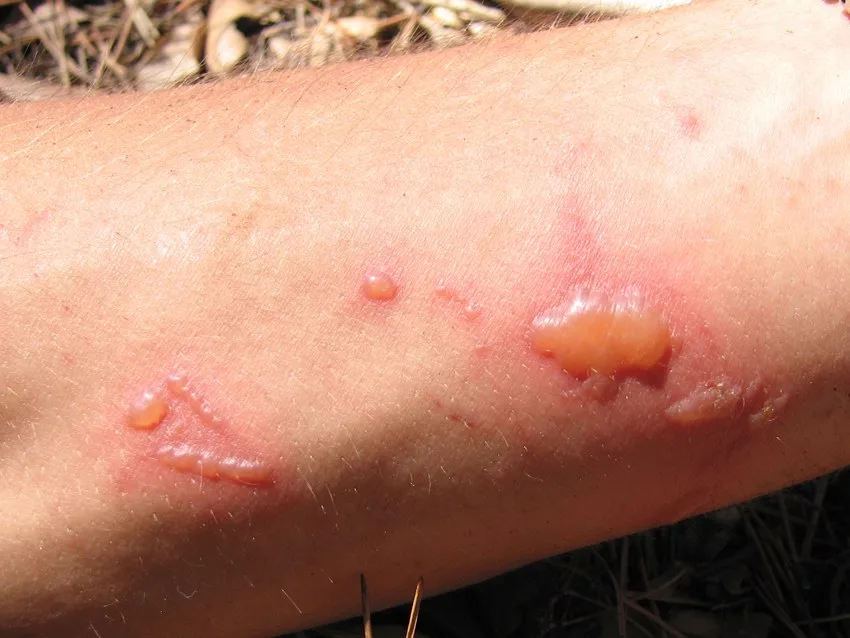
Phytophotodermatitis is a phototoxic skin reaction: photosensitising plant substances (furocoumarins) from plant sap or fruit get onto the skin, and subsequent sun exposure triggers the inflammation. The bullous, streaky presentation is traditionally called meadow grass dermatitis (dermatitis bullosa striata pratensis). It is not an allergy.
Occurrence & epidemiology
Anyone can be affected. People at particular risk include gardeners, vegetable pickers, hikers, bartenders (lime juice) and people using string trimmers; children, for instance, when playing with hollow plant stems.
Aetiopathogenesis
Furocoumarins (psoralens) are activated by UVA light and damage cell membranes directly, without involvement of the immune system. Typical culprits are umbellifers such as giant hogweed, cow parsnip, parsnip and celery, members of the rue family such as lime, gas plant and common rue, and the sap of the fig tree. Eating large amounts of furocoumarin-containing foods can cause more widespread photosensitivity.
Clinical features
- About 24–48 hours after sun exposure, redness, swelling and often blisters appear exactly at the sites of contact, painful like sunburn.
- Streaky, linear or bizarre-shaped lesions are typical, especially on the limbs, as are drip and spatter patterns (e.g. lime juice, string trimmer).
- After the reaction subsides, streaky postinflammatory hyperpigmentation often remains and may persist for weeks to years.
Diagnosis
- The diagnosis is clinical: a history of plant contact followed by sun exposure plus the typical streaky distribution.
- Conditions to distinguish include allergic contact dermatitis to plants, burns, dermatitis artefacta and – in children – non-accidental injury.
Differential diagnoses
Keep learning in the app
References (selection)
- DermNet: Phytophotodermatitis
- MSD Manual Professional: Photosensitivity (Abschnitt Phytophotodermatitis)
- [Dermatitis bullosa striata pratensis caused by Dictamnus albus L. (burning bush)]
- [Bullous phototoxic contact dermatitis caused by Ruta graveolens L. (garden rue), Rutaceae. Case report and review of literature]
Cross-references
Mentioned in
More environmental and photodermatoses
Note: This page is intended for medical education and does not replace diagnosis or treatment decisions in individual cases.