Pemphigus vulgaris
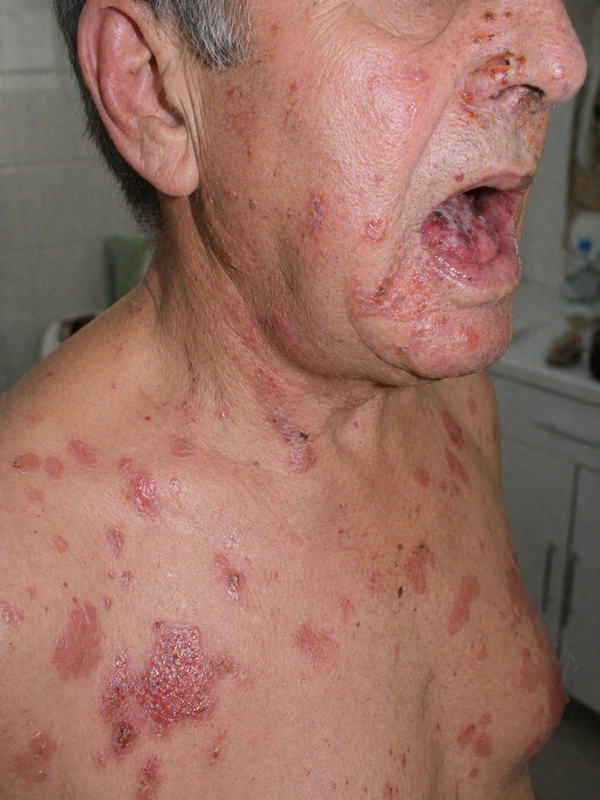
Pemphigus Vulgaris Severity Classification (according to PDAI/Clinical)
- Localized form: ≤ 1 cm² mucosa or ≤ 1% skin affected; no significant impairment of quality of life.
- Mild form: PDAI Score ≤ 15.
- Moderate/Severe form: PDAI Score > 15; significant pain and impairment of quality of life.
Overview
Autoantibodies: IgG antibodies against desmogleins, primarily against Desmoglein 3 (Dsg3) (mucosal type) or additionally against Desmoglein 1 (mucocutaneous type). Immunofluorescence: Intercellular, net-like deposits of IgG and C3 in the epidermis ("fishnet pattern"). Histology: Characteristic is the suprabasal cleft formation due to loss of cell contact (acantholysis). The lowest cell layer remains attached to the basement membrane like a "tombstone pattern".
Differential diagnoses
- Pemphigus foliaceus (drug-induced, antihypertensive medication)
- Pemphigus herpetiformis
- Pemphigus vegetans
- Mucous Membrane Pemphigoid
- Stevens-Johnson syndrome
- Minor aphthous ulcer
- Bullous pemphigoid
- TEN (toxic epidermal necrolysis)
Practise Pemphigus vulgaris in the app
Flashcards with spaced repetition, exam questions and spot-the-diagnosis on this topic – in DermaFuchs, free of charge.
In the DermaFuchs app: 9 flashcards · 5 clinical images
Open in browser Download on the App StoreSources (selection)
More blistering diseases
Note: This page is intended for medical education and does not replace diagnosis or treatment decisions in individual cases. Treatment and follow-up content is available in the app.