Aphthous ulcers (recurrent aphthous stomatitis)
- Synonyms
- Aphthe, Mundaphthen, aphthöse Stomatitis, Mundgeschwür, habituelle Aphthen, mouth ulcers, canker sores, aphthae, aphthous stomatitis
- Specialty
- Dermatology · Regional & special dermatoses
- Images
- Clinical 2
- In the app
- 2 flashcards
- Last updated
- 10/2026 · Dr. Pascal Bafteh
Contents
Images (2)
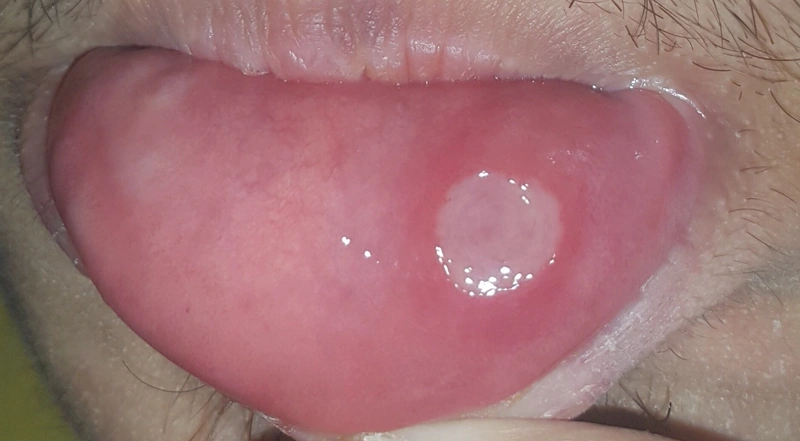
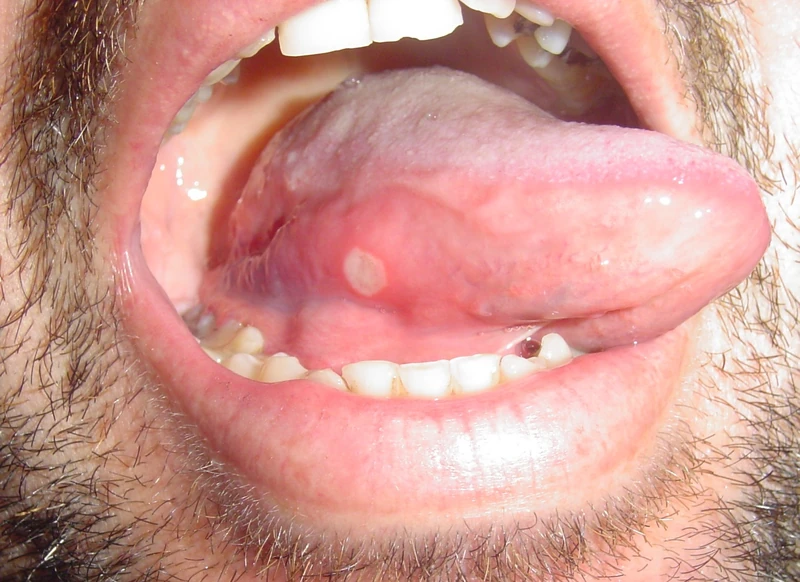
Definition
Aphthae are painful, round, superficial mucosal ulcers with a yellowish-white fibrin coating and a red halo. Recurrent aphthae without underlying disease are called recurrent aphthous stomatitis; aphthous ulcers are the most common ulcerative condition of the oral mucosa.
Classification
- Minor aphthae (80%): under 5 mm, heal within 1–2 weeks.
- Major aphthae: large (often over 10 mm), last weeks or months and leave a scar.
- Herpetiform aphthae: numerous pinpoint ulcers, most often on the tongue; resolve within a month.
Aetiopathogenesis
The cause is not fully understood; a familial predisposition (positive family history in about 40%) and a dysregulated immune response against mucosal components play a role. Triggers are minor injuries, stress, hormonal changes, certain foods and toothpastes containing sodium lauryl sulfate. Recurrent aphthae may reflect iron, vitamin B12 or folate deficiency, coeliac disease, inflammatory bowel disease, PFAPA syndrome or Behçet's disease.
Diagnosis
- Clinical diagnosis.
- With frequent or severe recurrences: blood count, ferritin, vitamin B12, folate, coeliac serology; ask about genital ulcers, eye and bowel symptoms (Behçet's disease, Crohn's disease).
- Persistent ulcers without an obvious cause: biopsy.
Differential diagnoses

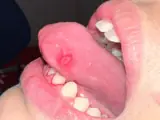
Image credits for the thumbnails
- Herpes simplex (cold sores): unknown (Commons user), “Cold sore”, Public Domain, via Wikimedia Commons · Public Domain · Source
- Secondary syphilis (lues II): Ehlers S, Sergent S, Ashurst J (Clin Pract Cases Emerg Med 2020), CC BY 4.0, via PubMed Central (PMC7676796) · CC BY 4.0 · Source
- Pemphigus vulgaris: Mohammad2018, CC BY-SA 4.0, via Wikimedia Commons, cropped · CC BY-SA 4.0 · Source
- Behçet's disease: El Omari S, Barhoud O, Elarabi S et al. (Cureus 2026), CC BY 4.0, via PubMed Central (PMC13561507) · CC BY 4.0 · Source · cropped
Treatment principles
- Individual aphthae heal spontaneously; treatment is symptomatic with antiseptic mouth rinses, topical local anaesthetics and topical glucocorticoids.
- General measures include avoiding mechanical irritation and spicy or acidic foods.
- With frequent or severe recurrences, nutritional deficiencies and systemic diseases such as Behçet's disease or inflammatory bowel disease are investigated; severe courses may require systemic anti-inflammatory therapy.
Specific treatment regimens with drugs and doses are covered in the DermaFuchs app.
Keep learning in the app
References (selection)
Cross-references
Keep learning
Keep learning with flashcards, exam questions and spot diagnoses in the DermaFuchs app – free, in your browser or as an app.
Related pages: Herpes simplex (cold sores) · Candida intertrigo · Secondary syphilis (lues II)
Note: This page is intended for medical education and does not replace diagnosis or treatment decisions in individual cases.