Paraneoplastic pemphigus
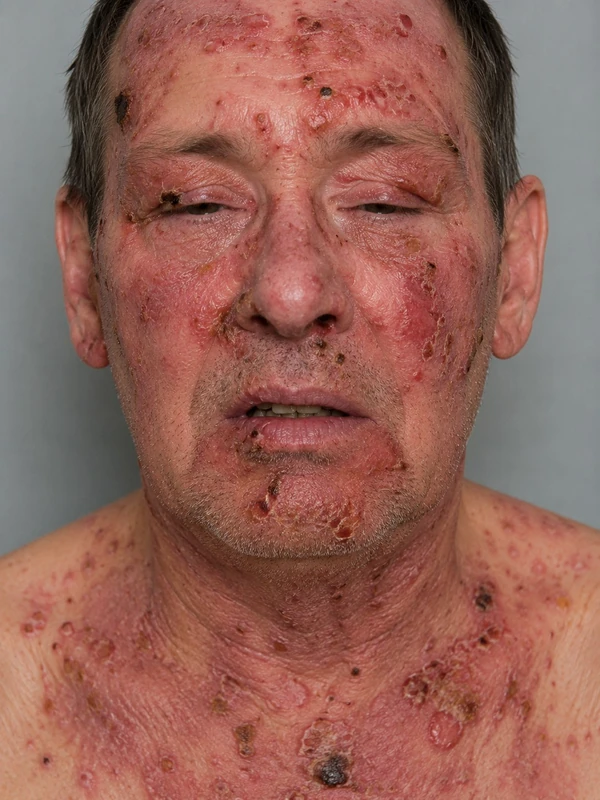
Overview
- Association: Obligately occurs in the context of neoplasms, mostly B- and T-cell lymphomas or Castleman's tumor.
- Antigens: IgG/IgA against plakins (envoplakin, periplakin) and Desmocollin 2/3.
- Clinical features: Severe involvement of all mucous membranes (incl. conjunctivae, esophagus) as well as palms and soles; the feared complication is bronchiolitis obliterans — it largely determines the high lethality.
- Diagnostics: Besides ELISA/immunoblot for envoplakin/periplakin, indirect immunofluorescence on rat bladder epithelium (transitional epithelium) is the classic screening test — it contains plakins but no desmogleins and is therefore negative in pemphigus vulgaris.
- Classification: PNP is one of the obligate paraneoplasias — alongside erythema gyratum repens, acquired hypertrichosis lanuginosa, necrolytic migratory erythema (glucagonoma) and malignant acanthosis nigricans. Consequence: mandatory tumour search (imaging, lymph node ultrasound, haematological work-up).
Differential diagnoses
- Pemphigus vulgaris
- Pemphigus foliaceus (drug-induced, antihypertensive medication)
- Stevens-Johnson syndrome
- Mucous Membrane Pemphigoid
Practise Paraneoplastic pemphigus in the app
Flashcards with spaced repetition, exam questions and spot-the-diagnosis on this topic – in DermaFuchs, free of charge.
In the DermaFuchs app: 2 flashcards · 1 clinical images
Open in browser Download on the App StoreSources (selection)
More blistering diseases
Note: This page is intended for medical education and does not replace diagnosis or treatment decisions in individual cases. Treatment and follow-up content is available in the app.