Tinea cruris
- Synonyms
- jock itch, groin ringworm
- Specialty
- Dermatology · Fungal infections
- Images
- Clinical 3
- In the app
- 6 flashcards
- Last updated
- 10/2026 · Dr. Pascal Bafteh
Contents
Images (3)
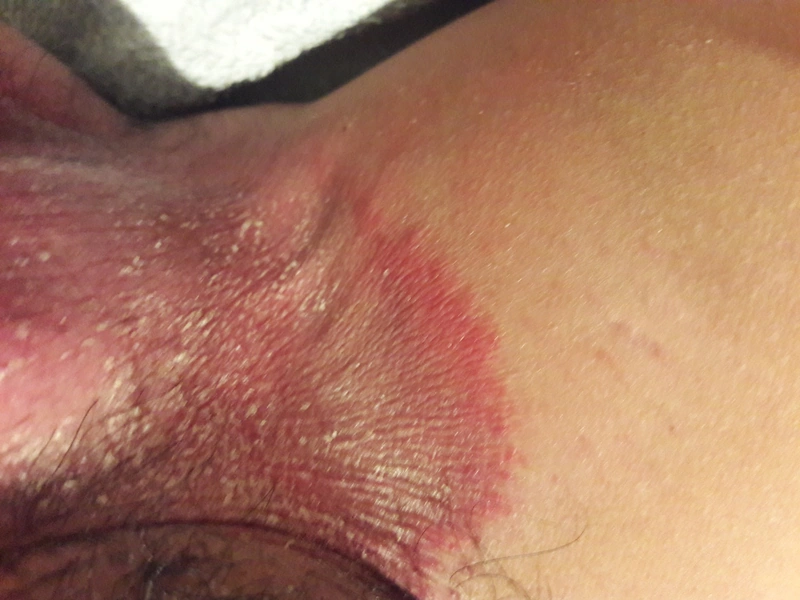
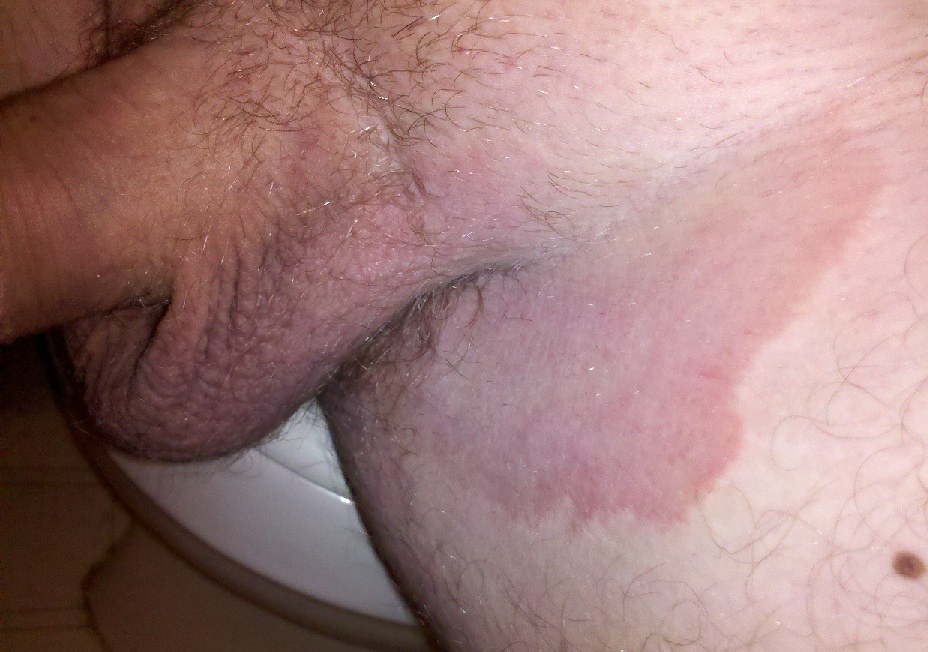
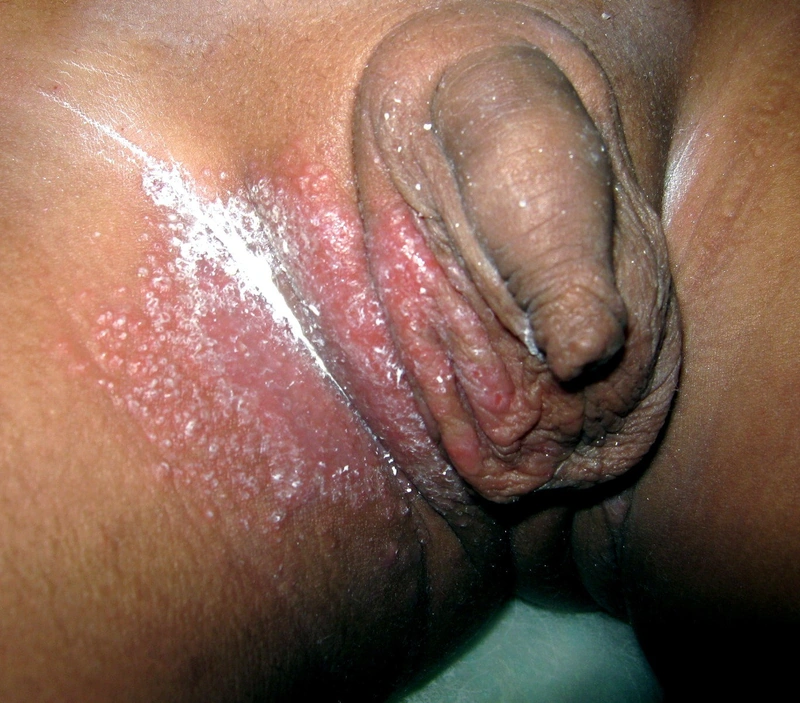
Definition
Tinea cruris (tinea inguinalis) is a dermatophyte infection of the groin and inner thighs, possibly spreading to the lower abdomen, pubic area, buttocks and perineum; the penis, scrotum and vulva are typically spared. It usually starts on one side and remains asymmetrical even when bilateral.
- Clinical features: sharply demarcated erythematosquamous plaques in the inguinal/pubic area with active border and severe pruritus; DD candida intertrigo: satellite papules + macerated coatings without active rim.
- Pathogens: most commonly T. rubrum and Epidermophyton floccosum, less often T. mentagrophytes.
Occurrence & epidemiology
Men are affected about three times as often. The commonest organisms are Trichophyton rubrum and Epidermophyton floccosum; they are usually spread from tinea pedis or onychomycosis by scratching or via towels and bed sheets. Previous episodes, occlusive clothing, obesity, excessive sweating and diabetes mellitus are predisposing factors.
Diagnosis
- KOH microscopy and fungal culture from the scaly edge; examination of the feet as well.
- Distinction from candidal intertrigo, erythrasma (coral-red under Wood's light, tinea does not fluoresce), inverse psoriasis, seborrhoeic dermatitis and Hailey-Hailey disease.
Differential diagnoses
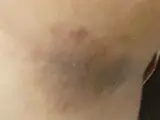
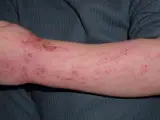
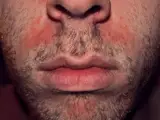
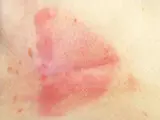
Image credits for the thumbnails
- Tinea corporis: Corina G., “Tinea corporis”, Public Domain, via Wikimedia Commons · Public domain · Source
- Erythrasma: unknown (Commons user), “Erythrasma”, CC BY-SA 4.0, via Wikimedia Commons · CC BY-SA 4.0 · Source
- Atopic dermatitis (atopic eczema): Eisfelder, “Atopic dermatitis child”, CC BY-SA 3.0, via Wikimedia Commons · CC BY-SA 3.0 · Source
- Seborrhoeic dermatitis: Roymishali, “Seborrhoeic dermatitis highres”, CC BY-SA 3.0, via Wikimedia Commons · CC BY-SA 3.0 · Source
- Intertrigo: Pera F, Suman C, Cosma M, Mazza S, Brunani A, Cancello R (J Cosmet Dermatol 2025), CC BY 4.0, via PubMed Central (PMC12042251) – panel B “before” (cropped) · CC BY 4.0 · Source
Treatment principles
- Tinea cruris is usually treated with topical antifungals; extensive or treatment-resistant disease requires systemic therapy.
- It is important to treat any concomitant tinea pedis at the same time, as it acts as a reservoir of infection.
- Keeping the groins dry and avoiding occlusive clothing help prevent recurrence.
Guideline: AWMF guideline register (no. 013-002)
Specific treatment regimens with drugs and doses are covered in the DermaFuchs app.
Keep learning in the app
References (selection)
Cross-references
Keep learning
Keep learning with flashcards, exam questions and spot diagnoses in the DermaFuchs app – free, in your browser or as an app.
Related pages: Tinea corporis · Erythrasma · Candida intertrigo
Note: This page is intended for medical education and does not replace diagnosis or treatment decisions in individual cases.