Cercarial dermatitis (swimmer's itch, schistosome larvae)
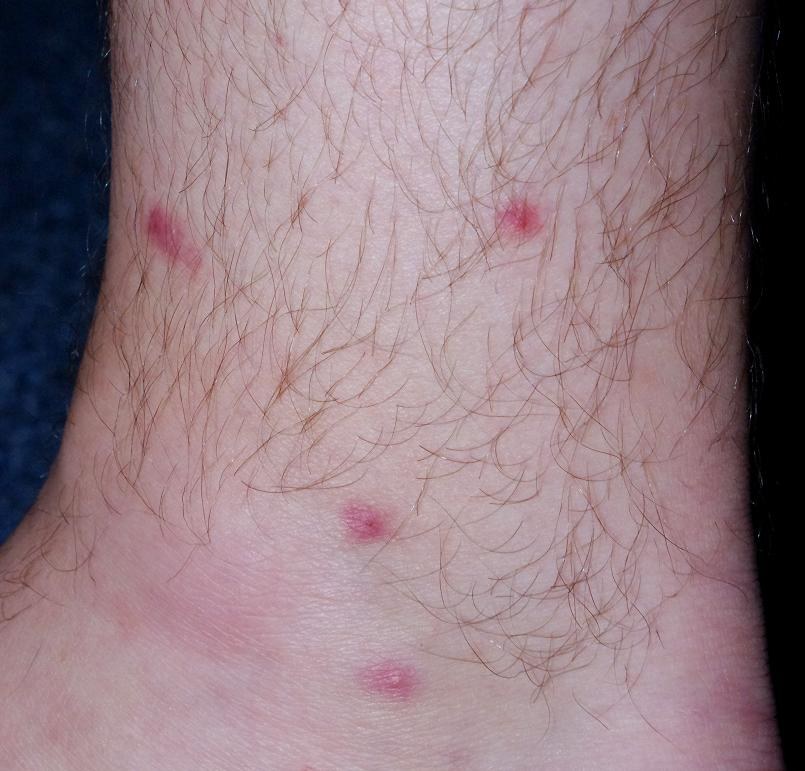
Overview
- Causative agent: Schistosoma haematobium (Urogenital Schistosomiasis), S. mansoni / S. japonicum (Intestinal Schistosomiasis).
- Transmission: Freshwater contact in endemic areas (Sub-Saharan Africa, Brazil, Middle East, Asia) — penetration of cercariae through the skin.
- Clinical presentation:
- Early phase: Cercarial dermatitis (itchy papules at the entry site) — "Swimmer's itch"
- Subacute: Katayama fever (fever, eosinophilia, hepatosplenomegaly, urticaria) 4–8 weeks after exposure
- Chronic: granulomatous reaction + fibrosis in liver/intestine/bladder; S. haematobium → hematuria + bladder cancer risk
- Diagnosis: Gold standard is egg detection in urine/stool plus serology and skin biopsy.
Differential diagnoses
- Cutaneous larva migrans
- Urticaria
- Filariasis
- Scabies
- Allergic contact dermatitis
Practise Cercarial dermatitis (swimmer's itch, schistosome larvae) in the app
Flashcards with spaced repetition, exam questions and spot-the-diagnosis on this topic – in DermaFuchs, free of charge.
In the DermaFuchs app: 1 flashcards · 2 clinical images
Open in browser Download on the App StoreMore parasitic skin diseases
- Demodicosis
- Filariasis
- Cutaneous leishmaniasis
- Cutaneous larva migrans
- Pediculosis capitis
- Caterpillar dermatitis caused by oak processionary moth (Thaumetopoea processionea)
- Crusted (Norwegian) scabies
- Scabies
Note: This page is intended for medical education and does not replace diagnosis or treatment decisions in individual cases. Treatment and follow-up content is available in the app.