Behçet's disease
Exam relevance: in 1 of more than 50 board exam reports · rank 93
- Specialty
- Dermatology · Inflammatory skin diseases
- Images
- Clinical 1
- In the app
- 1 flashcard
- Last updated
- 10/2026 · Dr. Pascal Bafteh
Contents
Images (1)
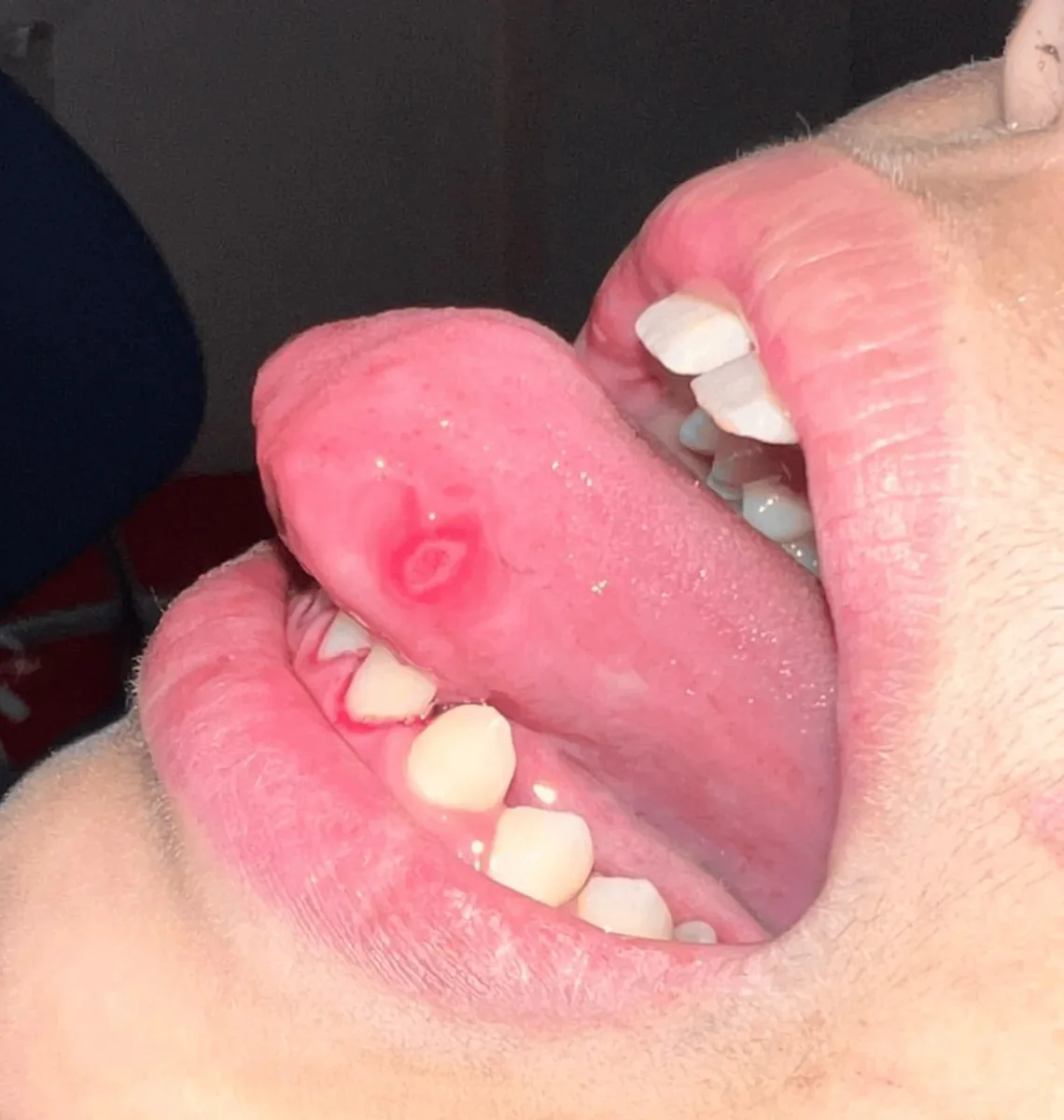
Definition
Definition & Demographics
- Chronic, inflammatory, relapsing generalized vasculitis with multiple organ involvement.
- Etiology: Classically, it is autoimmune + HLA-B*51 (+ viral triggers).
- Manifestation: 20–40 years of age, both sexes overall about equally affected (varies by region), Silk Road population (Turkey, Iran, Mediterranean, East Asia) — highest prevalence.
- Histology: neutrophil-rich perivascular inflammation with leukocytoclasia, affecting small venous mucocutaneous vessels.
Clues for Behçet's vs. Recurrent Aphthous Stomatitis
- Involvement of pharynx and tonsils as well (Behçet ulcers can occur anywhere in the mouth and pharynx).
- Very large, strikingly configured aphthae (not simply round).
- General symptoms with fever, night sweats, weight loss, ESR ↑.
Clinical features
Clinical Presentation (ISG Criteria 1990)
- Recurrent oral aphthae obligatory (≥ 3 ×/year) PLUS ≥ 2 others:
- Genital aphthae / ulcers
- Eye involvement (anterior / posterior uveitis, hypopyon, retinal vasculitis)
- Skin manifestations: Erythema nodosum-like nodules, pseudo-folliculitis, pyodermas, sterile pustules, thrombophlebitis migrans
- Pathergy test positive (sterile pustule 24–48 h after needle prick)
- Systemic: Arthritis, GI vasculitis, CNS involvement (Neuro-Behçet), pulmonary artery aneurysms, large vein thromboses.
Diagnosis
Diagnostics
- CBC + Diff + ESR + CRP
- Pathergy test (sterile needle 4 × into forearm skin → reading 24–48 h)
- HIV in case of risk factors
- Ophthalmological consultation obligatory (visual acuity, fundus)
- HLA-B*51 supportive, not obligatory
- MRI of the skull in case of neurological symptoms
Differential diagnoses
 Aphthous ulcers (recurrent aphthous stomatitis)
 Secondary syphilis (lues II)
 Herpes simplex (cold sores)
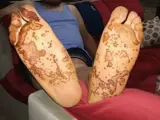 Reactive arthritis (Reiter syndrome)
Image credits for the thumbnails
- Aphthous ulcers (recurrent aphthous stomatitis): Dominiqueflores0514, “Canker sore mouth ulcer (cropped)”, CC BY-SA 4.0, via Wikimedia Commons · CC BY-SA 4.0 · Source
- Secondary syphilis (lues II): Ehlers S, Sergent S, Ashurst J (Clin Pract Cases Emerg Med 2020), CC BY 4.0, via PubMed Central (PMC7676796) · CC BY 4.0 · Source
- Herpes simplex (cold sores): unknown (Commons user), “Cold sore”, Public Domain, via Wikimedia Commons · Public Domain · Source
- Reactive arthritis (Reiter syndrome): Mohammad2018, “Keratoderma blennorrhagica”, CC BY-SA 4.0, via Wikimedia Commons · CC BY-SA 4.0 · Source
Treatment principles
- Treatment depends on the organ manifestation and is interdisciplinary.
- Mucocutaneous lesions are treated topically with glucocorticoids and local anaesthetics, and with frequent relapses systemically with anti-inflammatory agents or phosphodiesterase-4 inhibitors.
- Severe ocular, vascular, joint or CNS involvement requires systemic glucocorticoids combined with immunosuppressants or biologics such as TNF-α inhibitors.
Specific treatment regimens with drugs and doses are covered in the DermaFuchs app.
Keep learning in the app
Cross-references
Mentioned in
Keep learning
Keep learning with flashcards, exam questions and spot diagnoses in the DermaFuchs app – free, in your browser or as an app.
Related pages: Aphthous ulcers (recurrent aphthous stomatitis) · Secondary syphilis (lues II) · Herpes simplex (cold sores)
Note: This page is intended for medical education and does not replace diagnosis or treatment decisions in individual cases.