Hypothyroidism
Board exam relevance: in 1 of 105 exam reports · rank 181- Synonyms
- underactive thyroid, low thyroid, subclinical hypothyroidism, myxedema, high TSH
- Specialty
- Internal medicine · Endocrinology & diabetes
- Images
- Histology 1
- Last updated
- 10/2026 · Dr. Pascal Bafteh
Contents
Images (1)
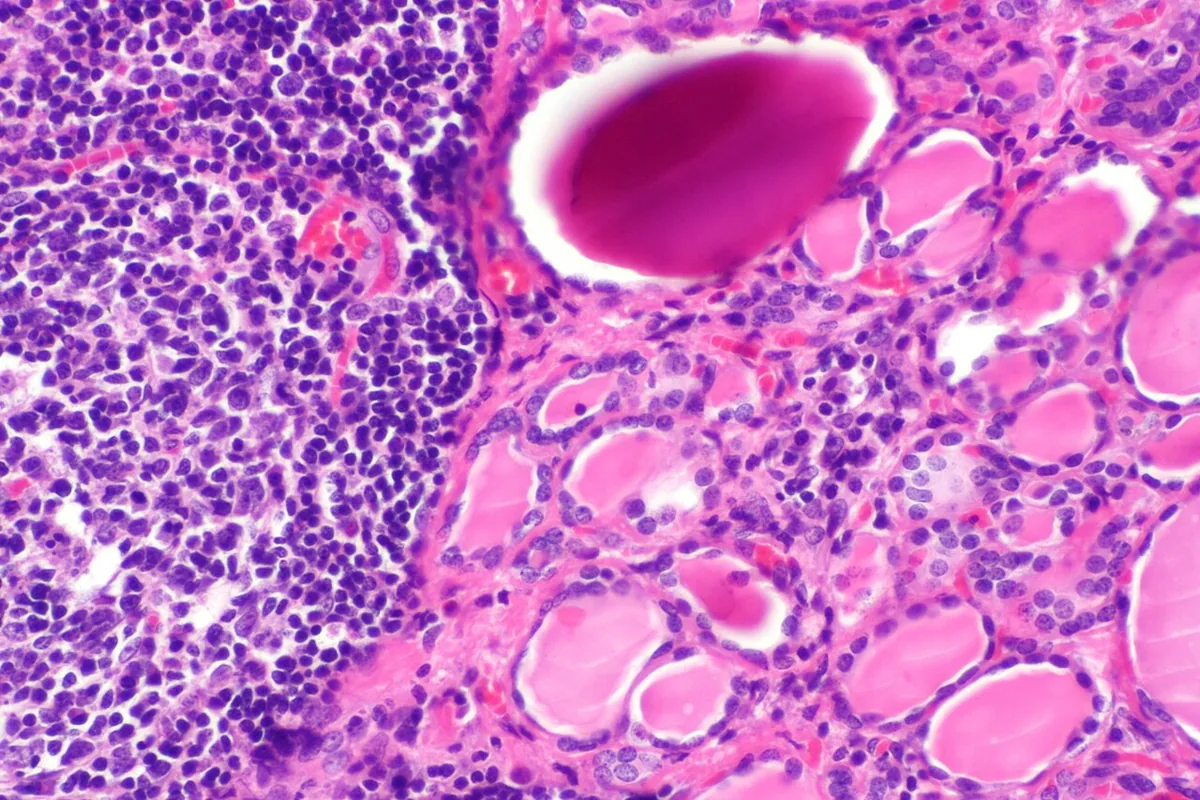 Histology
Definition
Hypothyroidism is a deficiency of thyroid hormones. In the primary form the cause lies in the thyroid itself (TSH raised, fT4 low); in the secondary or tertiary form it lies in the pituitary or hypothalamus (fT4 low, TSH low or inappropriately normal). In subclinical hypothyroidism TSH is raised and fT4 normal; symptoms are absent or mild.
Occurrence & epidemiology
Hypothyroidism can occur at any age and is particularly common in older people: over the age of 65 it affects almost 10 % of women and 6 % of men. Subclinical thyroid dysfunction is found in about 15 % of older women and 10 % of older men, particularly with underlying Hashimoto's thyroiditis.
Aetiopathogenesis
- Hashimoto's thyroiditis: most common cause, e.g. in the United States
- Iatrogenic: second most common cause, e.g. after ablative measures for hyperthyroidism or goiter
- Iodine deficiency: causes goiter and, if severe, hypothyroidism, including congenital hypothyroidism; rare in most regions since the introduction of iodized salt
- Drug-induced: e.g. caused by iodine-containing medicines, certain psychiatric drugs and certain immunomodulatory and cancer drugs
- Rare causes: inherited enzyme defects of hormone synthesis, thyroiditis in its hypothyroid phase
- Central hypothyroidism: pituitary or hypothalamic disease, often with further hormone deficiencies
Clinical features
Key findings
- Overt primary hypothyroidism: TSH raised, fT4 low
- Common symptoms: cold intolerance, fatigue, weight gain, constipation, bradycardia
- Skin signs: dry, coarse skin, myxedematous swelling, sparse, coarse hair
- Accompanying laboratory findings: cholesterol usually raised, frequently an anemia that is usually normocytic, sometimes raised creatine kinase in older people
Symptoms usually begin insidiously and nonspecifically; common first signs are fluid retention with periorbital puffiness, fatigue, cold intolerance and mental fogginess.
- Metabolism: modest weight gain, cold intolerance, hypothermia
- Nervous system and mood: forgetfulness, slowing, depression, delayed relaxation of deep tendon reflexes, carpal tunnel syndrome
- Skin and hair: puffy, doughy skin (myxedema), dry, coarse skin, coarse dry hair, carotenemia on the palms and soles, macroglossia, hoarse, slow speech
- Heart and serous membranes: bradycardia, pericardial effusion, pleural effusions and ascites
- Digestion and menstruation: constipation; heavy menstrual bleeding or secondary amenorrhea
- Older people: often few, vague symptoms such as confusion, loss of appetite, falls or muscle pain with raised CK; the picture can resemble dementia
- Myxedema coma as a life-threatening decompensation
Diagnosis
- TSH is the most sensitive test for primary hypothyroidism; together with fT4 it distinguishes subclinical from overt disease. T3 often remains normal for a long time and is not suitable for diagnosis.
- Central form: low fT4 with low or normal TSH (with reduced bioactivity); the underlying causes often affect other hormone axes.
- Anemia: usually normochromic-normocytic, sometimes hypochromic due to iron deficiency from heavy menstrual bleeding, or macrocytic; rarely severe. Cholesterol is usually raised in primary hypothyroidism.
- Search for the cause: TPO antibodies and ultrasound if Hashimoto's thyroiditis is suspected.
- Confounders: a low T4 also occurs in severe non-thyroidal illness (euthyroid sick syndrome) and in thyroxine-binding globulin deficiency.
Keep learning in the app
Further reading (open access)
Cross-references
Note: Learning content for medical education – not a treatment recommendation and no substitute for diagnosis or treatment decisions in individual cases. Treatment and management are deliberately not covered on this page.