Insulinoma
Board exam relevance: in 1 of 105 exam reports · rank 181- Synonyms
- beta cell tumor, islet cell tumor, pancreatic neuroendocrine tumor, pNET, Whipple's triad
- Specialty
- Internal medicine · Endocrinology & diabetes
- Images
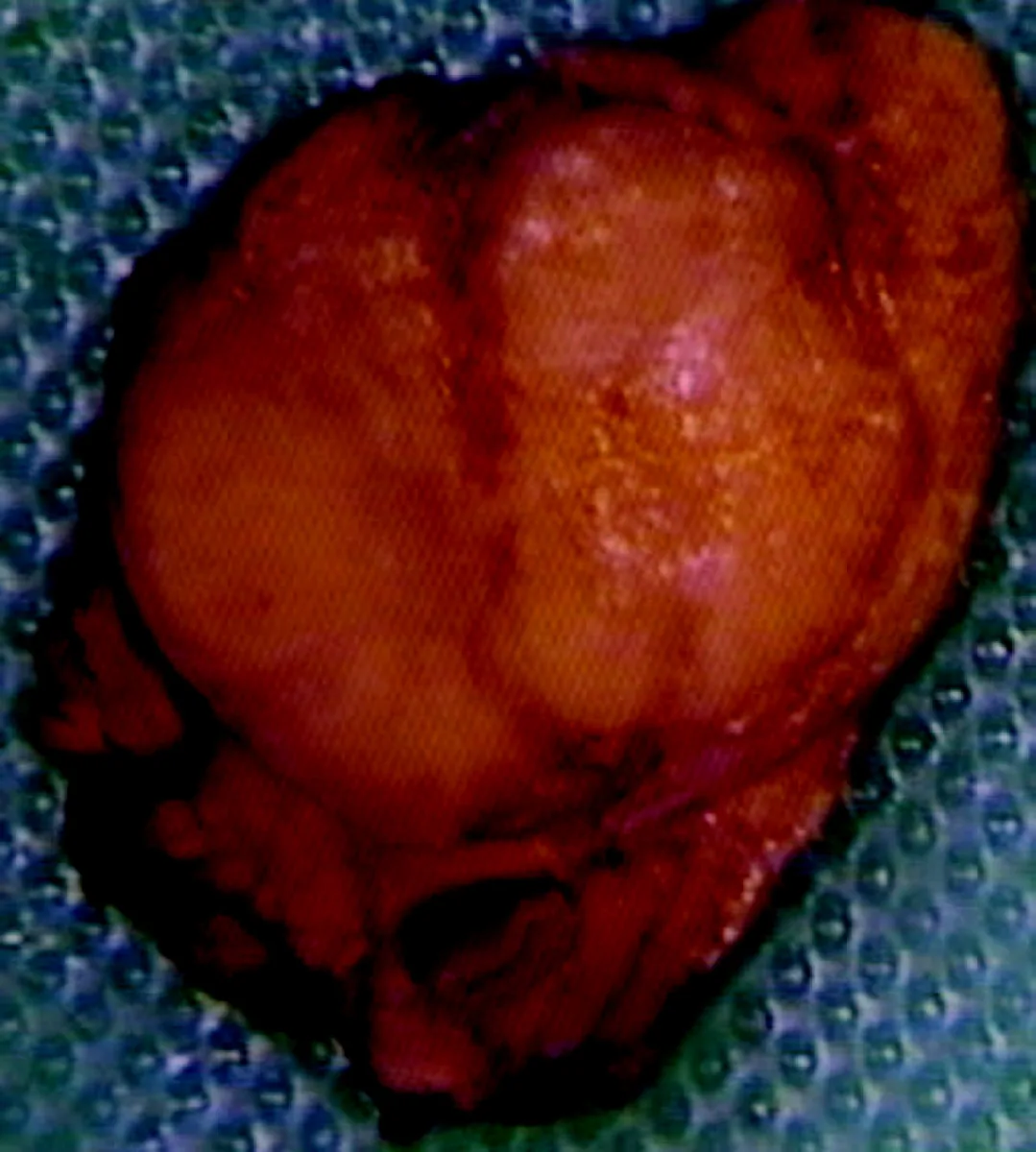
- Gross specimen 1
- Last updated
- 10/2026 · Dr. Pascal Bafteh
Contents
Images (1)
Definition
Insulinoma is a rare neuroendocrine tumor of the pancreatic beta cells with autonomous, non-suppressible insulin secretion. The hallmark is fasting hypoglycemia; postprandial hypoglycemia occurs less often.
Occurrence & epidemiology
Insulinoma occurs in about 1 in 250,000 people; the median age at diagnosis is about 50 years. Around 10 % of insulinomas occur as part of multiple endocrine neoplasia type 1 (MEN 1); these patients usually develop the disease in their twenties, and the tumors are more often multiple.
Aetiopathogenesis
Insulinomas arise from islet cells. About 80 % are solitary, and only about 10 % are malignant. They are almost always located in the pancreas; in less than 1 % they are found ectopically in the duodenal wall or peripancreatic tissue. The tumor's insulin secretion is not suppressed by falling glucose; accordingly, beta-hydroxybutyrate is low during hypoglycemia.
Clinical features
Hypoglycemia typically occurs in the fasting state. Symptoms often develop insidiously and are easily mistaken for a psychiatric or neurological disorder.
- Neuroglycopenic symptoms: headache, confusion, visual disturbances, weakness, palsy, ataxia, marked personality changes, loss of consciousness, seizures, coma
- Sympathetic symptoms with a rapid fall in glucose: faintness, tremor, palpitations, sweating, hunger, nervousness
- The hyperinsulinism can contribute to weight gain.
Diagnosis
Biochemical confirmation
- Prolonged fast: because many patients are symptom-free at presentation, a supervised fast of 48–72 hours is performed. About 98 % develop symptoms within 48 hours, 70–80 % within 24 hours.
- Whipple's triad: symptoms during the fast, simultaneously documented hypoglycemia and relief after carbohydrate intake.
- Findings during hypoglycemia (glucose < 55 mg/dl or 3.0 mmol/l): inappropriate insulin secretion with a serum level of the hormone > 6 µU/ml (42 pmol/l), C-peptide ≥ 0.6 ng/ml (0.2 nmol/l), proinsulin ≥ 5 pmol/l, low beta-hydroxybutyrate and a rise in glucose after glucagon; screening for oral antidiabetic agents is negative.
- Distinction from factitious hypoglycemia: with surreptitious use of exogenous hormone, C-peptide and proinsulin are normal or low.
Localization
Localization studies follow only after biochemical confirmation. Endoscopic ultrasound has a sensitivity of more than 90 %; positron emission tomography (PET) can be added. CT has proven of little help in localizing these usually small tumors. Staging follows the TNM system for well-differentiated pancreatic neuroendocrine tumors.
Keep learning in the app
Further reading (open access)
Cross-references
Note: Learning content for medical education – not a treatment recommendation and no substitute for diagnosis or treatment decisions in individual cases. Treatment and management are deliberately not covered on this page.