Graves' disease
Board exam relevance: in 6 of 105 exam reports · rank 59- Synonyms
- Basedow's disease, autoimmune hyperthyroidism, thyroid eye disease, Graves' ophthalmopathy, bulging eyes, TRAb
- Specialty
- Internal medicine · Endocrinology & diabetes
- Images
- Ultrasound 1 · Scintigraphy 1 · Clinical 2
- Last updated
- 10/2026 · Dr. Pascal Bafteh
Contents
Images (4)
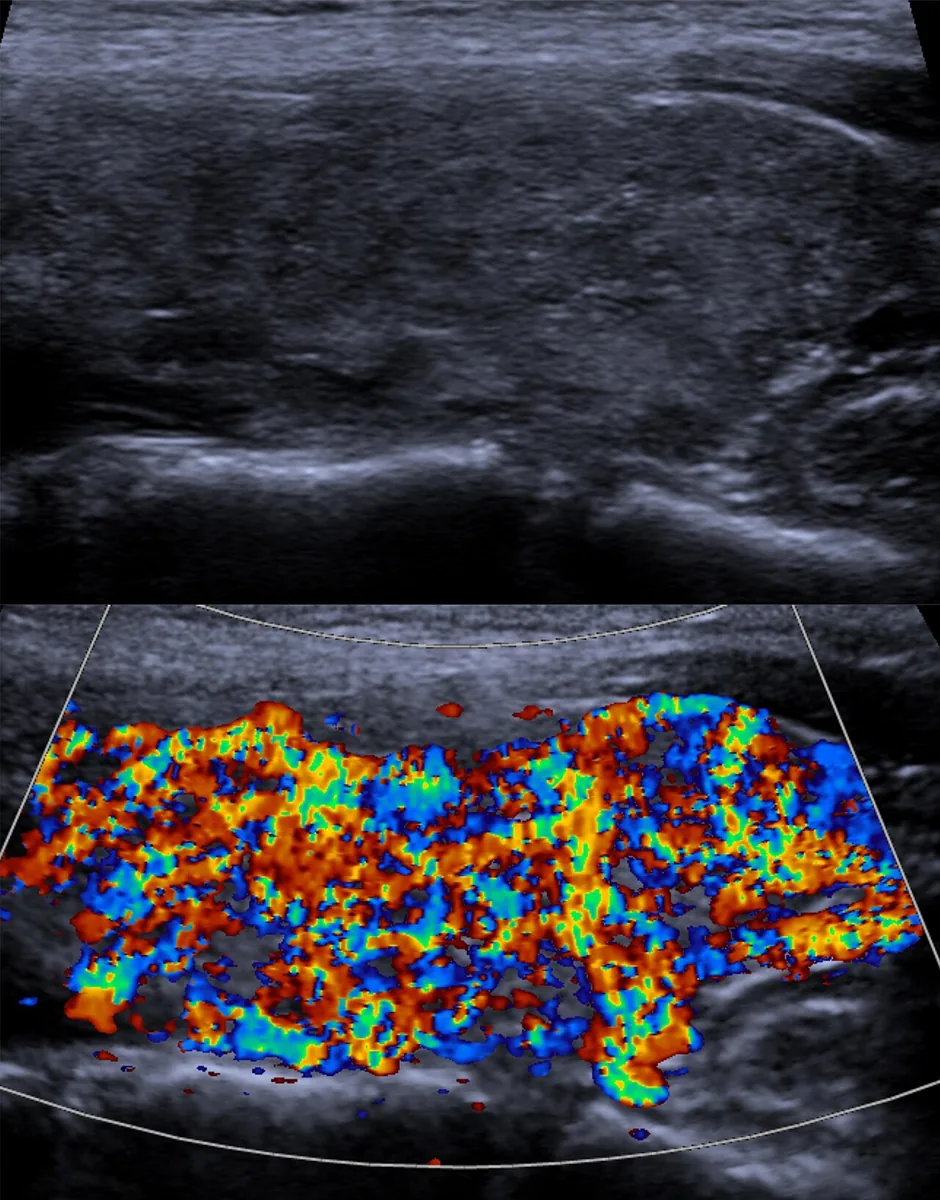 Ultrasound
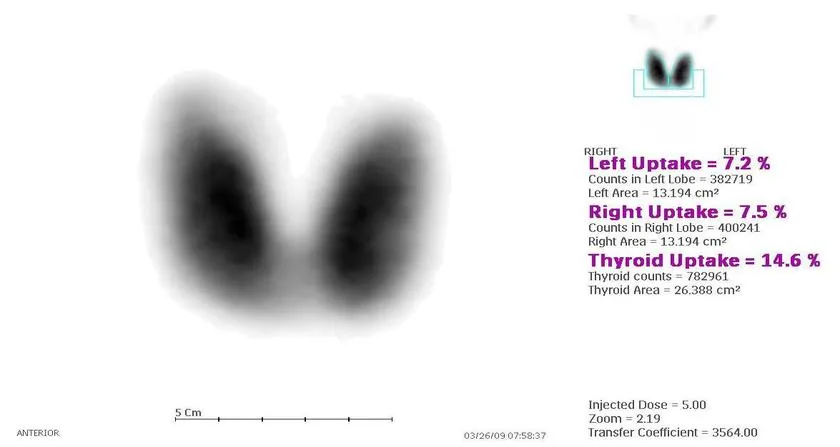 Scintigraphy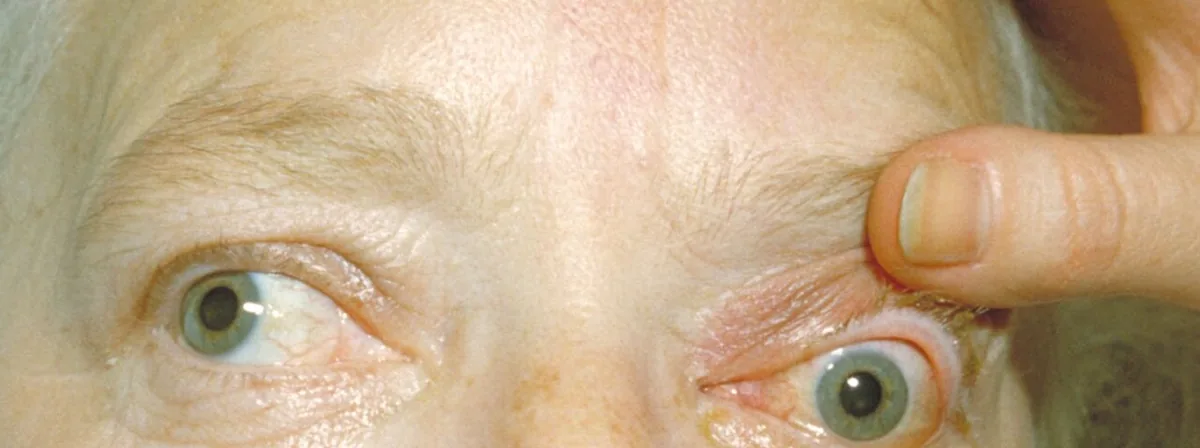
Definition
Graves' disease is an autoimmune thyroid disease in which stimulating autoantibodies against the TSH receptor (TRAb, also TSI) cause hyperthyroidism with diffuse goiter. Thyroid eye disease and, rarely, infiltrative dermopathy (pretibial myxedema) may accompany it. It is the most common cause of hyperthyroidism.
Occurrence & epidemiology
Hyperthyroidism affects women considerably more often than men, mainly between 20 and 50 years of age. Familial clustering is known; smoking is a risk factor for hyperthyroidism.
Aetiopathogenesis
Unlike most autoantibodies, TSH receptor antibodies are stimulatory: they cause continuously increased synthesis and release of T4 and T3 and growth of the thyroid gland. Heredity increases the risk, but the genes involved are unknown.
Thyroid eye disease probably results from antibodies against TSH receptors on orbital fibroblasts and fat cells; released cytokines cause inflammation and deposition of glycosaminoglycans in the extraocular muscles and orbital fat. It may precede hyperthyroidism or appear up to 20 years later and often runs a course independent of thyroid function.
Graves' disease occurs more often together with other autoimmune disorders, e.g. type 1 diabetes, vitiligo, premature graying of hair, pernicious anemia, systemic rheumatic diseases and autoimmune polyglandular syndromes.
Clinical features
- Merseburg triad: goiter + exophthalmos + tachycardia.
- Hyperthyroidism: restlessness, palpitations, tachycardia or atrial fibrillation, heat intolerance, sweating, weight loss, tremor, diarrhea
- Goiter: diffusely enlarged, smooth thyroid without discrete nodules, often with an audible bruit
- Thyroid eye disease: orbital pain, lacrimation, irritation, photophobia, lid retraction, exophthalmos (proptosis), periorbital swelling, restricted eye movement with diplopia; with normal thyroid function it is called euthyroid Graves' disease
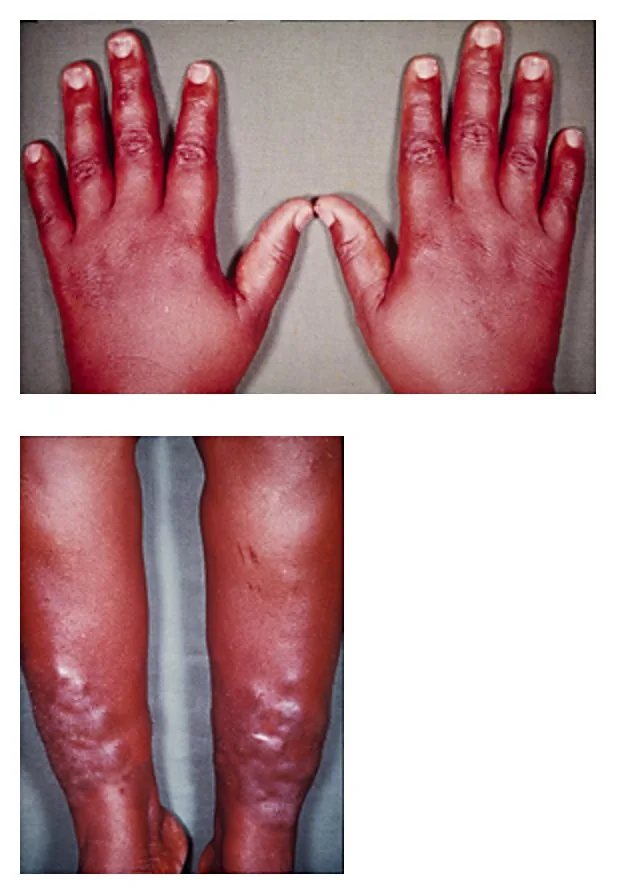
- Pretibial myxedema: non-pitting, initially red and itchy, later firm thickening of the skin, usually on the shins; almost only together with eye disease
Diagnosis
Antibodies
- Graves' — pathognomonic: TRAb (stimulating).
- Nonspecific in both: TPO antibody + Tg antibody.
- Hashimoto — ultrasound: hypoechoic + inhomogeneous + often small.
Ultrasound
- Doppler pattern: hypervascular ('thyroid inferno').
- B-mode: diffusely hypoechoic + inhomogeneous.
- Thyroid function: TSH suppressed, fT4 and/or fT3 raised
- TSH receptor antibodies (TRAb): confirm the diagnosis; because they cross the placenta, they indicate the risk of neonatal hyperthyroidism in pregnant women with a history of Graves' disease. Most patients also have TPO antibodies, fewer have thyroglobulin antibodies.
- Scintigraphy or iodine uptake: diffusely increased; needed mainly when the clinical picture is not clear
- Eye disease: ophthalmological examination with measurement of proptosis and eye motility; cross-sectional imaging of the orbit if required
Keep learning in the app
Further reading (open access)
Cross-references
More topics: Endocrinology & diabetes
Note: Learning content for medical education – not a treatment recommendation and no substitute for diagnosis or treatment decisions in individual cases. Treatment and management are deliberately not covered on this page.