Primary aldosteronism (Conn's syndrome)
Board exam relevance: in 10 of 105 exam reports · rank 27- Synonyms
- Conn syndrome, hyperaldosteronism, aldosterone excess, aldosterone-producing adenoma, PA, adrenal hypertension
- Specialty
- Internal medicine · Endocrinology & diabetes
- Images
- CT 1 · Gross specimen 1 · Histology 1 · ECG 1
- Last updated
- 10/2026 · Dr. Pascal Bafteh
Contents
Images (4)
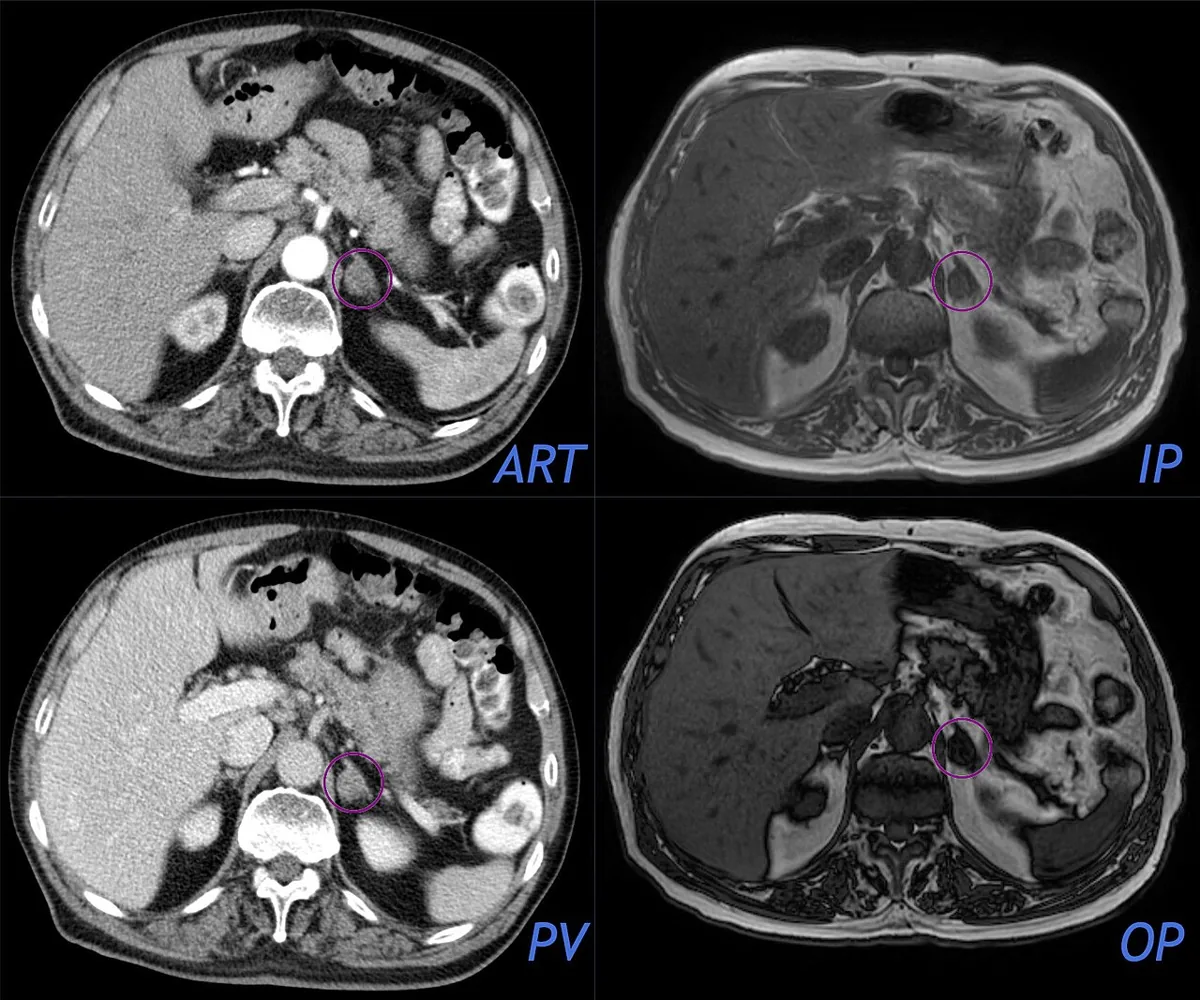 CT
CT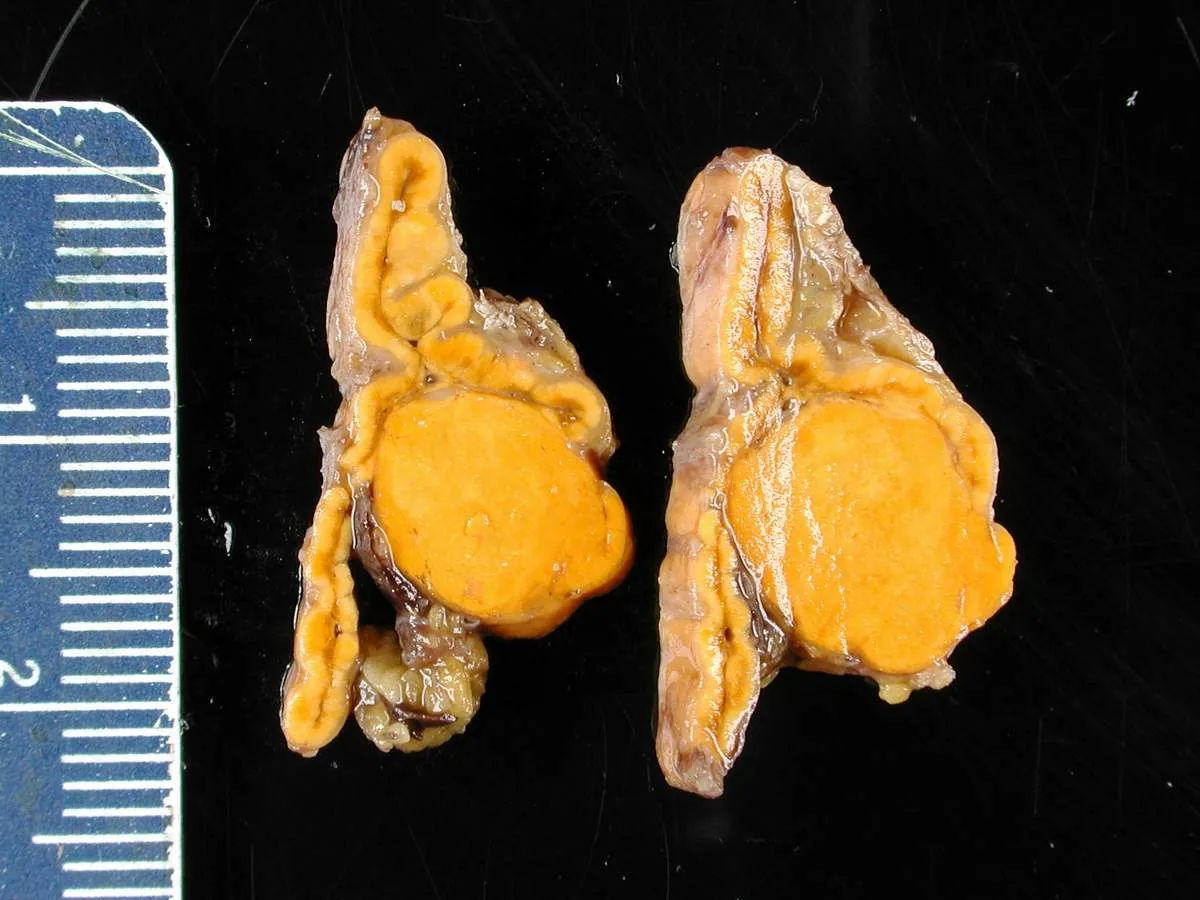 Gross specimen
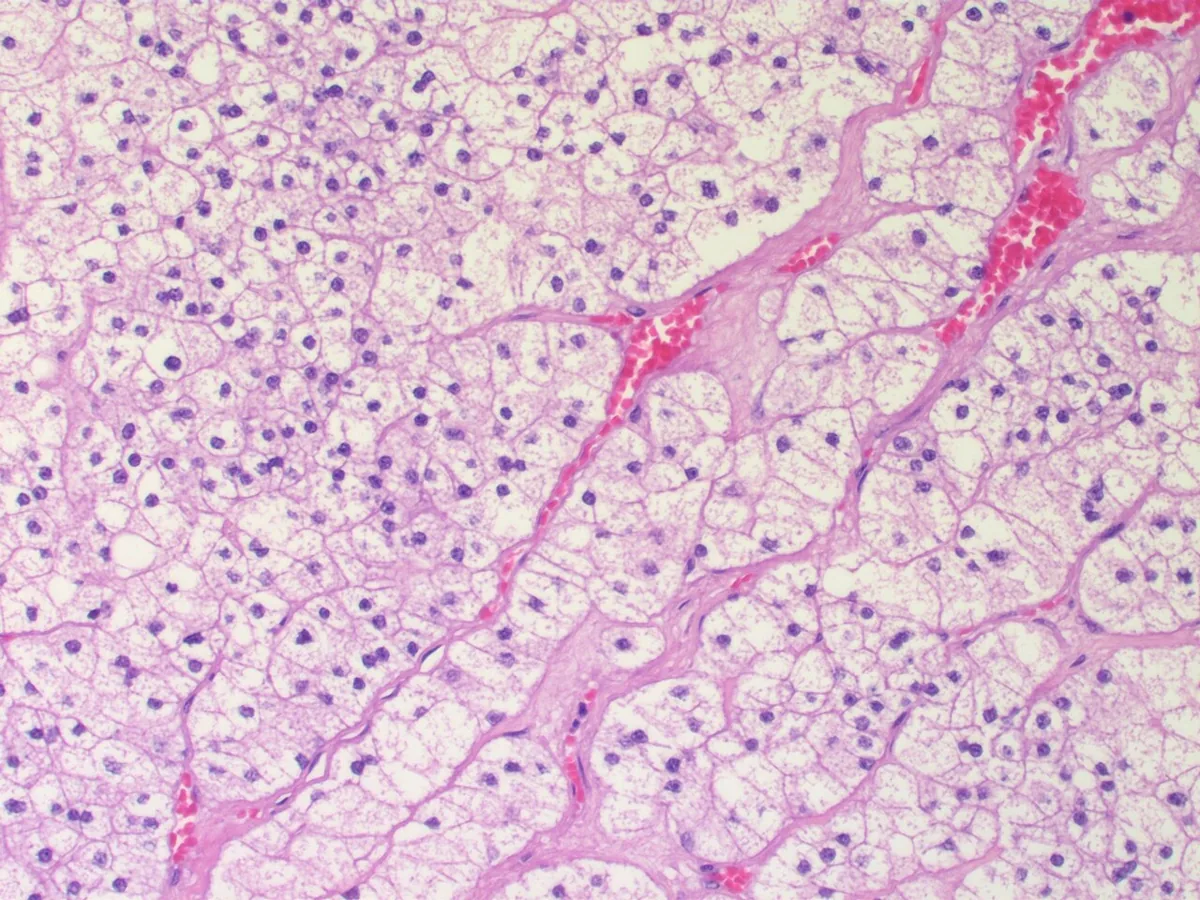 Histology
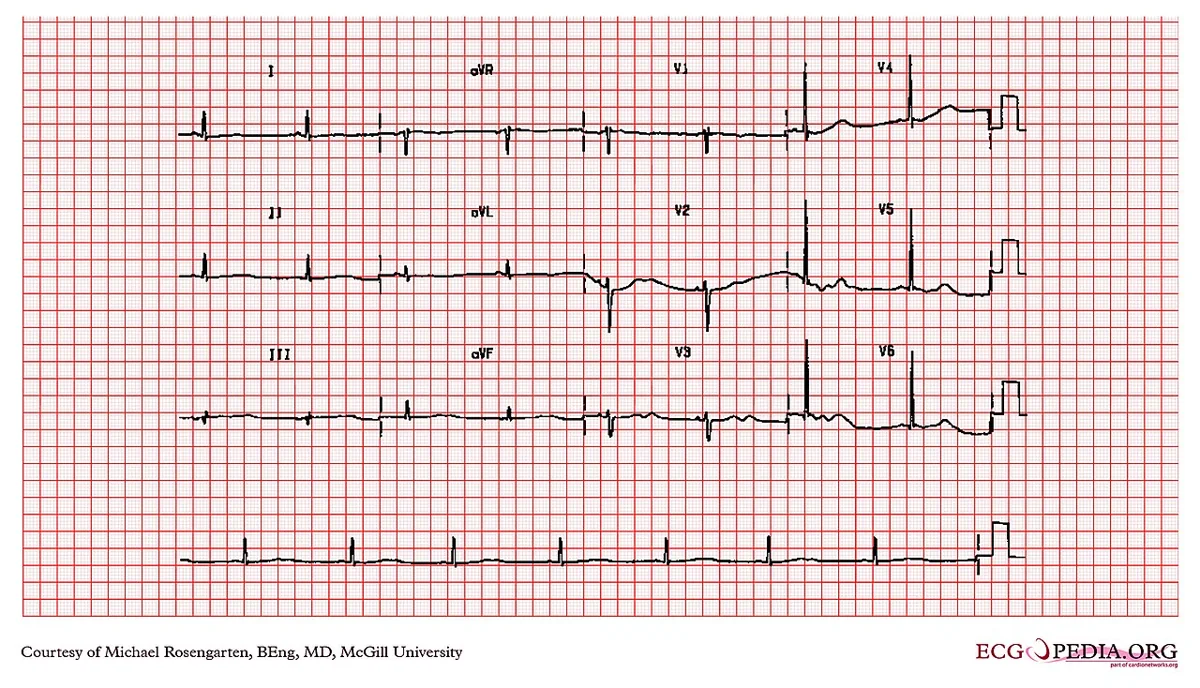 ECG
ECGDefinition
Primary aldosteronism (PA) is autonomous overproduction of aldosterone by the adrenal cortex that is largely independent of renin and volume status. Renin is typically suppressed.
Conn's syndrome strictly refers to hyperaldosteronism due to an aldosterone-producing adenoma, although clinically the term is often used for any PA. PA is considered the most common cause of secondary hypertension.
Classification
Subtypes
- Unilateral PA: aldosterone-producing adenoma or unilateral adrenal hyperplasia.
- Bilateral PA: idiopathic bilateral adrenal hyperplasia or bilateral adenomas.
- Aldosterone-producing adrenocortical carcinoma: rare; usually larger than 4 cm.
- Familial hyperaldosteronism (about 5 % of cases): type I with a chimeric CYP11B1/CYP11B2 gene, type II (CLCN2), type III (KCNJ5) and type IV (CACNA1H); also the genetic but non-familial form with seizures and neurological abnormalities (de novo mutation in CACNA1D).
Occurrence & epidemiology
PA is thought to affect 5.9–34 % of people with hypertension; the range mainly reflects differing diagnostic thresholds. Frequency rises with the severity of hypertension: about 4.2 % with grade 1, 10.2 % with grade 2 and 16.4 % with grade 3 hypertension; about 22 % in refractory hypertension.
Incidence increases with age; the median age at diagnosis in most studies was 50–55 years. PA is found in 1–4 % of adrenal incidentalomas.
Settings with a high pretest probability
- sustained blood pressure above 160/100 mmHg
- hypertension that remains at a systolic of at least 140 or a diastolic of at least 90 mmHg despite three classes of blood pressure–lowering agents, or normal blood pressure only with four or more agents
- hypertension before the age of 40
- hypertension with hypokalemia that is spontaneous or provoked by drugs that increase urine output
- hypertension with an adrenal tumor
- hypertension with atrial fibrillation without another cause
- hypertension with a family history of early hypertension or early stroke (under 40 years)
- hypertension in first-degree relatives of patients with PA
Aetiopathogenesis
Pathophysiology
In the distal tubule aldosterone causes sodium reabsorption in exchange for potassium and hydrogen ions. It is regulated mainly by the renin–angiotensin system and, to a lesser extent, by ACTH.
In PA aldosterone continues to be produced despite adequate volume and blood pressure. Sodium and water retention increase plasma volume and blood pressure; the high sodium delivery to the juxtaglomerular apparatus and the high blood pressure suppress renin. The result is a raised aldosterone-to-renin ratio. Potassium loss leads to hypokalemia and metabolic alkalosis. More than 90 % of aldosterone-producing adenomas carry somatic mutations in ion channels or pumps (e.g. KCNJ5) that lead to continuous aldosterone production.
Clinical features
Main features
- Arterial hypertension: often the only sign; mild to severe, frequently difficult to control and predominantly diastolic.
- Hypokalemia: present in fewer than 40 % of patients (9–37 %); a normal potassium therefore does not exclude PA.
- Effects of hypokalemia and alkalosis: episodic muscle weakness, paraesthesia, transient paralysis, tetany.
- Hypokalemic nephropathy: polyuria and polydipsia.
- Hypernatremia and hypervolaemia may occur; edema is uncommon.
Complications
PA promotes myocardial infarction, heart failure, atrial fibrillation, stroke and chronic kidney disease; it is associated with obesity, obstructive sleep apnea and diabetes mellitus.
Diagnosis
Laboratory tests and initial testing
- Aldosterone-to-renin ratio (ARR): the standard screening test; typical findings are raised plasma aldosterone and suppressed renin.
- Thresholds: depend on assay and units; a commonly used cut-off is an ARR above 30 (aldosterone in ng/dl, plasma renin activity in ng/ml/h). With very low renin the ratio can be falsely positive even when aldosterone is low.
- Influencing factors: many blood pressure–lowering agents alter renin and aldosterone. Hypokalemia and sodium restriction can cause false-negative, older age and renal impairment false-positive results.
- Distinction: low renin and low aldosterone suggest another form of mineralocorticoid excess (e.g. liquorice intake, Cushing's syndrome, Liddle syndrome), high renin and high aldosterone suggest secondary hyperaldosteronism.
- Electrolytes: hypokalemia, metabolic alkalosis, sometimes hypernatremia.
Confirmatory tests
Because the ARR has low specificity, autonomous aldosterone production is confirmed by at least one confirmatory test: aldosterone cannot be adequately suppressed by volume expansion.
- Saline loading test: oral over three days or as a four-hour saline suppression test. If aldosterone after the four-hour test in the recumbent position is above 10 ng/dl, PA is highly likely, below 5 ng/dl unlikely; in the seated position a value above 6 ng/dl is considered confirmatory.
- Unequivocal without confirmatory testing: spontaneous hypokalemia, plasma aldosterone above 20 ng/dl and renin below the detection limit.
Subtyping and localisation
- Adrenal CT: excludes large masses (suspected carcinoma); adenomas often appear as small hypodense nodules below 2 cm. However, CT does not show whether a nodule produces aldosterone; in a meta-analysis CT/MRI and adrenal vein sampling disagreed in 37.8 %.
- Adrenal vein sampling: bilateral measurement of aldosterone and cortisol; distinguishes unilateral from bilateral aldosterone production (selectivity and lateralisation index).
- PET with radiolabelled metomidate or other tracers is increasingly used for lateralisation.
- Genetic testing: with early onset and familial PA.
Keep learning in the app
Further reading (open access)
Cross-references
Note: Learning content for medical education – not a treatment recommendation and no substitute for diagnosis or treatment decisions in individual cases. Treatment and management are deliberately not covered on this page.