Tinea capitis (scalp ringworm)
Exam relevance: in 3 of more than 50 board exam reports · rank 45
- Synonyms
- Kopfpilz, tinea capitis, scalp ringworm, kerion
- Specialty
- Dermatology · Fungal infections
- Images
- Clinical 2
- In the app
- 6 flashcards
- Last updated
- 10/2026 · Dr. Pascal Bafteh
Contents
Images (2)
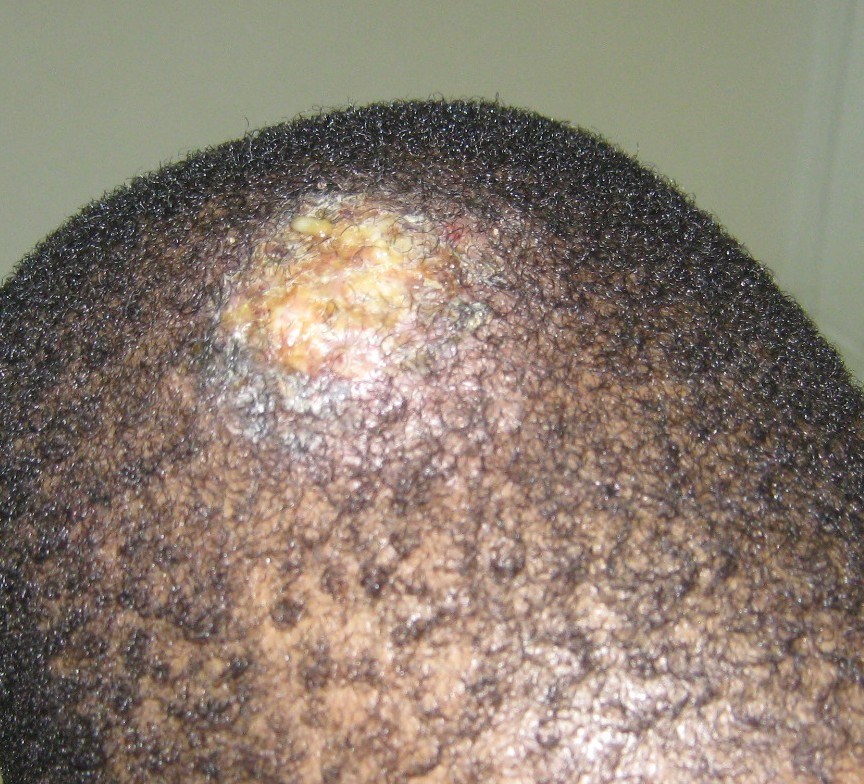
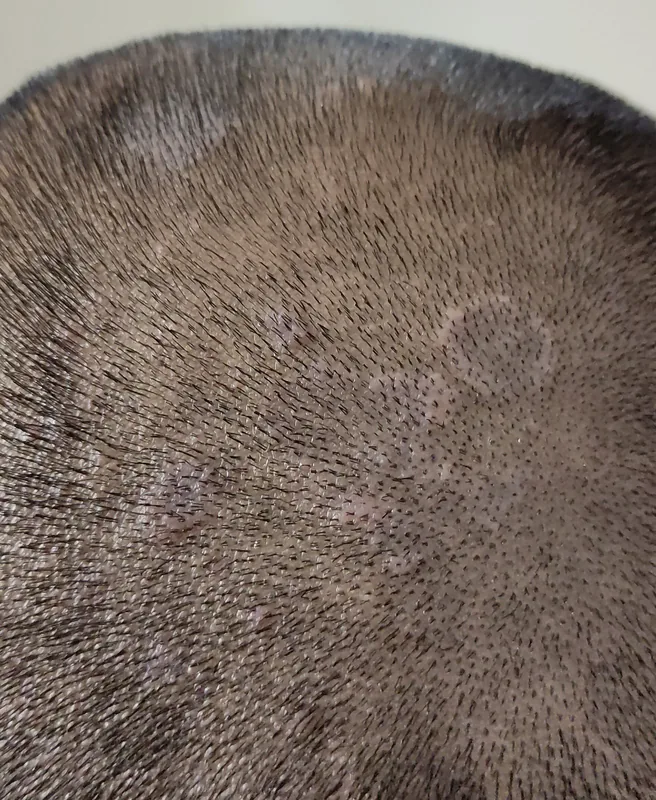
Aetiopathogenesis
Pathogenesis & Pathogens
- Typical pathogens: predominantly zoophilic — T. mentagrophytes, T. benhamiae (guinea pig), T. verrucosum (calf) and M. canis (cat); anthropophilic T. tonsurans.
Clinical features
Clinical Presentation
- Clinical features: Annular scaling lesions with alopecia; inflammatory forms with pustules and crusts
- Dermoscopy tinea capitis: broken hairs
- Special form: Kerion Celsi = highly inflammatory, boggy, painful form (in detail in section 7)
Clinical Picture
- Finding: an intensely red, boggy, tender plaque or nodule on the scalp with alopecia; on pressure pus is expressed from the widened follicular ostia as if from a sieve (honeycomb appearance).
- Hairs: can be epilated painlessly — an important feature distinguishing it from a bacterial abscess.
- Accompanying findings: firm nuchal and retroauricular lymphadenopathy, sometimes fever and malaise; a mykid (id) reaction may appear on the trunk as a scattered exanthem.
- Equivalent in the beard area: tinea barbae profunda in a farmer with cattle contact.
Diagnosis
Microscopy
- Endothrix = spores within the hair shaft (typical for anthropophilic Trichophyton species such as T. tonsurans, T. violaceum)
- Ectothrix = spores on the outside of the hair shaft (typical for M. canis, M. audouinii, but also zoophilic T. mentagrophytes, T. verrucosum)
Diagnostics
- Additionally: Wood's lamp (greenish fluorescence with Microsporum, not with Trichophyton), dermoscopy (comma hairs, corkscrew hairs, black dots).
- Environment: send the pet to the vet, screen family members and close contacts.
Differential diagnoses
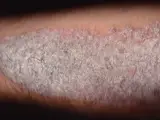
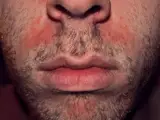
- Kerion celsi
Image credits for the thumbnails
- Alopecia areata: Abbassyma at English Wikipedia, “Allopecia areata”, Public Domain, via Wikimedia Commons · Public domain · Source
- Androgenetic Alopecia: Before My Ken, “Back of man's head”, CC BY-SA 3.0, via Wikimedia Commons · CC BY-SA 3.0 · Source
- Psoriasis vulgaris (plaque psoriasis): MediaJet, “An Arm Covered With Plaque Type Psoriasis”, CC BY-SA 3.0, via Wikimedia Commons · CC BY-SA 3.0 · Source
- Seborrhoeic dermatitis: Roymishali, “Seborrhoeic dermatitis highres”, CC BY-SA 3.0, via Wikimedia Commons · CC BY-SA 3.0 · Source
Treatment principles
- Tinea capitis is always treated with systemic antifungals, as topical agents do not adequately reach the hair follicle; topical treatment is added.
- The choice of agent depends on the organism identified in culture, and treatment continues beyond clinical and mycological cure.
- In kerion, prompt systemic therapy is crucial to prevent scarring alopecia; source animals and contacts are examined and treated.
Specific treatment regimens with drugs and doses are covered in the DermaFuchs app.
Keep learning in the app
References (selection)
Cross-references
Keep learning
Keep learning with flashcards, exam questions and spot diagnoses in the DermaFuchs app – free, in your browser or as an app.
Related pages: Alopecia areata · Androgenetic Alopecia · Psoriasis vulgaris (plaque psoriasis)
Note: This page is intended for medical education and does not replace diagnosis or treatment decisions in individual cases.