Nevus sebaceus
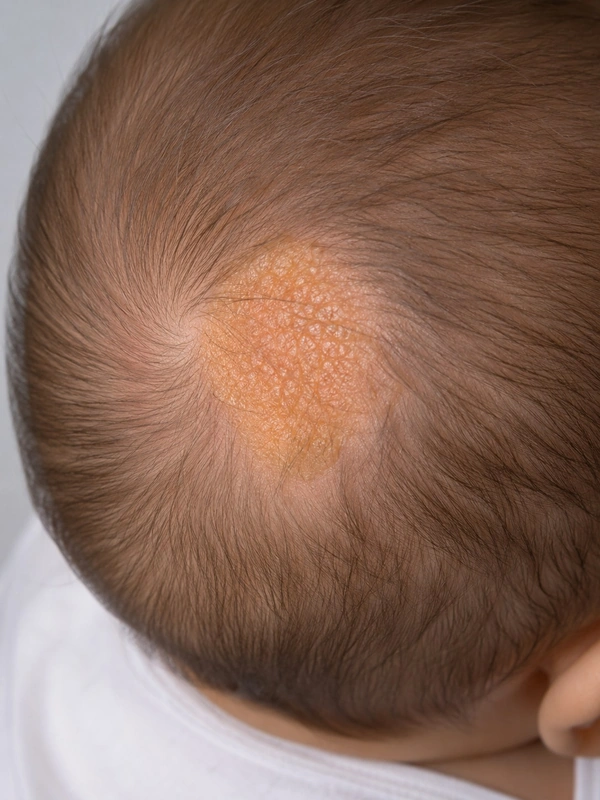
Naevus sebaceus + Schimmelpenning-Feuerstein-Mims syndrome
- Naevus sebaceus (Jadassohn): congenital yellow-orange hairless plaque with verrucous surface, on scalp/face, hyperplasia of sebaceous glands + ectopic apocrine glands.
- Genetics: Postzygotic HRAS- (most common) or KRAS-mosaic — somatic mosaicism, not inherited.
- Secondary tumours (lifetime risk ~ 10–20 %): most commonly trichoblastoma (benign), more rarely BCC, sebaceous carcinoma — therefore excision recommended at the latest in puberty.
- Schimmelpenning-Feuerstein-Mims syndrome (organoid epidermal nevus syndrome): extensive linear naevus sebaceus + CNS (seizures, intellectual disability), ocular (colobomas, lipodermoid) and skeletal anomalies, same HRAS/KRAS-mosaic mechanism.
Differential diagnoses
- Trichoepithelioma
- Basal cell carcinoma
- Keratoacanthoma
- Seborrhoeic keratosis
- Pilomatrixoma
- Syringoma
- Aplasia cutis congenita
- Becker's nevus
Practise Nevus sebaceus in the app
Flashcards with spaced repetition, exam questions and spot-the-diagnosis on this topic – in DermaFuchs, free of charge.
In the DermaFuchs app: 1 flashcards · 5 clinical images
Open in browser Download on the App StoreSources (selection)
More skin tumours
- Basal cell carcinoma
- Melanoma
- Lentigo maligna
- Cutaneous squamous cell carcinoma
- Actinic keratosis
- Actinic cheilitis
- Merkel cell carcinoma
- Microcystic adnexal carcinoma
Note: This page is intended for medical education and does not replace diagnosis or treatment decisions in individual cases. Treatment and follow-up content is available in the app.