Hand, foot and mouth disease
- Synonyms
- HFMK, Hand-Mund-Fuß-Krankheit, Coxsackie, Hand-Fuß-Mund-Exanthem, HFMD, coxsackievirus
- Specialty
- Dermatology · Viral infections
- Images
- Clinical 7
- In the app
- 3 flashcards
- Last updated
- 10/2026 · Dr. Pascal Bafteh
Contents
Images (7)
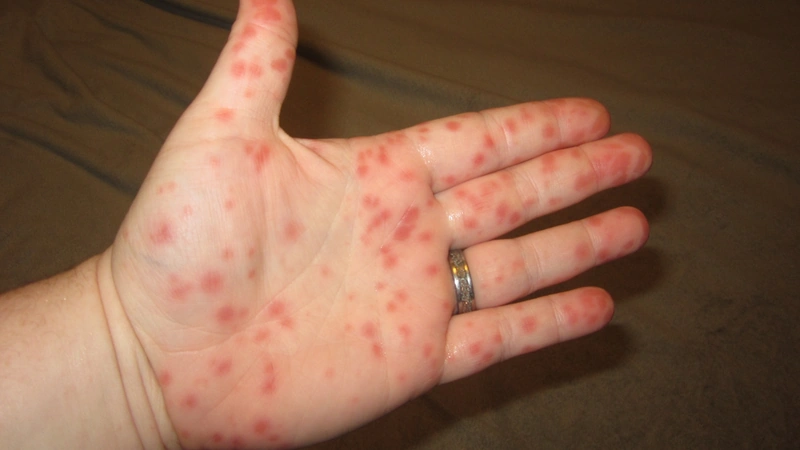
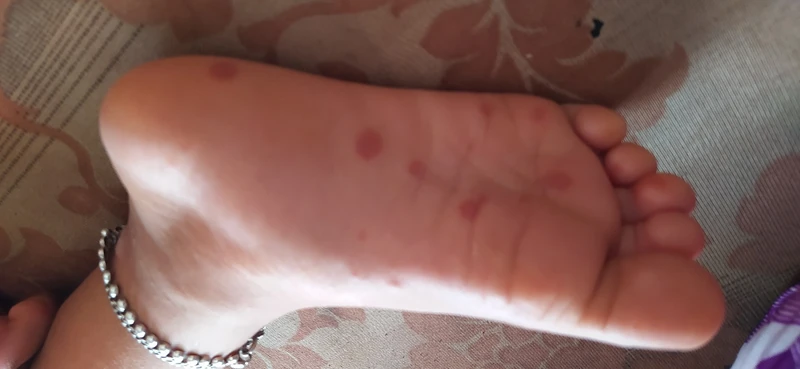
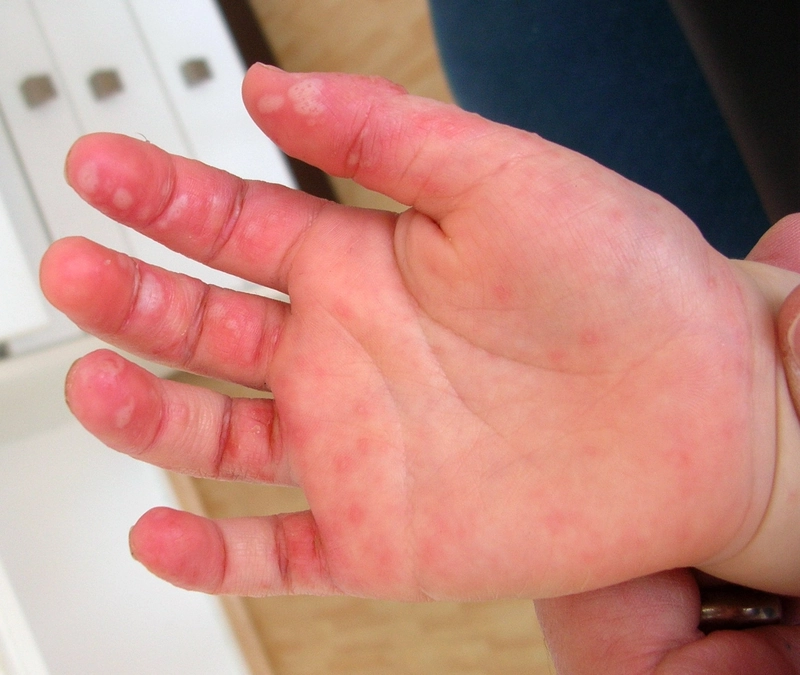
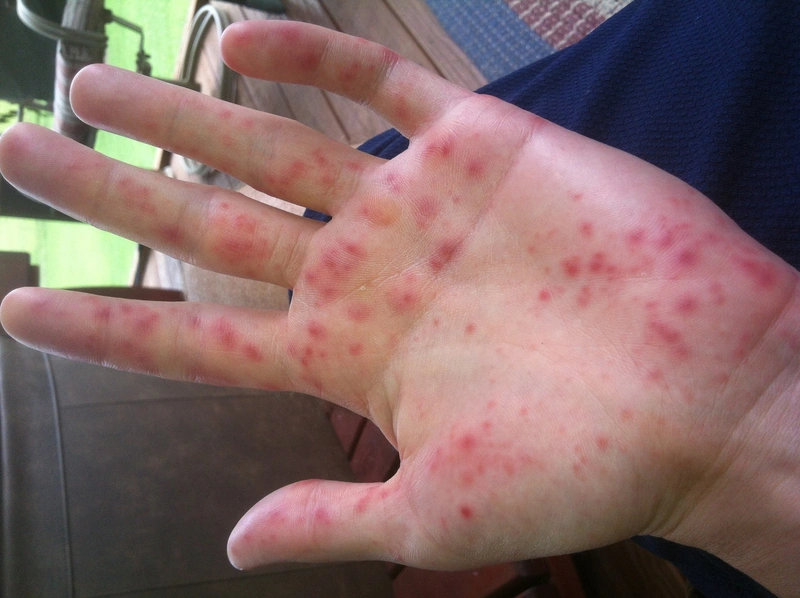
Definition
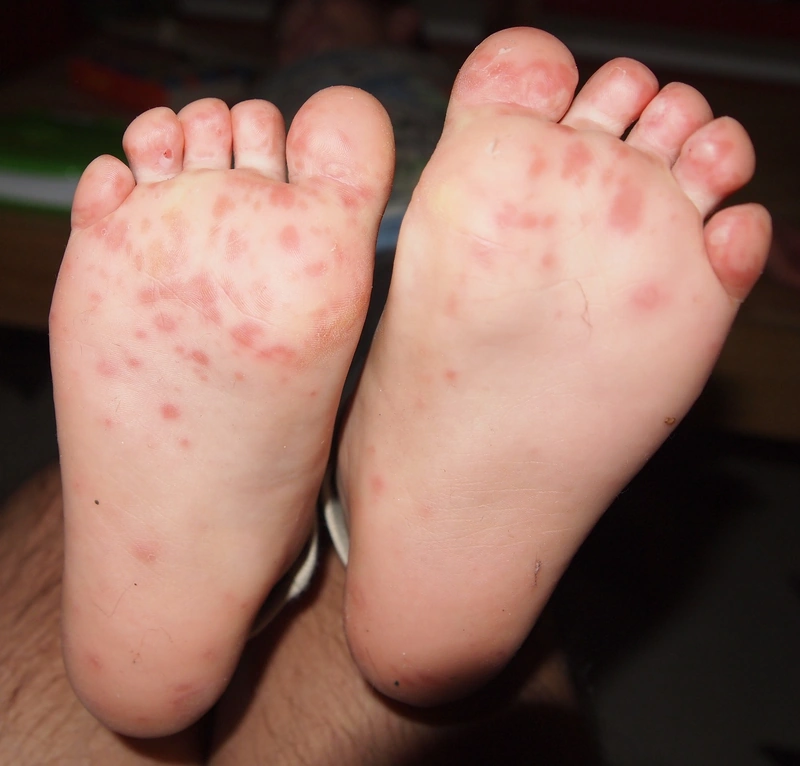
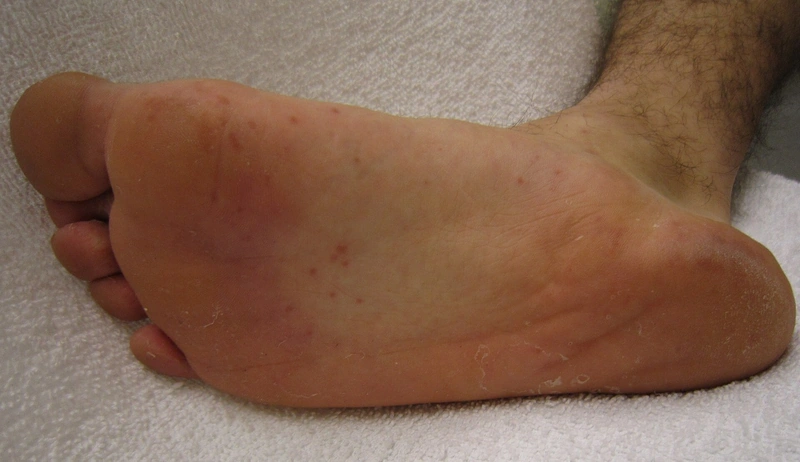
Hand, foot and mouth disease is a usually mild, highly contagious viral infection caused by group A enteroviruses, most often coxsackievirus A6 and A16, also A10 and enterovirus A71, with vesicles on the oral mucosa, hands and feet.
Occurrence & epidemiology
Mainly children under ten are affected; outbreaks in nurseries are common, especially in summer and autumn. Transmission is faecal-oral, by droplets and by direct contact with vesicle fluid.
Clinical features
- Mild fever, sore throat and loss of appetite, followed by painful vesicles and aphthae on the tongue, buccal mucosa and palate.
- Oval, grey vesicles with a red halo on the palms, soles, fingers and toes; the buttocks and other areas mainly in atypical courses (usually CVA6) or in children with eczema.
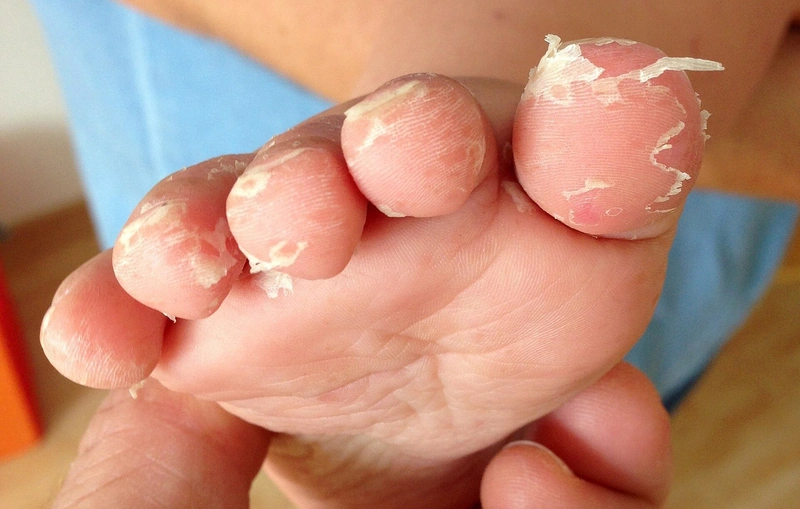
- Weeks later the nails may shed (onychomadesis).
- Rarely neurological complications (aseptic meningitis, encephalitis), mainly with enterovirus A71.
Diagnosis
- Usually a clinical diagnosis based on the typical distribution.
- If needed, enterovirus PCR from vesicle fluid, throat swab or stool.
- Distinction from herpes simplex infections (e.g. herpetic gingivostomatitis), varicella and other viral infections, bullous impetigo, bullous insect bite reactions and dyshidrotic eczema.
Differential diagnoses
 Dyshidrotic eczema (pompholyx)
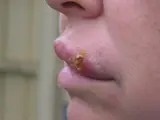 Herpes simplex (cold sores)
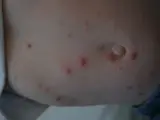 Varicella (chickenpox)
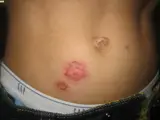 Impetigo (impetigo contagiosa)
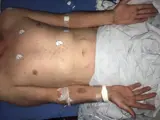 Secondary syphilis (lues II)
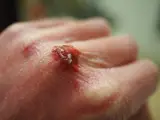 Hand eczema
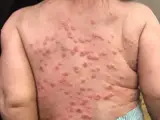 Eczema herpeticum
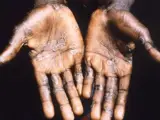 Mpox
Image credits for the thumbnails
- Dyshidrotic eczema (pompholyx): Inwe (Wikimedia Commons), “Dyshidrosis”, CC BY-SA 3.0, via Wikimedia Commons · CC BY-SA 3.0 · Source
- Herpes simplex (cold sores): unknown (Commons user), “Cold sore”, Public Domain, via Wikimedia Commons · Public Domain · Source
- Varicella (chickenpox): Jonnymccullagh, “Chickenpox 5yearold”, CC BY-SA 3.0, via Wikimedia Commons · CC BY-SA 3.0 · Source
- Impetigo (impetigo contagiosa): Littlekidsdoc, “Bullous impetigo”, CC BY-SA 4.0, via Wikimedia Commons · CC BY-SA 4.0 · Source
- Secondary syphilis (lues II): Ehlers S, Sergent S, Ashurst J (Clin Pract Cases Emerg Med 2020), CC BY 4.0, via PubMed Central (PMC7676796) · CC BY 4.0 · Source
- Hand eczema: JIP, “Eczema on knuckle”, CC BY-SA 4.0, via Wikimedia Commons · CC BY-SA 4.0 · Source
- Eczema herpeticum: Mohammad2018, CC BY-SA 4.0, via Wikimedia Commons, cropped · CC BY-SA 4.0 · Source
- Mpox: CDC/ Brian W.J. Mahy, Public domain, via Wikimedia Commons · Public domain · Source · CDC PHIL #12761
Treatment principles
- Hand, foot and mouth disease usually resolves spontaneously within a few days, and there is no specific antiviral treatment.
- Treatment is symptomatic with analgesics and antipyretics and local pain relief in the mouth; adequate fluid intake is particularly important in young children.
- Hygiene measures such as thorough hand washing reduce transmission.
Specific treatment regimens with drugs and doses are covered in the DermaFuchs app.
Keep learning in the app
References (selection)
Cross-references
Mentioned in
Keep learning
Keep learning with flashcards, exam questions and spot diagnoses in the DermaFuchs app – free, in your browser or as an app.
Related pages: Dyshidrotic eczema (pompholyx) · Herpes simplex (cold sores) · Varicella (chickenpox)
Note: This page is intended for medical education and does not replace diagnosis or treatment decisions in individual cases.