Esophageal cancer
Board exam relevance: in 5 of 105 exam reports · rank 69- Synonyms
- oesophageal carcinoma, cancer of the gullet, oesophageal squamous cell carcinoma, oesophageal adenocarcinoma
- Specialty
- Internal medicine · Gastroenterology
- Images
- Endoscopy 1 · CT 1 · X-ray 1 · Histology 1 · Gross specimen 1
- Last updated
- 10/2026 · Dr. Pascal Bafteh
Contents
Images (5)
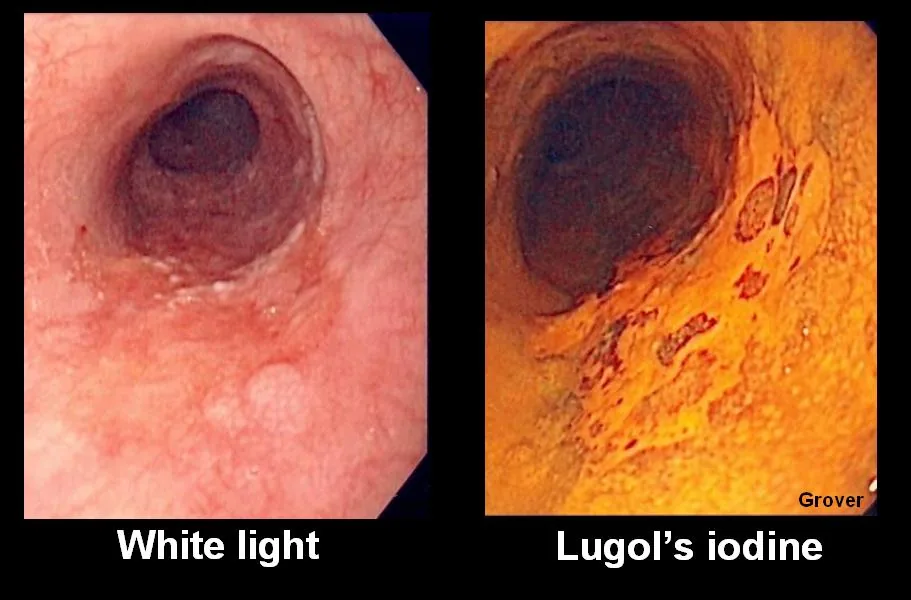 Endoscopy
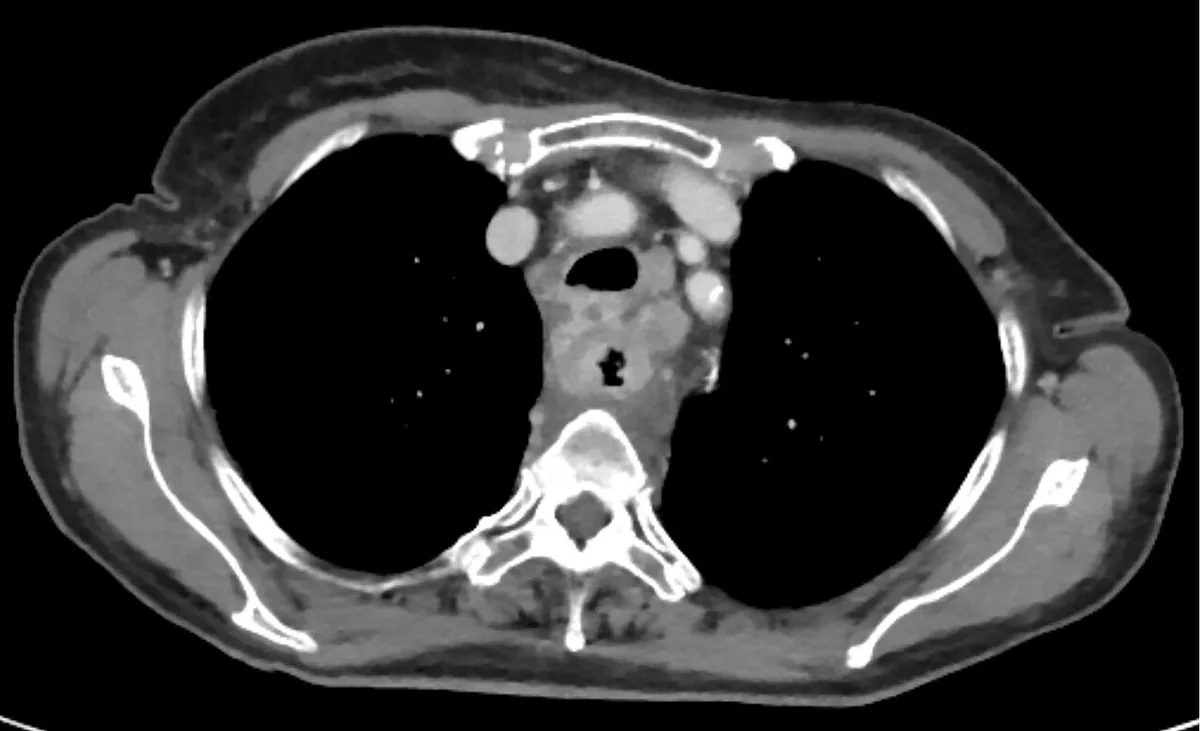 CT
CT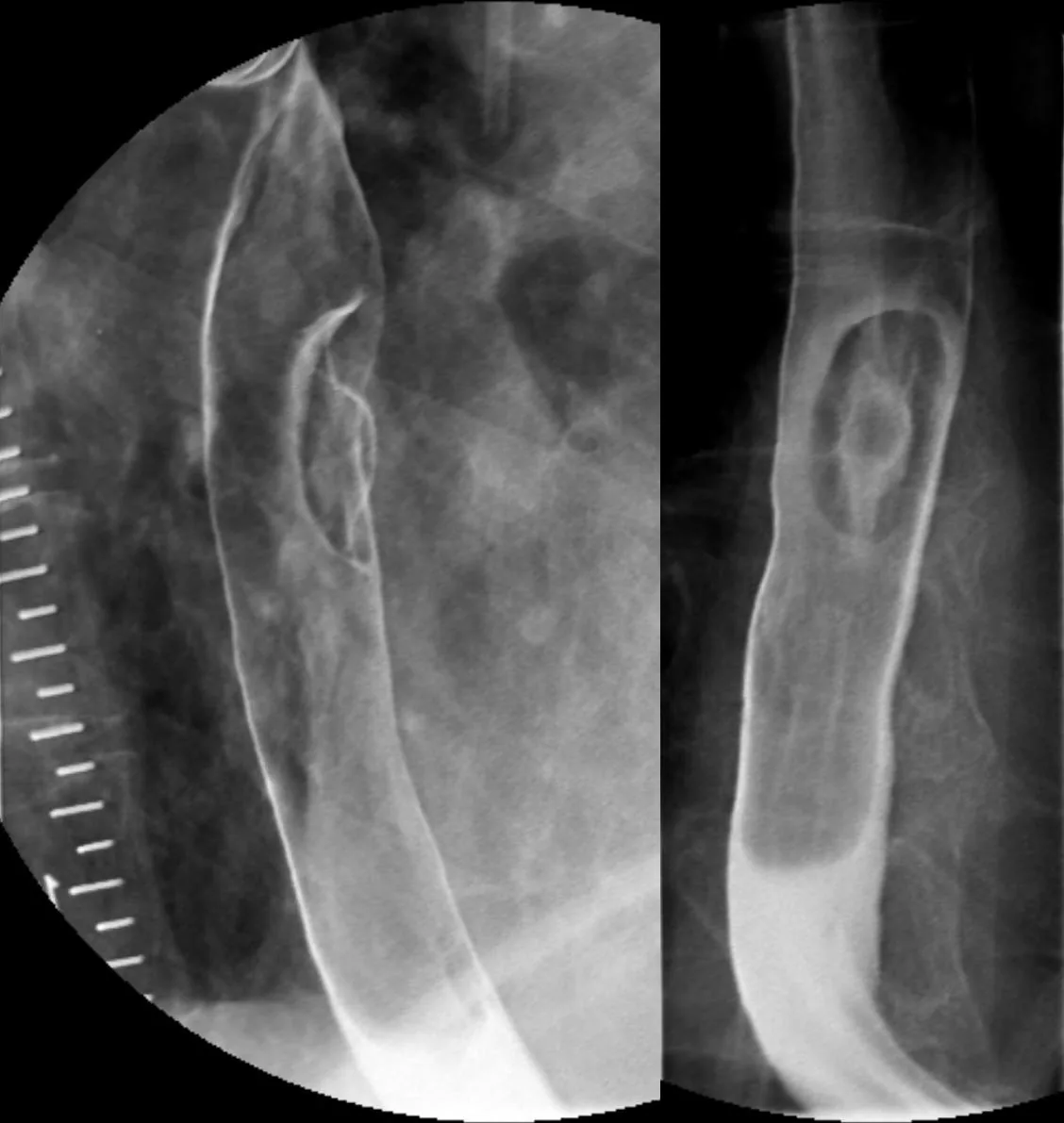 X-ray
X-ray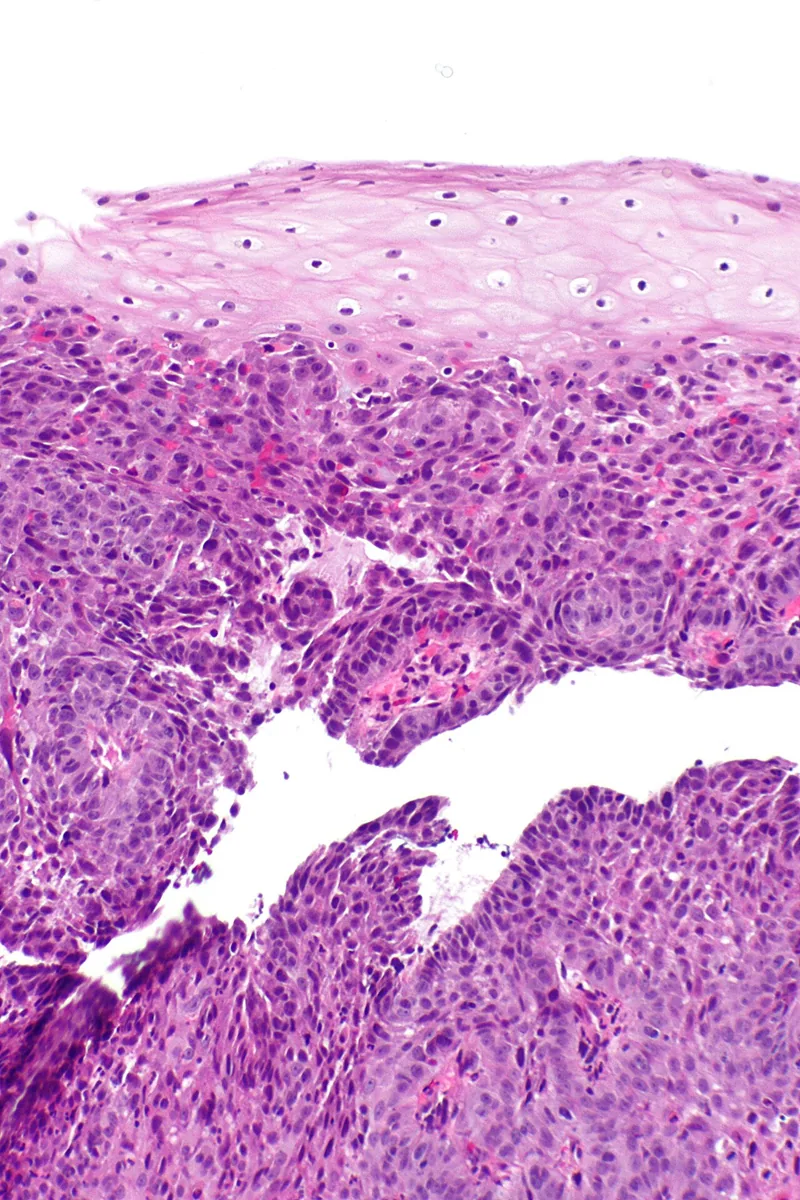 Histology
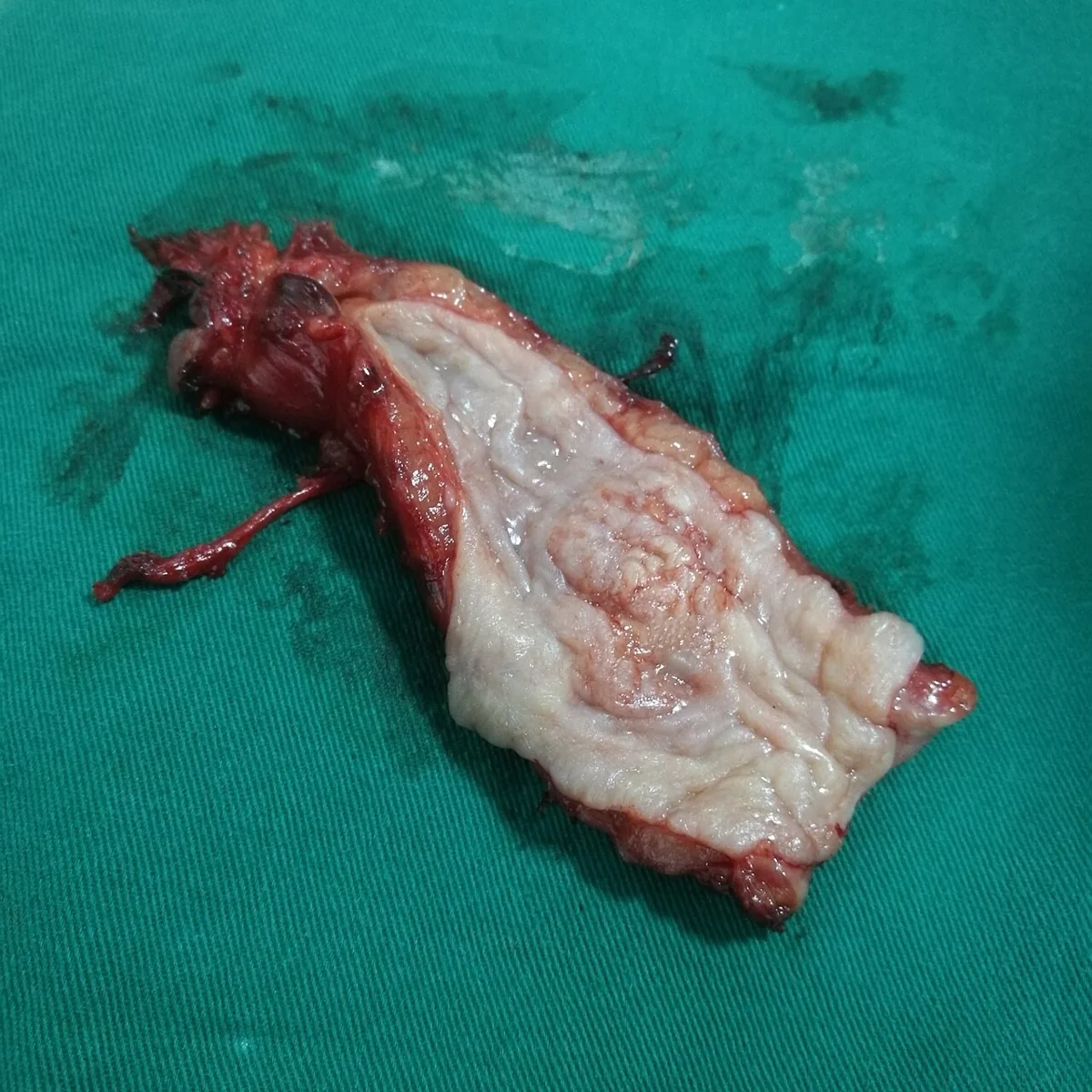 Gross specimen
Definition
Esophageal cancer is a malignant tumor of the esophagus. In the proximal two thirds, squamous cell carcinoma is the most common type, in the distal third adenocarcinoma. An adenocarcinoma of the distal esophagus is difficult to distinguish from a carcinoma of the gastric cardia invading the esophagus.
Classification
- Squamous cell carcinoma: the most common type worldwide; variants are spindle cell carcinoma (poorly differentiated) and verrucous carcinoma (well differentiated).
- Adenocarcinoma: in the distal esophagus, usually arising from Barrett's esophagus.
- Rare malignant tumors: e.g. mucoepidermoid and adenosquamous carcinoma, adenoid cystic carcinoma, small cell carcinoma, carcinoid tumor, sarcoma, primary malignant melanoma.
- Metastases of other tumors to the esophagus are extremely rare.
Occurrence & epidemiology
In Germany, about 5,820 men and 1,780 women were diagnosed with esophageal cancer in 2023. Men are affected three times as often and, at a median of 68 years, four years earlier than women. Squamous cell carcinomas account for about 42 %; the share of adenocarcinomas, which occur almost exclusively at the junction with the stomach, has risen to about 48 %, and to 52 % in men. Barely one in three tumors is detected at an early stage (UICC I/II).
Worldwide, esophageal cancer was the eleventh most commonly diagnosed cancer in 2022, with about 511,000 new cases.
Aetiopathogenesis
- Alcohol and tobacco (in any form); in squamous cell carcinoma both factors reinforce each other, and the risk rises with the amount of alcohol drunk daily.
- Gastro-esophageal reflux disease and Barrett's esophagus: mainly for adenocarcinoma; alcohol is not an important risk factor for adenocarcinoma, but smoking contributes.
- Obesity: mainly for adenocarcinoma, probably by promoting reflux.
- Older age and male sex.
- Achalasia: markedly increases the risk of both types.
- Other factors: human papillomavirus infection, ingestion of lye or other caustic substances (with stricture), esophageal webs in Plummer–Vinson syndrome, previous exposure of the esophagus to ionising rays.
- Genetic syndromes: e.g. tylosis, familial Barrett's esophagus, Bloom syndrome, Fanconi anemia; familial clustering is also known.
Clinical features
Early stages are usually asymptomatic.
- Progressive dysphagia: first for solids, then for semisolids and finally for liquids and saliva.
- Loss of weight: almost universal, even with a good appetite.
- Chest pain, often radiating to the back.
- Hoarseness from vocal cord paralysis due to compression of the recurrent laryngeal nerve; nerve compression can also cause spinal pain, hiccups or diaphragmatic paralysis.
- Intraluminal growth: odynophagia, vomiting, hematemesis, melaena, iron deficiency anemia, aspiration and cough.
- Tracheo-esophageal or broncho-esophageal fistulas: lung abscess and pneumonia.
- Other findings: superior vena cava syndrome, malignant pleural effusion with dyspnea, malignant ascites, bone pain.
- Spread: lymphatic to internal jugular, cervical, supraclavicular, mediastinal and celiac nodes; distant metastases mainly to lung and liver, less often to bone, heart, brain, adrenal glands, kidneys and peritoneum.
Diagnosis
- Endoscopy with biopsy: confirms the diagnosis.
- CT of the chest, abdomen and pelvis and whole-body PET-CT: staging.
- Endoscopic ultrasound: assessment of depth of invasion and regional lymph nodes.
- Laboratory tests: full blood count (iron deficiency anemia from chronic blood loss).
Keep learning in the app
Further reading (open access)
Cross-references
More topics: Gastroenterology
Note: Learning content for medical education – not a treatment recommendation and no substitute for diagnosis or treatment decisions in individual cases. Treatment and management are deliberately not covered on this page.